How to Choose a Grinding Mill for Wollastonite Processing? Key Equipment Explained
Introduction
Wollastonite, a naturally occurring calcium silicate mineral, is a critical industrial material prized for its high brightness, low moisture absorption, and needle-like acicular structure. Its applications span from plastics and ceramics as a functional filler to metallurgy as a flux and to construction as an alternative to asbestos. The performance of wollastonite in these applications is intrinsically linked to its particle size, shape (aspect ratio preservation), and purity after processing. Therefore, selecting the appropriate grinding mill is not merely a cost decision but a fundamental choice that determines product quality, operational efficiency, and market competitiveness. This article provides a comprehensive guide to navigating the key factors in mill selection and explains the suitability of various grinding technologies for different wollastonite processing goals.
Key Factors in Mill Selection for Wollastonite
Before evaluating specific equipment, processors must define their production objectives based on the following parameters:
1. Target Product Fineness and Particle Size Distribution (PSD)
This is the primary driver. Wollastonite products are categorized broadly by mesh size:
– Coarse Grades (30-200 mesh / 600-74μm): Used in ceramics, welding fluxes, and construction. The focus is on high capacity and cost-effective size reduction with less emphasis on ultra-fine cuts.
– Fine Grades (200-500 mesh / 74-25μm): Common for plastics and rubber reinforcement. Achieving a controlled top cut and preserving aspect ratio become important.
– Ultrafine/High-Aspect-Ratio Grades (500-2500+ mesh / 25-5μm and below): Used in high-performance polymers, paints, and coatings. The paramount goals are achieving micron and sub-micron sizes while maximizing the retention of the acicular (needle-like) morphology, which provides mechanical reinforcement.
2. Capacity Requirements
The required throughput (tons per hour) scales with the mill size and power. It’s essential to balance capital expenditure with long-term production planning. A mill that is significantly under-powered for the required duty will become a bottleneck, while an oversized mill operates inefficiently at partial load.
3. Preservation of Acicular Structure
Unlike many minerals where spherical particles are desired, wollastonite’s value often lies in its needle shape. Mills that utilize primarily impact or attrition forces (like ball mills) can overgrind and destroy these needles, producing equidimensional particles. Mills employing layered material bed compression or controlled centrifugal grinding are generally better at preserving aspect ratio.
4. Energy Efficiency and Operating Costs
Grinding is an energy-intensive process. Mills with higher grinding efficiency and integrated, efficient classification systems can dramatically reduce power consumption per ton of product. Maintenance costs, linked to wear part life and service intervals, are another critical operational expense.
5. System Integration and Environmental Controls
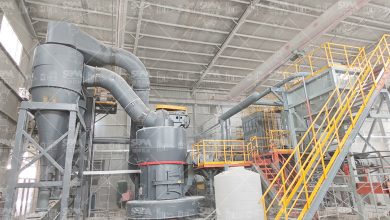
A modern grinding plant must consider dust collection, noise abatement, and system footprint. Integrated systems that combine grinding, classification, and collection in a single, sealed unit offer advantages in space utilization and environmental compliance.
Overview of Grinding Mill Technologies for Wollastonite
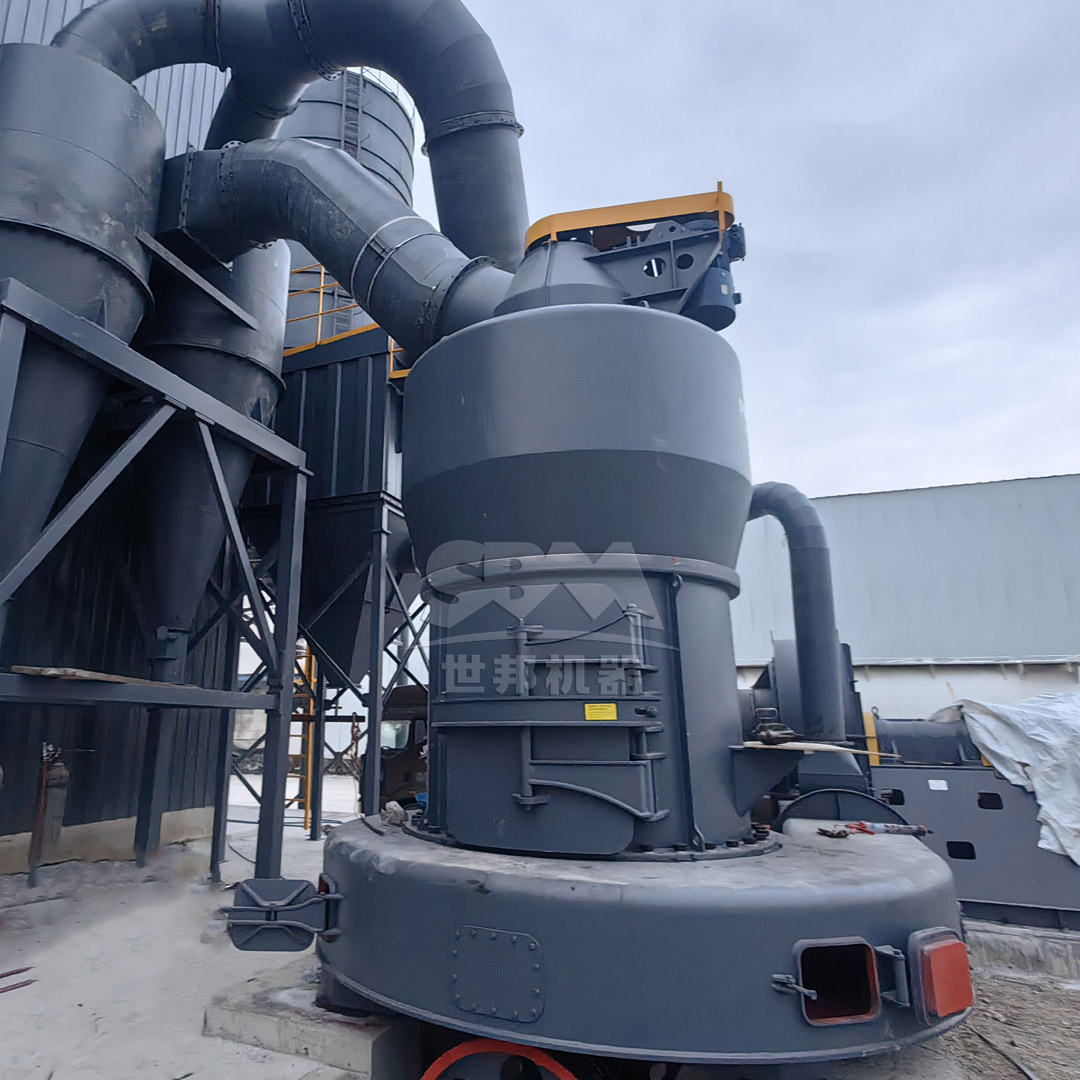
1. Raymond Mill (Pendulum Roller Mill)
Typical Output: 30-325 mesh (600-45μm).
Best For: Medium-fine grinding of wollastonite where high aspect ratio preservation is not the top priority. It is a robust, cost-effective workhorse for producing filler grades.
Working Principle: Rollers swing outward due to centrifugal force and roll against a stationary ring, crushing the feed material shoveled into the grinding zone.
Considerations: Well-suited for capacities up to ~25 t/h. Can produce heat, which may affect some wollastonite surface properties. Modern versions offer improved efficiency and control.
2. Ball Mill
Typical Output: 0.074-0.8mm (200-20 mesh).
Best For: High-capacity production of relatively coarse wollastonite powders, often in wet or dry grinding circuits for ceramic or metallurgical applications.
Working Principle: Material is crushed by impact and attrition as the mill rotates and grinding media (steel balls) cascade and tumble.
Considerations: High energy consumption. The impact and tumbling action are highly abrasive and can severely reduce the aspect ratio of wollastonite, making it less suitable for high-value, reinforcing grades. It is often followed by a classifier in a closed circuit.
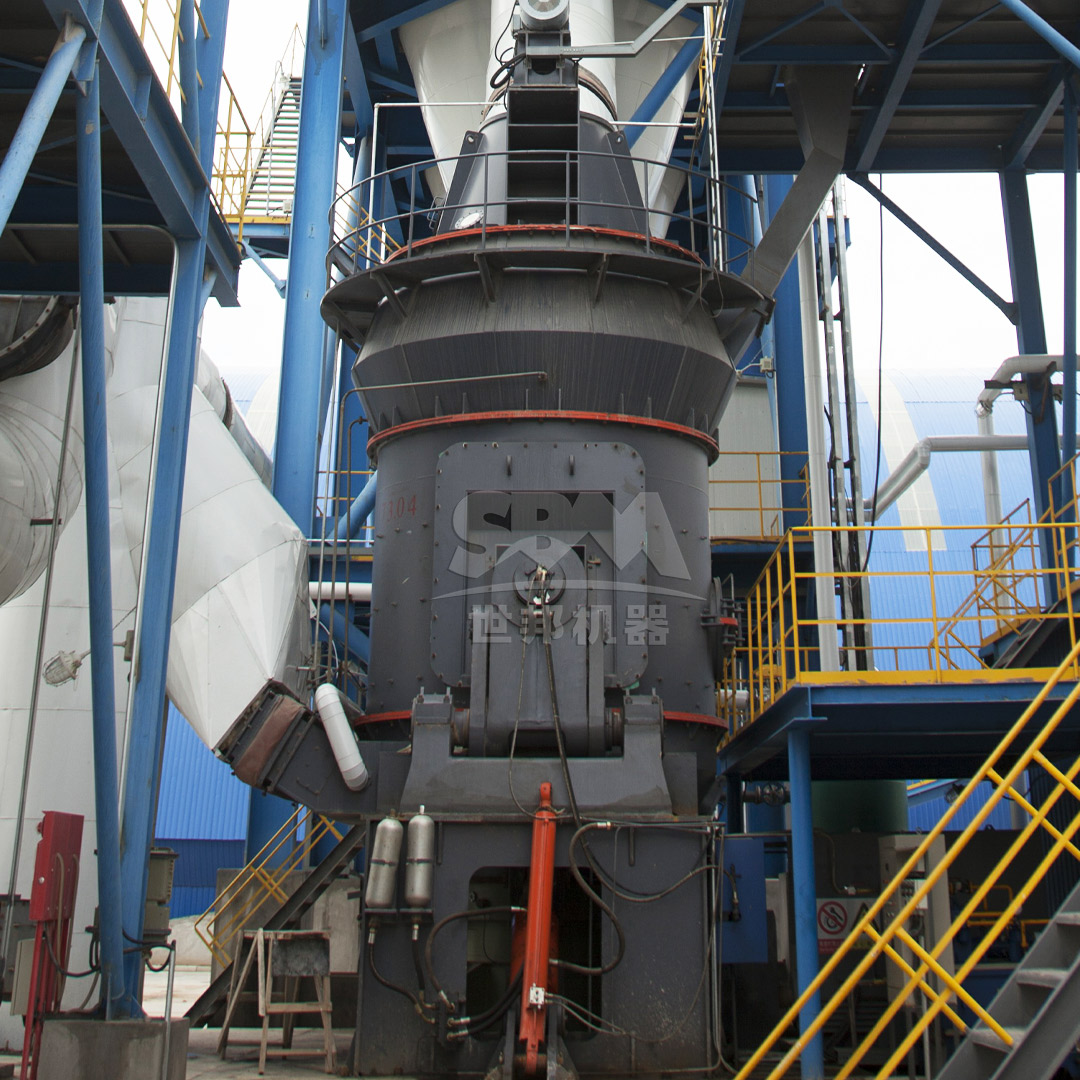
3. Vertical Roller Mill (VRM)
Typical Output: 30-325 mesh (600-45μm), with special designs reaching 600 mesh (20μm).
Best For: Large-scale production of fine wollastonite powders with better energy efficiency than ball mills. Suitable for integrated grinding-drying-classification.
Working Principle: Material is fed onto a rotating table and crushed under rollers pressed against the table. Ground material is transported by air to an internal classifier.
Considerations: Offers excellent energy efficiency (30-40% lower than ball mills) and a smaller footprint. The grinding mechanism (compression) is gentler than a ball mill’s impact, offering better potential for structure preservation at finer sizes.
4. Ultrafine Grinding Mills (Jet Mills, Stirred Media Mills, Advanced Roller Mills)
Typical Output: 5-45μm (2500-325 mesh) and finer.
Best For: Production of high-value, ultra-fine, high-aspect-ratio wollastonite for premium applications in polymers and coatings.
Working Principle:
– Jet Mills: Use high-speed compressed air or steam to create particle-on-particle impact, excellent for very fine sizes but can be energy-intensive.
– Advanced Roller Mills: Utilize multiple grinding rings and precision classifiers to achieve ultrafine sizes via layered grinding with high efficiency.
Considerations: This is the technology frontier for wollastonite. The key is achieving the target fineness while minimizing damage to the acicular structure and maximizing throughput per unit of energy consumed.
Recommended Equipment Solutions for Specific Wollastonite Processing Goals
Based on the outlined factors and technologies, here are targeted equipment recommendations:
For High-Capacity Production of Fine Wollastonite (30-325 mesh)
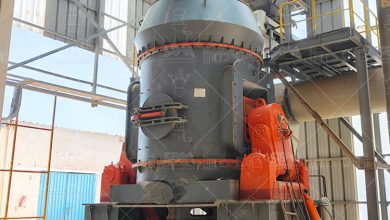
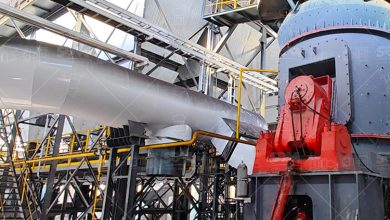
When the goal is to produce significant volumes of fine filler-grade wollastonite with optimal energy efficiency and system stability, the MTW Series European Trapezium Mill is an outstanding choice. This next-generation pendulum roller mill incorporates advanced engineering features specifically designed for heavy-duty, efficient operation.
Its integral bevel gear drive achieves a remarkable 98% transmission efficiency, directly translating to lower energy costs. The wear-resistant volute structure and optimized arc air duct minimize pressure loss and improve airflow, enhancing classification efficiency and system stability. For wollastonite processing plants requiring reliable output in the range of 3 to 45 tons per hour, the MTW series offers a perfect balance of performance, durability, and cost-effectiveness. Models like the MTW175G or MTW215G are particularly suited for large-scale operations.
For Producing Ultra-Fine, High-Aspect-Ratio Wollastonite Powder (325-2500 mesh)
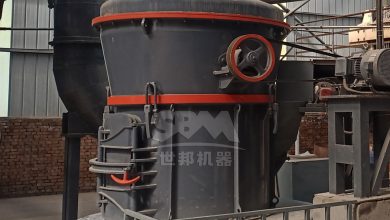
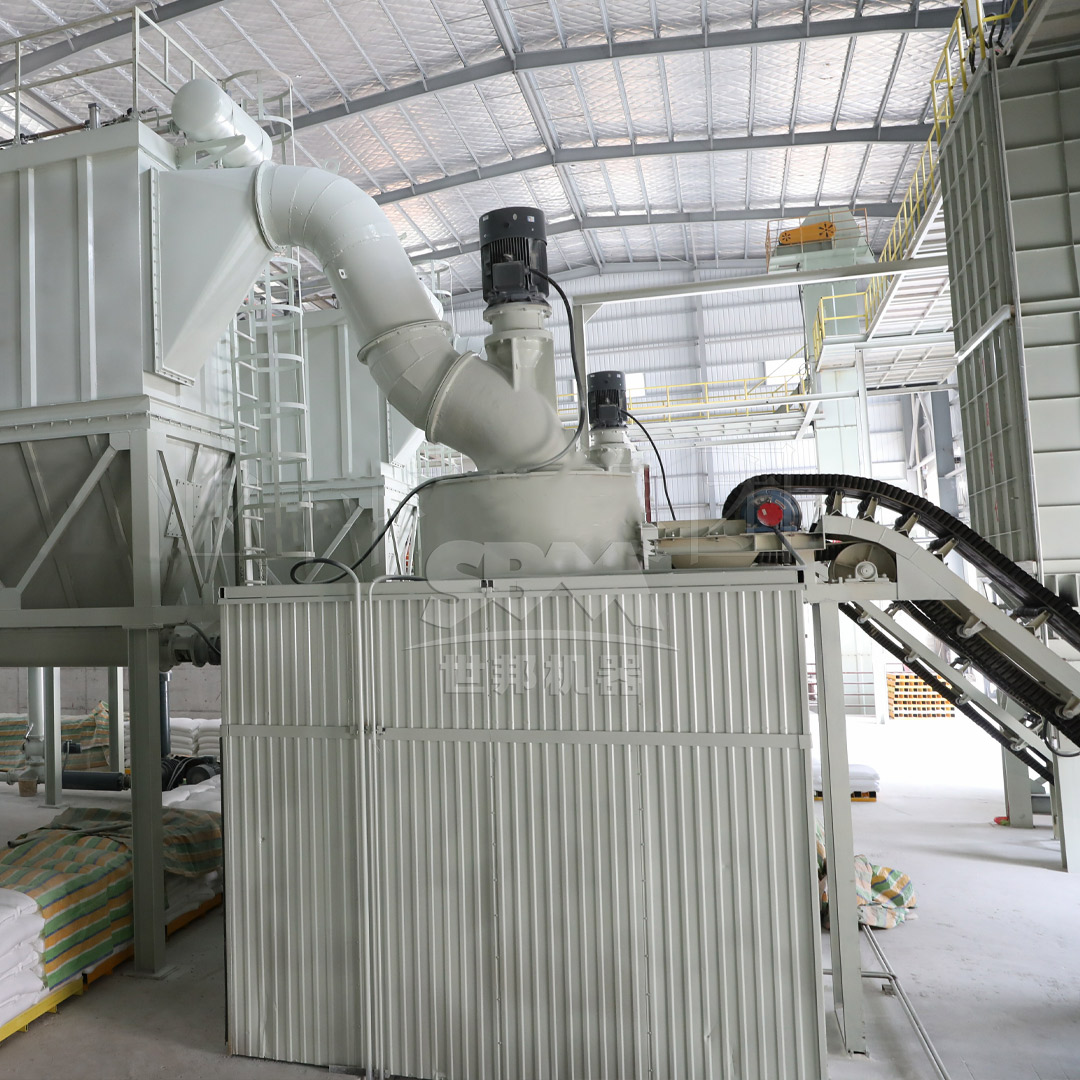
To unlock the highest market value by producing ultrafine wollastonite powders where preserving the acicular structure is critical, a dedicated ultrafine grinding system is essential. Our SCM Series Ultrafine Mill is engineered precisely for this challenge.
This mill operates on a layered material bed grinding principle. The main motor drives multiple grinding rings to rotate, and materials are ground layer-by-layer under roller pressure. This method applies more compressive shear than violent impact, which is instrumental in delaminating the wollastonite crystals along their natural cleavage planes, thereby promoting fines production while helping to maintain needle shape.
The heart of the system is its high-precision vertical turbine classifier. It ensures precise particle size cutting, guaranteeing a narrow, consistent product distribution with no coarse powder mixing. With an output fineness adjustable between 325 and 2500 mesh (45-5μm) and capacities from 0.5 to 25 t/h, the SCM series provides remarkable flexibility. Furthermore, it delivers this performance with high energy efficiency—reported to have double the capacity of some jet mills while consuming 30% less energy. For processors targeting the premium plastics, paint, and coating markets, the SCM Ultrafine Mill represents a technologically superior and economically sound solution.
Conclusion
Selecting the optimal grinding mill for wollastonite is a strategic decision that hinges on clearly defined product specifications, primarily fineness and the required preservation of its acicular structure. For coarse to standard fine grades, robust technologies like the advanced MTW European Trapezium Mill offer high capacity and efficiency. For the demanding production of ultra-fine, high-value, high-aspect-ratio powders, advanced systems like the SCM Series Ultrafine Mill, with its gentle layered grinding and precise classification, are indispensable. By carefully matching the grinding technology to the end-product goals, wollastonite processors can maximize product quality, optimize operational costs, and secure a strong position in a competitive market.