How to Acidify Vermiculite? Acid Treatment Methods for Vermiculite Processing
Introduction to Vermiculite Acidification
Vermiculite, a hydrous phyllosilicate mineral, undergoes significant expansion when heated, making it valuable for insulation, horticulture, and as a lightweight aggregate. However, for advanced applications in catalysis, wastewater treatment, or as a high-performance filler, raw vermiculite often requires chemical modification to enhance its surface properties, porosity, and ion-exchange capacity. Acid treatment, or acid leaching, is a critical process that selectively removes interlayer cations (like Mg2+, Fe2+) and impurities, leading to the formation of porous, high-surface-area silica frameworks. This article provides a comprehensive guide to the methods, chemistry, and industrial processing steps for effectively acidifying vermiculite.
The Chemistry Behind Acid Treatment
The primary goal of acid treatment is the partial dissolution of the octahedral sheet (typically brucite-like, containing Mg, Fe, Al) within the vermiculite’s 2:1 layer structure. Concentrated mineral acids, most commonly hydrochloric (HCl) or sulfuric (H2SO4), protonate the interlayer cations and attack the octahedral cations. The general reaction can be simplified as:
Vermiculite-(Mg,Fe)3(Si,Al)4O10(OH)2·nH2O + H+ → Porous Silica Framework + (Mg2+, Fe2+)(aq) + H2O
The extent of dissolution controls the final product’s properties. Mild treatment increases cation exchange capacity (CEC) and surface acidity, while prolonged or severe treatment can lead to complete delamination and the formation of amorphous, high-surface-area silica.
Key Processing Steps for Industrial Acidification
1. Pre-Treatment: Size Reduction and Classification
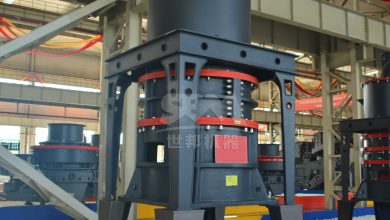
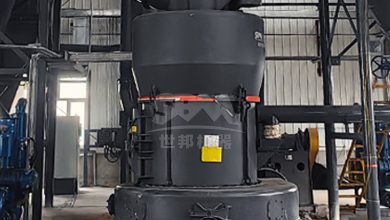
Raw vermiculite ore must be crushed and milled to a consistent, fine particle size to maximize the surface area exposed to the acid. Efficient and controlled comminution is crucial. For this stage, a robust milling system like our MTW Series European Trapezium Mill is highly recommended. It handles feed sizes up to 50mm and can grind vermiculite to an optimal fineness of 30-200 mesh for acid treatment. Its anti-wear shovel design and integral bevel gear drive ensure reliable, low-maintenance operation, critical for processing abrasive minerals.
2. Acid Leaching Process
This is the core chemical operation. The ground vermiculite is slurried with acid in a corrosion-resistant reactor (e.g., lined with rubber, PP, or Hastelloy).
- Acid Concentration: Typically 1-6M HCl or 1-4M H2SO4.
- Solid-to-Liquid Ratio: Usually between 1:5 and 1:10 (w/v).
- Temperature & Time: Conducted at 60-100°C for 1-24 hours. Higher temperatures accelerate the reaction but require more robust equipment.
- Agitation: Constant stirring is necessary to ensure uniform contact and prevent settling.
3. Washing and Filtration
After leaching, the acid-treated slurry must be thoroughly washed to remove residual acid and dissolved metal ions until the filtrate reaches a neutral pH. This step consumes large volumes of water and requires efficient solid-liquid separation using filter presses or vacuum drum filters.
4. Drying
The washed filter cake is dried at 100-120°C to produce the final acidified vermiculite product. Care must be taken to avoid overheating, which can alter the newly created porous structure.
Post-Acidification Processing: Achieving Ultra-Fine Grades
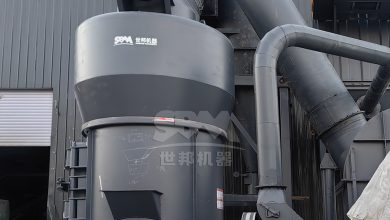
For specialty applications requiring sub-micron or nano-sized dispersions, the acidified vermiculite may need further ultra-fine grinding. This step exfoliates the layers and reduces particle size to the micron level, unlocking exceptional surface area and reactivity. Our SCM Series Ultrafine Mill is the ideal solution for this precision task. Capable of producing powders from 325 to 2500 mesh (45-5μm), its high-precision vertical turbine classifier ensures a narrow, consistent particle size distribution without coarse grit. The high-efficiency design consumes 30% less energy than traditional jet mills, making it a cost-effective choice for producing high-value, ultra-fine acidified vermiculite for advanced composites, catalysts, or functional fillers.
Factors Influencing Treatment Efficiency and Product Quality
- Vermiculite Origin: The elemental composition (Mg/Fe/Al ratio) varies by deposit and affects dissolution kinetics.
- Particle Size: Finer feed material leads to faster and more complete acid attack.
- Acid Type and Concentration: HCl generally offers faster leaching of cations, while H2SO4 may be more cost-effective industrially.
- Process Control: Precise control over temperature, time, and agitation is vital for batch-to-batch consistency.
Applications of Acidified Vermiculite
The modified material finds use in:
- Catalysis & Adsorption: As a catalyst support or direct adsorbent for heavy metals and organic pollutants, thanks to its high surface area and acidity.
- Advanced Composites: As a functional nano-filler in polymers to improve mechanical, thermal, and barrier properties.
- Specialty Agriculture: As a slow-release carrier for fertilizers or pesticides.
Conclusion
Acid treatment is a transformative process that upgrades natural vermiculite into a high-performance, functional material. Success hinges on a well-designed processing chain: from initial size reduction and controlled chemical leaching to efficient washing and optional ultra-fine grinding. Integrating reliable and efficient equipment, such as our MTW Series Mill for pre-grinding and SCM Series Ultrafine Mill for final refinement, ensures a scalable, economical, and high-quality production process. By mastering these acid treatment methods, producers can significantly enhance the value and expand the application horizons of vermiculite.