High Purity Graphite Production Process from Carbonaceous Materials and Working Principle of Graphite Grinding Mill
Introduction
The production of high-purity graphite, a critical material for applications ranging from lithium-ion batteries and semiconductors to advanced refractories, involves a sophisticated multi-stage process. Central to this process is the transformation of raw carbonaceous materials into fine, consistent powders, a task that demands precision grinding technology. This article delves into the production pathway for high-purity graphite and explores the working principles of modern grinding mills, with a focus on the technological solutions that ensure efficiency, purity, and scalability.
From Raw Material to Purified Carbon: The Production Process
The journey to high-purity graphite begins with the selection of carbonaceous precursors. Common feedstocks include petroleum coke, needle coke, coal tar pitch, and natural flake graphite. The production process can be broadly segmented into several key stages:
1. Raw Material Preparation and Calcination
Raw coke or coal-derived materials are first crushed to a manageable size and then subjected to calcination at temperatures between 1200°C and 1500°C in an oxygen-deficient atmosphere. This process drives off volatile matter, increases carbon content, and initiates the development of a rudimentary crystalline structure. The calcined coke, now harder and more abrasive, is the primary feed for the grinding circuit.
2. Primary and Secondary Crushing
The calcined coke lumps are reduced to a smaller, more uniform size suitable for fine grinding. Jaw crushers and hammer mills are typically employed for this stage, achieving a product size often below 20-30mm.

3. Fine Grinding: The Heart of the Process
This is the most critical mechanical step, where the calcined coke is pulverized into a fine powder. The fineness and particle size distribution (PSD) of this powder directly influence the subsequent purification efficiency, shaping characteristics, and the final properties of the graphite product. Achieving a consistent, ultra-fine powder (often requiring a D97 below 10μm or even 5μm) with minimal contamination is paramount. This demands advanced grinding technology.
4. Purification
The ground carbon powder undergoes purification to remove metallic and mineral impurities (e.g., Si, Al, Fe, Ca) to levels often below 10 ppm. The two main industrial methods are:
- High-Temperature Treatment: Heating the graphite to 2500-3000°C in halogen (chlorine, fluorine) atmospheres, where impurities volatilize.
- Chemical Purification: Using strong acids (HF, HCl, HNO3) to leach out impurities. The fine, uniform particle size achieved in the grinding stage significantly enhances the surface area and reactivity, improving purification kinetics and final purity levels.
5. Shaping and Graphitization
The purified powder is mixed with a binder (like pitch), shaped (via extrusion, molding, or isostatic pressing), and then baked. The final step is graphitization, where the material is heated to above 2500°C, transforming the amorphous carbon into a highly ordered, crystalline graphite structure.
The Working Principle of Modern Graphite Grinding Mills
Given the abrasive nature of calcined coke and the stringent requirements for fineness and purity, traditional grinding systems like ball mills are often inefficient and prone to contamination from media wear. Modern graphite processing relies on advanced roller mill and classifier technology based on the principle of material bed comminution.
Core Principle: Material Bed Comminution
Unlike impact or attrition-based systems, this method involves compressing a bed of material between two hard surfaces. In a grinding mill, rotating rollers exert high pressure onto a layer of material spread over a rotating grinding table or ring. The particles are primarily fractured by compressive forces against other particles in the bed. This method is highly energy-efficient, generates less heat, and minimizes metal-to-metal contact, reducing wear and contamination.
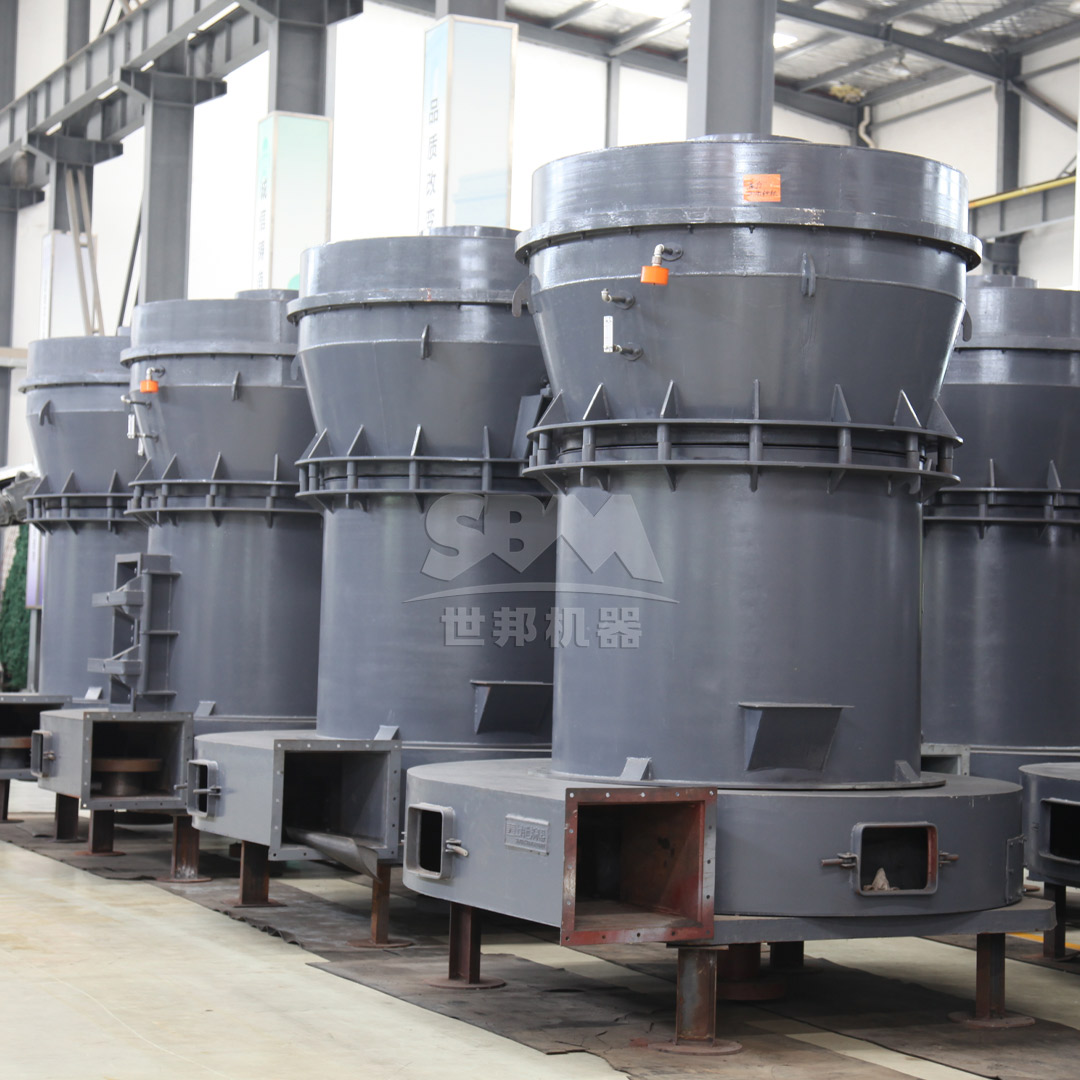
Integrated Classification System
A key component of modern fine-grinding mills is the integrated dynamic classifier, often a high-precision turbo classifier. As the ground material is carried upward by an air stream, the classifier rotor spins at high speed. Centrifugal force rejects coarse particles, sending them back to the grinding zone for further size reduction. Only particles fine enough to overcome the classifier’s centrifugal force pass through and are collected. This closed-circuit system ensures a tightly controlled top particle size and a narrow PSD.
System Components and Flow
- Feeding: Pre-crushed material is fed centrally onto the grinding table.
- Grinding: The rotating table centrifugal force moves material under the rollers, where it is ground.
- Drying/Transport: Hot air (or inert gas for safety) injected from the bottom dries the material and transports the fine particles upward.
- Classification: The air-powder stream enters the integrated classifier for separation.
- Collection: Fine product is collected in bag filters or cyclones. Coarse rejects fall back to the table.
Recommended Grinding Solutions for High-Purity Graphite
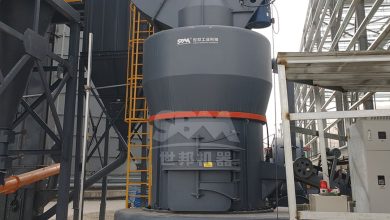
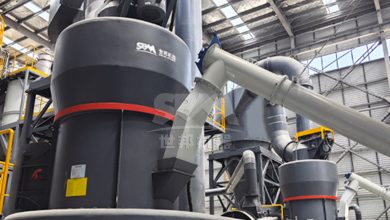
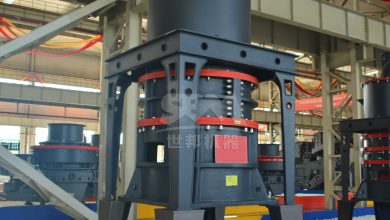
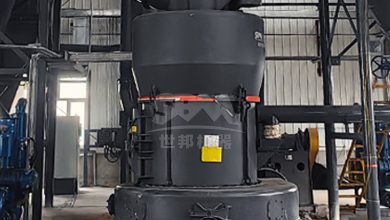
Selecting the right grinding mill is critical for productivity and product quality. For the demanding requirements of high-purity graphite production—specifically the need for ultra-fine powders (325-2500 mesh) with high throughput and minimal contamination—our SCM Series Ultrafine Mill represents an optimal solution.
SCM Ultrafine Mill: Engineered for Precision and Purity
This mill is specifically designed for producing fine and ultra-fine powders from hard, abrasive materials like calcined coke. Its design directly addresses the challenges of graphite processing:
- Ultra-Fine Output with Precision: Capable of achieving a final fineness between 325 to 2500 mesh (D97 ≤ 5μm), it meets the most stringent requirements for downstream purification. Its vertical turbine classifier ensures precise particle size cuts and a uniform product with no coarse grit contamination.
- High Efficiency & Energy Savings: Utilizing a layered grinding principle with multiple grinding rings and rollers, it offers a capacity approximately twice that of jet mills while reducing energy consumption by up to 30%. Intelligent control systems provide automatic feedback on product fineness.
- Durability and Low Contamination: The grinding rollers and rings are made from special wear-resistant materials, extending service life significantly. Crucially, the innovative design of the grinding chamber features a screw structure without bearings, eliminating a major potential source of lubricant contamination and ensuring stable, clean operation essential for high-purity applications.
- Environmental Compliance: The system integrates a high-efficiency pulse dust collector exceeding international standards and features soundproofing for operation below 75dB, ensuring a clean and safe working environment.
For larger scale operations or where the target fineness is in the coarse to medium-fine range (30-325 mesh), our MTW Series Trapezium Mill serves as an excellent primary or secondary grinding unit. Its advantages include a high-capacity range (3-45 T/H), exceptional wear protection with combined shovel blades, and an efficient curved air duct that minimizes energy loss. The integral bevel gear transmission provides high efficiency and reliability.

Conclusion
The production of high-purity graphite is a complex alchemy of thermal and mechanical processes. Within this chain, fine grinding is not merely a size reduction step but a critical determinant of purification efficacy and final product performance. Modern grinding mills based on material bed comminution and integrated classification, such as the SCM Ultrafine Mill, provide the necessary technological edge. They deliver the precise, clean, and energy-efficient pulverization required to transform calcined carbon into the high-quality powders that form the foundation of advanced graphite materials, enabling progress in energy storage, electronics, and beyond.