Does the Furnace Process for Fiberglass Production Require a Pyrophyllite Grinding Mill?
Introduction: The Critical Role of Raw Material Preparation
The furnace process for fiberglass production is a high-temperature, precision-driven operation where the quality, consistency, and chemical purity of the raw batch directly determine the final properties of the glass fibers. Among the various raw materials used—such as silica sand, limestone, and alumina—pyrophyllite (Al2Si4O10(OH)2) is a valued component. It acts as a source of alumina and silica while contributing to the melt’s viscosity and stability. A fundamental question for production engineers is whether this process specifically requires a dedicated pyrophyllite grinding mill. The answer is a resounding yes, and the selection of the appropriate milling technology is not merely an option but a cornerstone for efficiency, product quality, and cost control.
The Imperative for Fine and Consistent Pyrophyllite Powder
In the context of a glass melting furnace, the homogeneity of the raw material batch is paramount. Pyrophyllite, as mined or quarried, comes in lumps of varying sizes. Introducing coarse or irregularly sized particles into the batch leads to a host of operational challenges:
- Incomplete Melting: Larger particles melt slower than finer ones, creating inhomogeneities in the glass melt. This can lead to cords, stones, and seeds (small gaseous inclusions) in the final fiber, severely compromising its tensile strength and optical properties.
- Reduced Furnace Efficiency: The furnace must expend more energy and time to fully dissolve coarse particles, increasing specific energy consumption (kWh/ton of glass) and reducing overall throughput.
- Batch Segregation: During handling and charging, materials of different particle sizes tend to separate. This segregation results in a chemically inconsistent feed to the furnace, causing fluctuations in the molten glass’s composition and properties.
- Refractory Wear: Unmelted, dense particles can settle and accelerate wear on the furnace bottom refractories.
Therefore, the primary function of a pyrophyllite grinding mill is to transform raw pyrophyllite into a fine, uniformly sized powder, typically ranging from 100 mesh (150μm) to 325 mesh (45μm) or even finer for high-performance applications. This ensures rapid dissolution, perfect batch homogeneity, and a stable, high-quality melt.

Key Considerations in Selecting a Pyrophyllite Grinding Mill
Not all grinding mills are created equal for this specific task. The ideal mill must balance several critical factors:
- Fineness Control & Product Uniformity: The ability to produce a tightly controlled particle size distribution (PSD) is non-negotiable. A wide PSD negates the benefits of grinding.
- Contamination Control: The grinding process must not introduce metallic impurities (iron) from wear parts, as even trace amounts can color the glass and affect its properties.
- Energy Efficiency: Grinding is an energy-intensive process. Selecting a mill with high grinding efficiency directly lowers operational costs.
- System Reliability & Maintenance: Downtime for maintenance or liner/roller replacement disrupts the entire supply chain to the furnace.
- Environmental Compliance: The system must operate with minimal dust emission and acceptable noise levels.
Recommended Milling Solutions for Pyrophyllite Processing
Based on the stringent requirements of fiberglass production, two types of grinding mills stand out as optimal solutions, each catering to different scales and fineness targets.
1. For General Fineness (30-325 mesh / 600-45μm): The MTW Series European Trapezium Mill
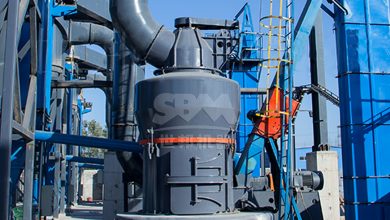
For most furnace process requirements where pyrophyllite needs to be ground to a consistent 30-325 mesh powder, the MTW Series European Trapezium Mill is an exceptionally robust and efficient choice. Its design directly addresses the needs of mineral processing for industrial furnaces.
- Precision & Stability: The integral bevel gear drive ensures smooth, stable transmission with 98% efficiency, providing consistent grinding power and reliable operation critical for continuous feed to a glass furnace.
- Durability & Low Contamination: Its anti-wear shovel design and wear-resistant volute structure are specifically engineered for abrasive minerals like pyrophyllite. This reduces the wear rate of key components, minimizing maintenance frequency and the risk of metallic contamination—a vital concern for glass quality.
- Optimized Efficiency: The curved air duct design reduces airflow resistance, enhancing the classification efficiency of the internal separator. This results in a more uniform product with less over-grinding, saving energy. For a medium-scale fiberglass plant, a model like the MTW175G, with a capacity of 9.5-25 tons per hour, can reliably supply the finely ground pyrophyllite needed for sustained furnace operation.

2. For Ultra-Fine or High-Purity Requirements (325-2500 mesh / 45-5μm): The SCM Series Ultrafine Mill
As fiberglass technology advances towards specialized E-glass, S-glass, or other high-performance variants, the demand for ultra-fine, high-purity raw materials increases. For grinding pyrophyllite to superfine levels (e.g., above 600 mesh) for enhanced reactivity or for applications requiring extremely low iron content, the SCM Series Ultrafine Mill is the definitive solution.
- Superior Fineness & Classification: The SCM mill excels in producing powders in the 325 to 2500 mesh range. Its high-precision vertical turbine classifier ensures sharp particle size cuts, eliminating coarse particles and delivering a product of exceptional uniformity. This level of consistency can significantly improve melt homogeneity for premium glass formulations.
- High Efficiency & Clean Operation: With a grinding mechanism that offers twice the capacity of traditional jet mills at 30% lower energy consumption, it is both economical and powerful. The fully sealed grinding chamber and pulse dust collection system with efficiency exceeding 99% guarantee an environmentally clean operation with no product loss, which is crucial for managing costly raw materials.
- Low Contamination Design: The use of special material rollers and rings extends service life and reduces the potential for wear-induced contamination. For a production line requiring ultra-fine pyrophyllite, the SCM1000 model, with an output of 1.0-8.5 tons per hour and fineness adjustable up to 2500 mesh, provides the perfect balance of capacity and precision.
Integration into the Fiberglass Production Line
The grinding mill is not an isolated unit but a key component in the raw material preparation circuit. It is typically preceded by primary crushing (e.g., a jaw crusher) to reduce feed size to the mill’s specification (≤50mm for MTW, ≤20mm for SCM). The ground powder is then conveyed to automated batch mixing systems, where it is blended with other precisely weighed and ground materials before being charged into the furnace.

Conclusion: An Essential Investment for Quality and Efficiency
The question of whether the furnace process for fiberglass production requires a pyrophyllite grinding mill has a clear and technical justification. It is an essential requirement, not an auxiliary step. Investing in a dedicated, high-performance grinding system—such as the versatile MTW Series European Trapezium Mill for standard fineness or the advanced SCM Series Ultrafine Mill for specialized applications—directly translates into tangible benefits: a more stable and efficient furnace operation, superior glass fiber quality with fewer defects, reduced energy consumption per ton of output, and lower long-term maintenance costs. In the competitive landscape of fiberglass manufacturing, optimizing raw material preparation through the right milling technology is a strategic decision that underpins both product excellence and operational profitability.