
Custom Silicon Carbide Grinding Mill Manufacturers: How to Choose the Best Supplier
Introduction
Silicon carbide (SiC) is an exceptionally hard synthetic compound with outstanding thermal conductivity, chemical inertness, and mechanical strength. These properties make it indispensable in industries ranging from abrasives and refractories to advanced ceramics and semiconductors. However, processing silicon carbide presents significant challenges due to its extreme hardness (9.5 on the Mohs scale) and abrasive nature. Selecting the right custom grinding mill manufacturer is therefore critical to achieving optimal particle size distribution, production efficiency, and operational economy.
This comprehensive guide examines the key factors to consider when choosing a supplier for custom silicon carbide grinding mills, with particular emphasis on technical capabilities, equipment performance, and long-term operational value.
Understanding Silicon Carbide Grinding Requirements
Before evaluating potential suppliers, it’s essential to understand the specific grinding requirements for silicon carbide applications. Different industries demand distinct particle size distributions and purity levels:
- Abrasives Industry: Requires controlled particle shapes with sharp edges for cutting efficiency
- Technical Ceramics: Needs ultra-fine powders with narrow size distributions
- Refractories: Utilizes various grain sizes for optimal packing density
- Semiconductor Substrates: Demands exceptionally pure, sub-micron powders
The extreme hardness of silicon carbide (approximately 25 GPa) necessitates specialized grinding equipment with superior wear resistance and precise classification capabilities. Conventional milling systems often suffer from excessive wear, contamination, and inconsistent particle size control when processing SiC.
Key Selection Criteria for Custom Grinding Mill Manufacturers
Technical Expertise and Experience
A manufacturer’s technical expertise should be your primary consideration. Look for suppliers with:
- Proven experience in designing mills for hard, abrasive materials
- Comprehensive understanding of particle size reduction mechanics
- Ability to provide customized solutions for specific SiC applications
- Technical support team with materials science background
Established manufacturers typically maintain extensive application laboratories where they can test your specific silicon carbide material and recommend optimal grinding parameters.
Equipment Performance and Specifications
Evaluate the technical specifications of proposed grinding systems with particular attention to:
- Wear Resistance: Critical for maintaining performance and avoiding contamination
- Energy Efficiency: Grinding hard materials consumes significant power
- Classification Accuracy: Essential for achieving target particle distributions
- Operational Flexibility: Ability to produce different size ranges
Advanced grinding systems incorporate specialized wear materials, precision classification technology, and intelligent control systems to optimize SiC processing.
Customization Capabilities
True customization extends beyond simple modifications to existing designs. Seek manufacturers who can:
- Design grinding systems around your specific throughput requirements
- Integrate with existing process equipment and material handling systems
- Provide specialized wear solutions for different SiC grades
- Offer flexible automation and control options
The most capable suppliers employ modular design approaches that allow for tailored solutions while maintaining manufacturing efficiency.
Quality Assurance and Testing Facilities
Reputable manufacturers maintain rigorous quality control systems and comprehensive testing capabilities:
- Material certification for critical wear components
- Factory acceptance testing with customer participation
- Application laboratories for process optimization
- Documented quality management systems (ISO 9001)
Request documentation of quality procedures and visit manufacturing facilities when possible to assess capabilities firsthand.
Recommended Grinding Solutions for Silicon Carbide
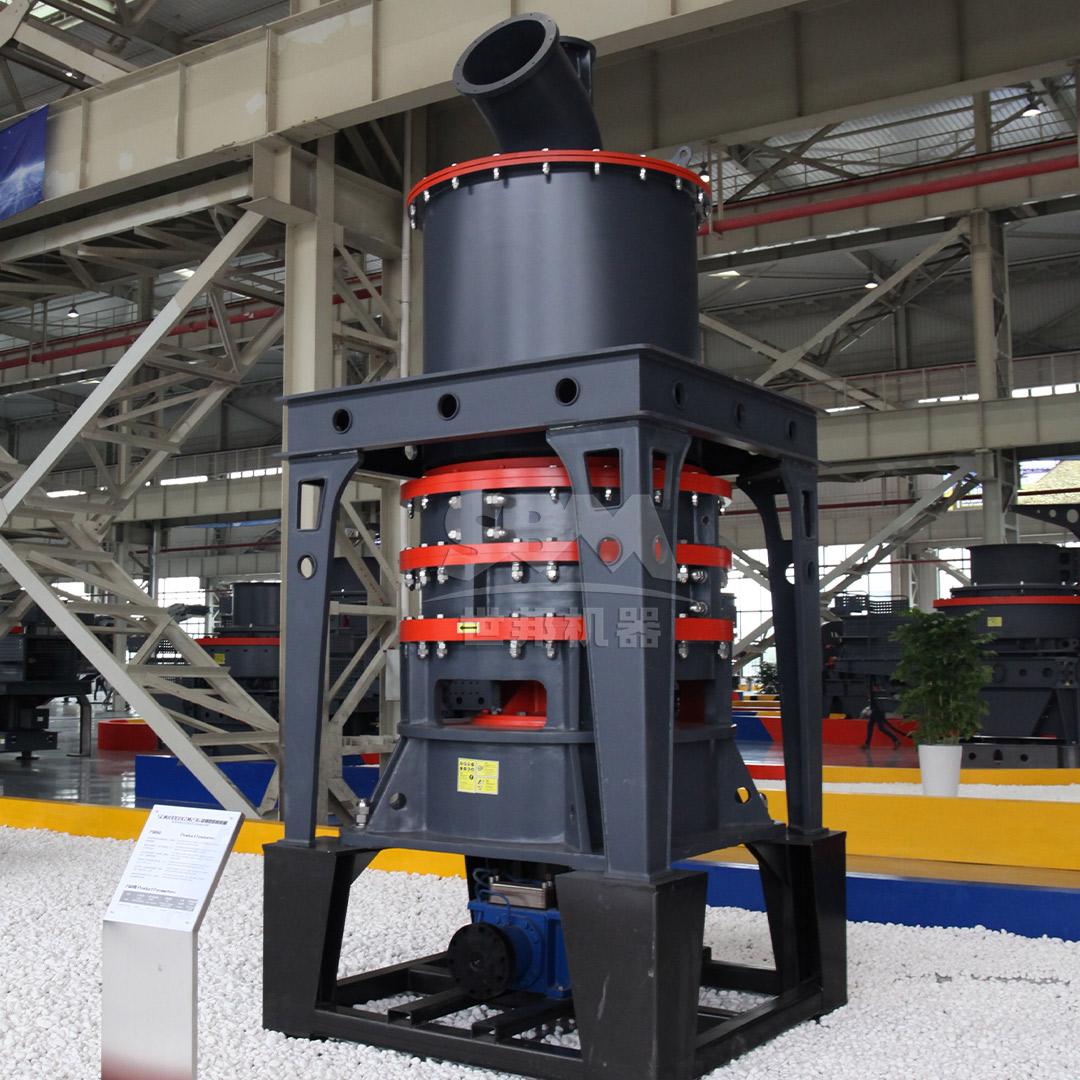
SCM Series Ultrafine Mill (45-5μm)
For applications requiring ultra-fine silicon carbide powders, the SCM Series Ultrafine Mill represents an optimal solution. This advanced grinding system delivers exceptional performance for SiC processing with the following advantages:
- High Efficiency & Energy Savings: With capacity twice that of jet mills and 30% lower energy consumption, the SCM series significantly reduces operating costs while maintaining superior product quality.
- Precision Classification: The vertical turbine classifier ensures accurate particle size cuts from 325 to 2500 mesh (D97≤5μm), eliminating coarse particle contamination and delivering uniform product quality.
- Durable Construction: Specially hardened grinding rollers and rings provide extended service life—multiple times longer than conventional components—while the bearing-free screw grinding chamber ensures stable operation.
- Environmental Compliance: Pulse dust collection exceeds international standards, and soundproof chamber design maintains noise levels below 75dB.
The SCM series operates through a multi-layer grinding principle where the main motor drives three layers of grinding rings. Material is dispersed into the grinding path by centrifugal force, undergoes progressive compression grinding, and is finally collected by the cyclone collector and pulse dust removal system.
With models ranging from SCM800 (0.5-4.5 ton/h) to SCM1680 (5.0-25 ton/h), the series offers scalable solutions for various production requirements while maintaining consistent fine powder quality.
MTW Series Trapezium Mill (600-45μm)
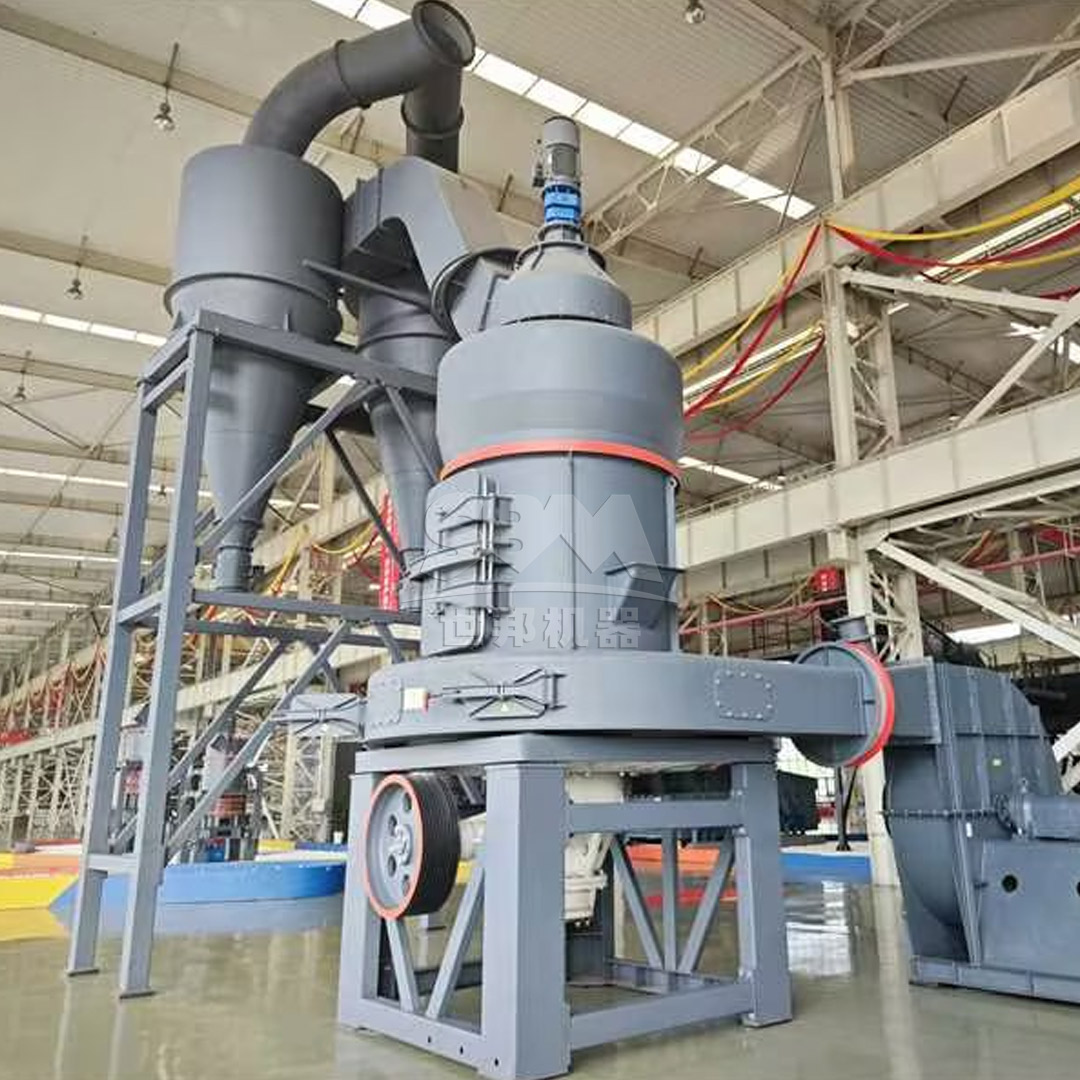
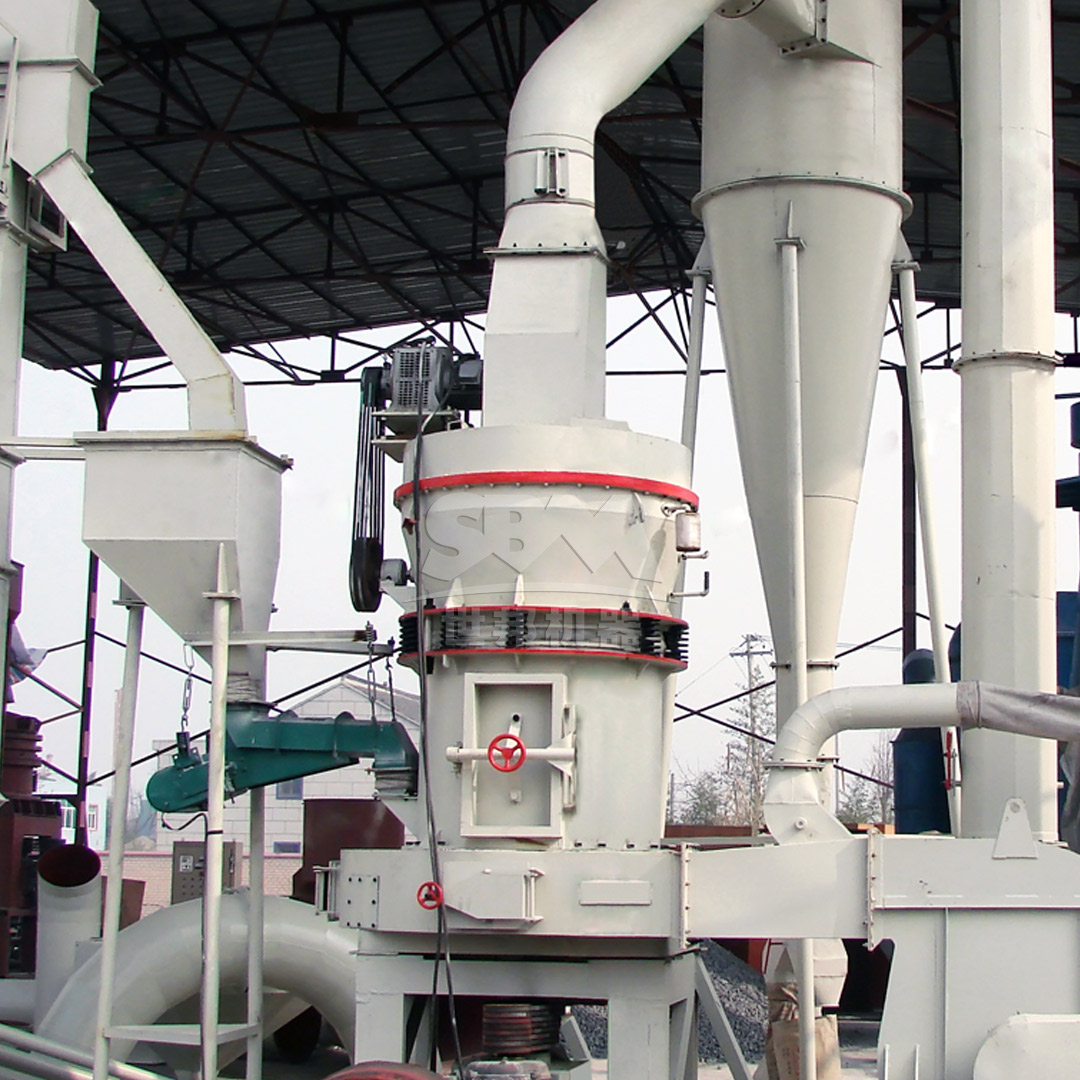
For medium to fine grinding of silicon carbide, the MTW Series Trapezium Mill provides robust performance and operational economy. This European-style grinding mill incorporates several advanced features specifically beneficial for abrasive materials:
- Anti-wear Shovel Design: Combined shovel blades reduce maintenance costs while curved design extends grinding roller service life.
- Optimized Air Flow Path: Curved air channel design minimizes energy loss with transmission efficiency improvements, protected by high-strength wear plates.
- Integrated Bevel Gear Transmission: Achieves 98% transmission efficiency while saving space and reducing installation costs.
- Wear-resistant Volute Structure: Non-blocking design enhances air classification efficiency while reducing maintenance costs by 30%.
The MTW series operates through a planetary grinding principle where the main motor drives grinding rollers to revolve around the central axis while rotating themselves to generate centrifugal force. Shovels throw material between the grinding ring and rollers to form a material layer, achieving efficient crushing through compression with precise particle size control via the classification system.
Available in multiple configurations from MTW110 (3-9 ton/h) to MRN218 (15-45 ton/h), the MTW series offers flexible solutions for various silicon carbide processing applications.
Technical Comparison: Key Performance Indicators
| Parameter | SCM Ultrafine Mill | MTW Trapezium Mill | Conventional Ball Mill |
|---|---|---|---|
| Output Fineness | 325-2500 mesh | 30-325 mesh | 200-400 mesh |
| Energy Consumption | 30-40% lower | 20-30% lower | Baseline |
| Wear Component Life | 3-5x longer | 2-3x longer | Baseline |
| Noise Level | ≤75 dB | ≤80 dB | 85-95 dB |
| Dust Emission | <20 mg/m³ | <30 mg/m³ | 50-100 mg/m³ |
After-Sales Support and Service Considerations
Comprehensive after-sales support is essential for maintaining optimal grinding performance. Evaluate potential suppliers based on:
- Spare Parts Availability: Critical wear components should be readily available
- Technical Training: Operator and maintenance personnel training programs
- Remote Monitoring: Advanced systems offering performance monitoring and predictive maintenance
- Service Response Time: Defined response times for technical support and emergency repairs
Leading manufacturers provide complete service packages including installation supervision, commissioning assistance, and ongoing performance optimization.
Cost Analysis: Total Cost of Ownership
When evaluating custom grinding mill suppliers, consider the total cost of ownership rather than just the initial purchase price. Key cost components include:
- Capital Investment: Equipment purchase and installation costs
- Energy Consumption: Power requirements across the operational lifecycle
- Wear Parts Replacement: Frequency and cost of replacing grinding elements
- Maintenance Labor: Routine maintenance and unexpected repairs
- Production Losses: Downtime impact on overall production capacity
Advanced grinding systems typically offer superior total cost of ownership despite higher initial investment, through reduced energy consumption, extended component life, and higher operational reliability.
Future-Proofing Your Investment
Silicon carbide applications continue to evolve, particularly in advanced ceramics and semiconductor sectors. When selecting a grinding mill supplier, consider their ability to support future requirements:
- Scalability: Equipment that can accommodate increased production demands
- Technology Roadmap: Manufacturers committed to ongoing product improvement
- Modular Design: Systems that can be upgraded as new technologies emerge
- Process Integration: Compatibility with emerging production methodologies
Forward-thinking suppliers maintain active research and development programs specifically focused on hard material processing challenges.
Conclusion
Selecting the right custom silicon carbide grinding mill manufacturer requires careful evaluation of technical capabilities, equipment performance, and long-term support. The extreme hardness and abrasive nature of SiC demand specialized grinding solutions that combine wear resistance, precision classification, and operational efficiency.
Both the SCM Series Ultrafine Mill and MTW Series Trapezium Mill represent advanced solutions specifically engineered for challenging materials like silicon carbide. With their combination of precision engineering, durable construction, and energy-efficient operation, these systems deliver optimal performance for the most demanding SiC processing applications.
By thoroughly assessing potential suppliers against the criteria outlined in this guide—technical expertise, customization capabilities, quality assurance, and comprehensive support—you can make an informed decision that ensures long-term processing efficiency and product quality for your silicon carbide applications.