Comprehensive Utilization of Magnesium Slag: Applications and Processing Solutions
Introduction
Magnesium slag, a by-product generated during the production of magnesium metal via the Pidgeon process or other metallurgical methods, presents both a significant environmental challenge and a valuable resource opportunity. Historically considered a waste material requiring disposal, advancements in material science and processing technologies have unlocked its potential for high-value applications. This article explores the diverse applications of magnesium slag and examines the critical role of modern grinding and processing equipment in transforming this industrial by-product into a commercially viable resource. The effective utilization of magnesium slag not only contributes to a circular economy but also offers economic benefits by reducing raw material costs and minimizing environmental footprints associated with landfilling.
Chemical and Physical Properties of Magnesium Slag
The composition of magnesium slag is primarily dominated by calcium silicate (Ca2SiO4), alongside other oxides such as MgO, Al2O3, and Fe2O3. Its properties are heavily influenced by the production process and the raw materials used. Typically, magnesium slag exhibits a porous, granular structure with moderate hardness. A key characteristic is its latent hydraulic activity, meaning it can react with water and calcium hydroxide to form cementitious compounds, especially when finely ground. This property forms the basis for its most prominent application as a supplementary cementitious material (SCM). The physical form of raw slag, often in lumps of varying sizes up to 50mm, necessitates efficient size reduction and classification to meet the stringent fineness requirements of downstream applications.
Key Application Areas for Processed Magnesium Slag
1. Construction and Building Materials
This is the largest and most established market for magnesium slag utilization. Finely ground magnesium slag powder is widely used as a partial replacement for Portland cement in concrete. Its pozzolanic and latent hydraulic properties contribute to the long-term strength development, improve durability (especially sulfate resistance), and reduce the heat of hydration in mass concrete pours. Furthermore, processed slag can be used in the production of autoclaved aerated concrete (AAC) blocks, cement clinker raw meal, and as a fine aggregate or filler in certain applications.
2. Soil Stabilization and Amendment
The alkaline nature and mineral content of magnesium slag make it suitable for soil stabilization in road base and sub-base construction. It can improve the bearing capacity and mechanical properties of weak soils. Additionally, it can serve as a soil amendment to adjust pH levels in acidic soils and provide slow-release sources of silicon and calcium for agricultural purposes, though this requires careful management due to potential heavy metal content.
3. Wastewater Treatment
Activated or simply ground magnesium slag has shown promise as an adsorbent for removing phosphates, heavy metals, and other contaminants from industrial wastewater. Its high surface area when finely ground and alkaline properties facilitate precipitation and adsorption processes.
4. Ceramics and Glass-Ceramics
Research indicates that magnesium slag, with its high silica and calcium content, can be used as a raw material in the production of certain types of ceramics, glass-ceramics, and mineral wool. This high-value application route requires precise control over chemical composition and particle size.
The Critical Role of Grinding Technology in Slag Valorization
The transformation of raw magnesium slag into a usable product is fundamentally dependent on efficient and controlled comminution. The target fineness, often measured as specific surface area (Blaine) or particle size distribution (PSD), directly impacts the reactivity and performance of the slag powder. For instance, cement replacement applications typically require a fineness of 400-550 m²/kg Blaine or a particle size where over 95% passes a 45-micron sieve (325 mesh). Achieving this efficiently, with low energy consumption and consistent product quality, is the core challenge.
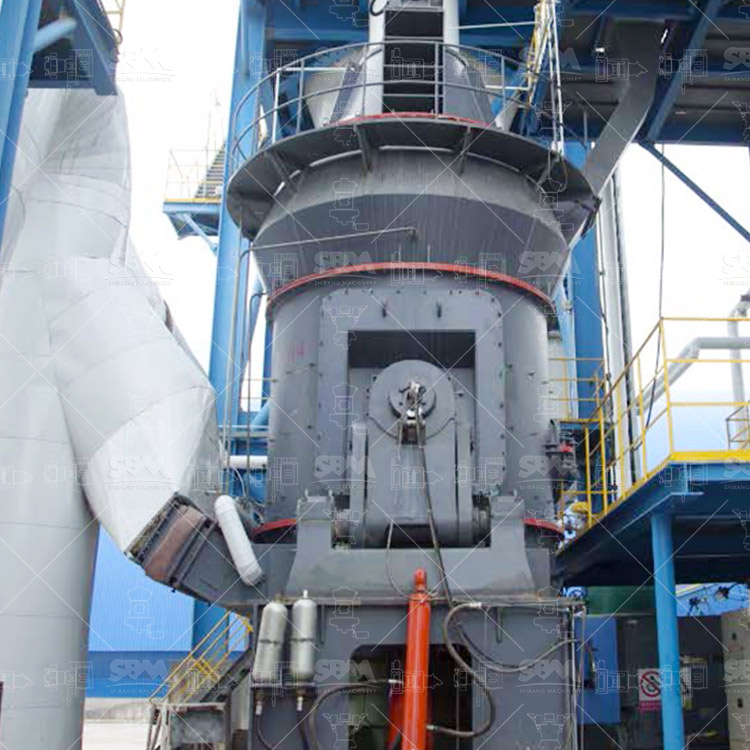
Traditional ball mills, while capable, are often energy-intensive and lack precise particle size control. Modern vertical roller mills and specialized grinding systems offer significant advantages. They operate on the principle of bed comminution, where material is ground between a rotating table and rollers under pressure, leading to higher energy efficiency. Integrated dynamic classifiers allow for real-time adjustment of product fineness, ensuring a consistent and optimal particle size distribution that maximizes the slag’s reactivity.
Recommended Processing Solutions: SCM Ultrafine Mill and LM Vertical Roller Mill
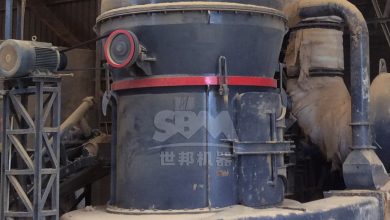
Selecting the right equipment is paramount for a profitable magnesium slag processing operation. For projects aiming to produce high-value, ultra-fine slag powder (e.g., for high-performance concrete or specialty applications), our SCM Series Ultrafine Mill is an ideal solution. This mill is engineered to produce powders in the range of 325 to 2500 mesh (45-5μm D97). Its vertical turbine classification system ensures precise particle size cuts with no coarse powder contamination, resulting in a uniform and highly reactive product. The SCM mill is also highly energy-efficient, offering approximately 30% lower energy consumption compared to traditional jet mills while delivering double the output. Models like the SCM1000, with a main motor power of 132kW and a capacity of 1.0-8.5 tons per hour, provide an excellent balance of performance and cost for medium-scale slag grinding plants.
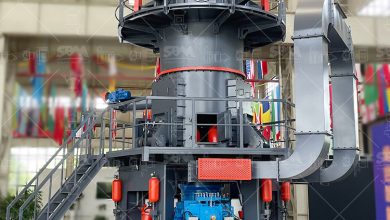
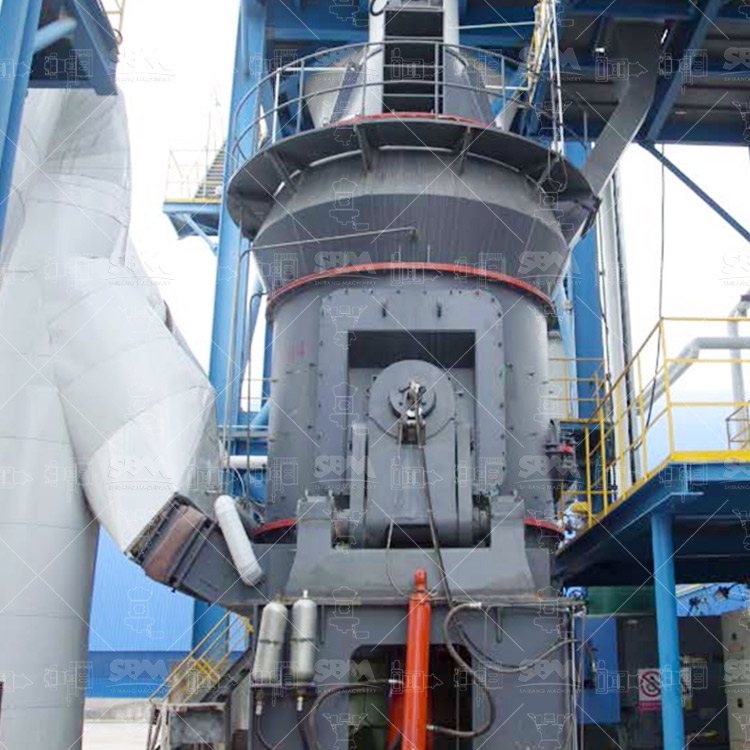
For large-scale production of slag powder for general construction materials, where the target fineness is typically 30-325 mesh (600-45μm), our LM Series Vertical Roller Mill stands out. Specifically, the LM Vertical Slag Mill models (e.g., LM190N, LM220N) are designed for the express purpose of grinding granulated blast furnace slag and are perfectly suited for magnesium slag. Their集约化设计 integrates crushing, grinding, drying, and classification in a single unit, reducing footprint by 50%. Key advantages include exceptionally low operating costs due to wear parts lasting 3 times longer than in conventional systems and energy savings of 30-40% compared to ball mill systems. The全密封负压运行 ensures dust emissions remain below 20mg/m³, meeting stringent environmental standards. With capacities ranging from 4 t/h (LM130N) to over 110 t/h (LM370N), this series can cater to any production requirement.

Processing Flow and System Integration
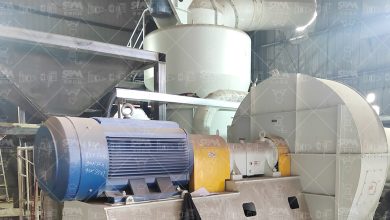
A typical magnesium slag processing line involves several stages. First, raw slag from storage is fed via a vibrating feeder to a jaw crusher or hammer mill for primary size reduction to below 20-50mm, depending on the grinding mill’s feed requirement. The pre-crushed material is then elevated to a raw material bin. From there, it is metered into the core grinding mill—such as the SCM Ultrafine Mill or LM Vertical Mill. Within the mill, grinding, drying (if a hot air generator is integrated), and classification occur. The fine product is conveyed by airflow to a high-efficiency cyclone collector and a subsequent pulse-jet baghouse for final powder collection. The collected powder is transported to product silos via screw conveyors and airslides. The entire system is controlled by a centralized PLC, which monitors and adjusts parameters like feed rate, grinding pressure, classifier speed, and temperature to maintain optimal and stable operation.
Economic and Environmental Benefits
Investing in advanced grinding technology for magnesium slag utilization yields substantial returns. Economically, it converts a waste liability (disposal costs) into a revenue-generating product. It reduces the need for quarrying virgin raw materials like limestone and clay in cement production, lowering material costs. The energy-efficient design of modern mills like the SCM and LM series minimizes operational expenses. Environmentally, it significantly reduces the solid waste burden, conserves natural resources, and lowers the carbon footprint of associated industries. Using slag in cement reduces the clinker factor, directly cutting CO2 emissions from cement manufacturing. Furthermore, the enclosed and dust-controlled design of recommended equipment prevents secondary pollution during the processing stage.
Conclusion
The comprehensive utilization of magnesium slag represents a smart convergence of environmental stewardship and industrial efficiency. Its successful transformation from waste to resource hinges on advanced processing technologies capable of delivering precise particle size control with high energy efficiency and operational reliability. Equipment such as the SCM Ultrafine Mill for specialty ultra-fine products and the LM Vertical Roller Mill for large-volume construction material production provide tailored, state-of-the-art solutions to meet these challenges. By adopting these technologies, industries can unlock the full value of magnesium slag, contributing to sustainable development goals while enhancing economic competitiveness through the creation of high-performance, low-carbon building materials.