Coal Kaolin (China Clay): Processing Methods and Industrial Applications
Introduction
Coal kaolin, also known as coal measure kaolin or China clay, is a unique sedimentary kaolin associated with coal seams. Its formation process, typically involving the alteration of volcanic ash in swampy, coal-forming environments, results in a material with distinct properties compared to primary kaolins. While it shares the core mineralogy of kaolinite (Al2Si2O5(OH)4), coal kaolin often contains higher levels of carbonaceous matter and other impurities, necessitating specialized processing to unlock its significant industrial value. This article explores the key processing methodologies and the resulting high-value applications of this versatile mineral.
From Raw Ore to Refined Product: Core Processing Stages
The transformation of raw coal kaolin into a marketable product involves a multi-stage process designed to remove impurities, control particle size, and enhance specific properties.
1. Crushing and Pre-Beneficiation
The process begins with the primary crushing of mined ore to a manageable size, typically below 50mm. Pre-beneficiation may involve screening or simple washing to remove coarse gangue. For efficient initial size reduction of run-of-mine coal kaolin, robust equipment like hammer mills or jaw crushers are employed.
2. Calcination: The Key to Functional Properties
Calcination is a critical thermal treatment process that defines many of coal kaolin’s industrial uses. By heating the clay to temperatures between 600°C and 1100°C in a controlled atmosphere, chemically bound water is driven off, transforming kaolinite into metakaolin (at ~600°C) and eventually mullite (at higher temperatures). This process:
- Removes Organic Carbon: Burns off carbonaceous matter, significantly improving brightness and whiteness.
- Enhances Hardness and Abrasion Resistance: The formation of mullite crystals creates a hard, inert material.
- Increases Porosity and Surface Area: Metakaolin exhibits high pozzolanic activity.
- Alters Optical and Electrical Properties: Increases opacity and electrical resistivity.
3. Grinding and Classification: Achieving Precision Particle Size
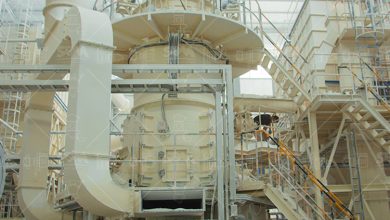
Post-calcination, the material must be finely ground and classified to meet stringent particle size distribution requirements for various applications. This is one of the most technologically demanding steps. The goal is to achieve a fine, uniform powder without introducing contaminants or causing excessive wear on equipment.
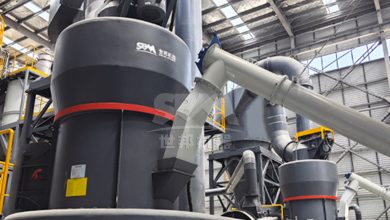
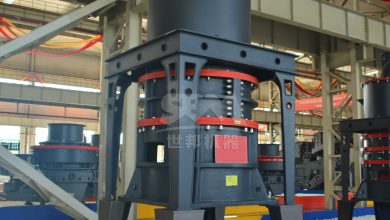
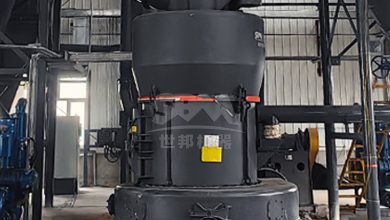
For coarse to medium-fine grinding (e.g., from 600μm down to 45μm/325 mesh), the MTW Series European Trapezium Mill represents an optimal solution. Its advantages are particularly relevant for processing calcined kaolin:
- Anti-wear Design: The combined shovel blades and wear-resistant volute structure are engineered to handle the abrasive nature of calcined clay, reducing maintenance costs by up to 30%.
- High-Precision Classification: An integral bevel gear-driven classifier ensures precise particle size cuts from 30 to 325 mesh, which is crucial for product consistency in applications like paper coating or polymer filling.
- High Capacity & Efficiency: With capacities ranging from 3 to 45 tons per hour, it supports large-scale production while its optimized arc air duct minimizes energy loss.
For ultra-fine and high-value applications, grinding down to 5μm (2500 mesh) is required. This demands advanced milling technology. The SCM Series Ultrafine Mill is specifically designed for this purpose and is highly recommended for producing premium-grade coal kaolin products.
- Ultra-Fine Output: It reliably produces powders in the range of 325 to 2500 mesh (45-5μm), essential for high-performance fillers in plastics, paints, and advanced ceramics.
- High-Efficiency Classification: Its vertical turbine classifier prevents coarse powder mixing, guaranteeing a uniform and narrow particle size distribution—a key quality parameter.
- Energy-Saving Operation: The mill’s grinding principle offers capacity twice that of traditional jet mills while consuming 30% less energy, significantly lowering operational costs.
- Durability & Cleanliness: Special material rollers and a fully sealed, negative-pressure system with high-efficiency pulse dust collection ensure long service life and an environmentally clean workshop.
4. Surface Modification
To improve compatibility with organic matrices like plastics or rubber, the kaolin surface may be treated with coupling agents (e.g., silanes). This hydrophobic treatment enhances dispersion, mechanical strength, and moisture resistance in composite materials.
Industrial Applications of Processed Coal Kaolin
The specific processing route determines the final application of the coal kaolin.
1. Fillers in Polymers, Paints, and Adhesives
Fine-ground and calcined kaolin is a major extender and functional filler. It improves tensile strength, abrasion resistance, and electrical properties in PVC cables, enhances barrier properties in films, and provides reinforcement and matting effects in paints and sealants.
2. Paper Coating and Filling
High-brightness calcined kaolin is used as a coating pigment to impart superior opacity, gloss, and printability to paper. Its plate-like structure and light-scattering ability make it a cost-effective alternative to more expensive TiO2.
3. Ceramics and Refractories
In ceramics, kaolin provides plasticity and green strength. Calcined kaolin, with its developed mullite phase, is a key component in refractory bricks and shapes for high-temperature industries due to its excellent thermal stability and resistance to slag attack.
4. Cement and Concrete Additives
Metakaolin from calcined kaolin is a highly reactive pozzolan. When used as a partial replacement for Portland cement, it significantly enhances concrete’s compressive strength, durability, and resistance to chemical attack, contributing to more sustainable construction.
5. Specialty Applications
Ultra-fine, high-purity grades find use in advanced ceramics, catalyst supports, and as a functional additive in fiberglass and rubber. Its controlled porosity and chemical inertness are valuable assets.
Conclusion
Coal kaolin is a resource of substantial economic importance, but its value is fully realized only through sophisticated processing. The journey from raw, impure clay to a high-performance industrial mineral hinges on precise calcination and, critically, advanced grinding and classification technology. The selection of grinding equipment directly impacts product fineness, uniformity, production efficiency, and ultimately, market competitiveness. For producers aiming to serve the high-end markets for fillers, coatings, and advanced materials, investing in efficient and precise milling systems like the SCM Series Ultrafine Mill for micron-level products or the robust MTW Series European Trapezium Mill for coarser grades is not just an operational decision, but a strategic one. These technologies enable the consistent production of quality-controlled coal kaolin products that meet the exacting demands of modern industry.