Challenge of Grinding Granite Ore: Producing Incredible Fineness with Giant Mill Machines
Introduction: The Geological Challenge of Granite Comminution
Granite, an igneous rock composed primarily of quartz, feldspar, and mica, presents one of the most demanding challenges in mineral processing. With Mohs hardness ratings of 6-7 for quartz and complex interlocking crystalline structures, achieving ultra-fine powder specifications requires sophisticated milling technology. The transformation of raw granite ore into high-value powders ranging from construction materials to industrial fillers demands equipment capable of handling extreme abrasion while maintaining precise particle size distribution.
The fundamental challenge lies in granite’s heterogeneous composition. While feldspar components may fracture relatively easily, quartz crystals require substantially more energy to comminute. This differential hardness creates processing inefficiencies in conventional mills, where softer components may become over-ground while harder particles remain coarse. Furthermore, the high silica content accelerates wear on grinding components, dramatically increasing operational costs without proper equipment selection.
The Evolution of Granite Grinding Technology
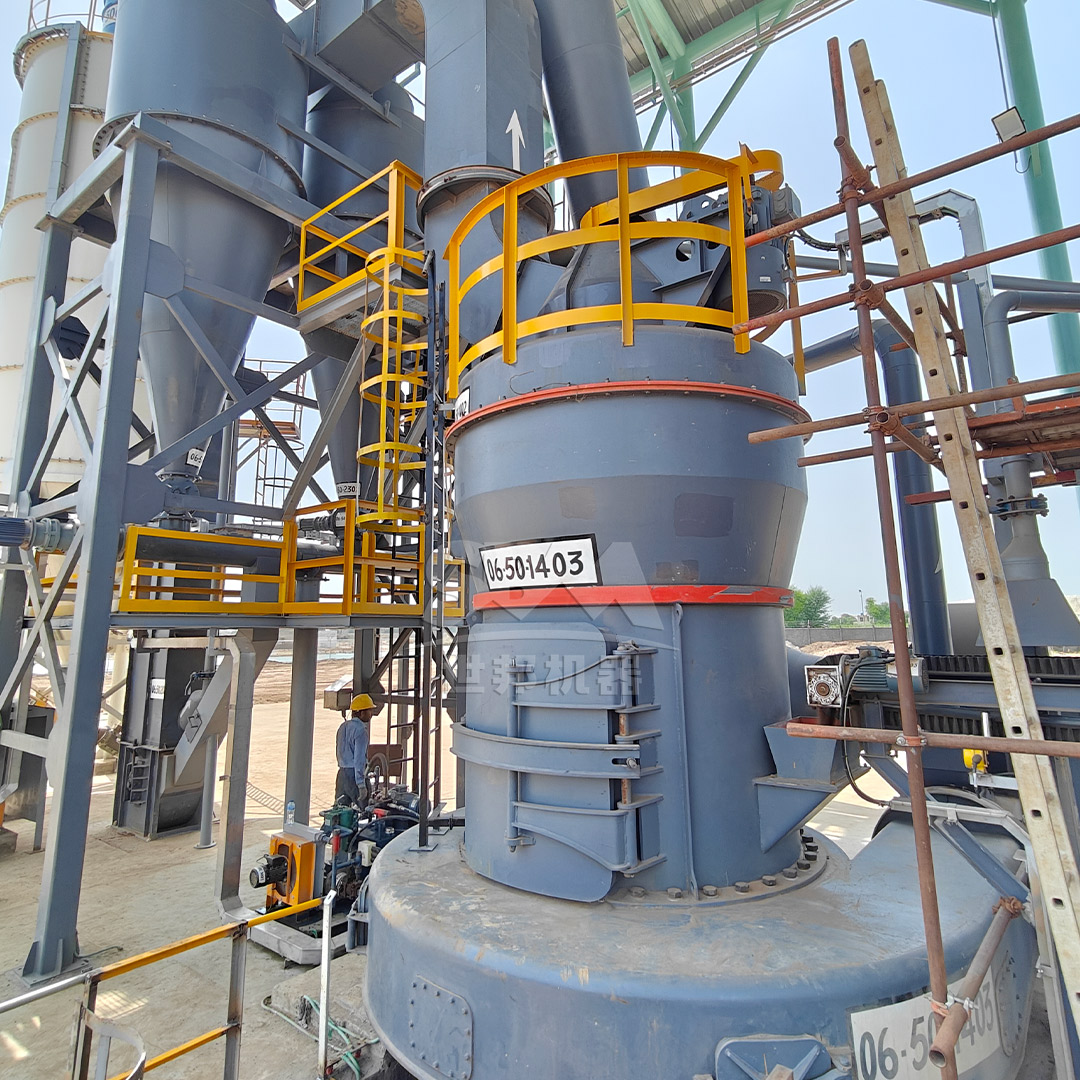
Traditional approaches to granite size reduction relied heavily on jaw crushers for primary breaking followed by cone crushers for secondary reduction, with ball mills handling the final grinding stages. While functional, this multi-stage approach suffered from high energy consumption, significant media wear, and limited control over final particle distribution. The advent of vertical roller mills and advanced classifier systems revolutionized granite processing by integrating multiple comminution stages into single units with dramatically improved efficiency.
Modern granite grinding technology has shifted toward pressurized grinding systems that utilize particle-bed comminution principles rather than impact or attrition alone. This approach applies pressure to material layers between grinding elements, creating inter-particle stresses that fracture granite along natural crystalline boundaries. The result is significantly higher energy efficiency – often 30-50% better than traditional methods – with reduced wear rates and superior particle shape characteristics.
Technical Requirements for Ultra-Fine Granite Powder Production
Producing granite powders in the 5-45μm range (approximately 325-2500 mesh) demands equipment capable of overcoming several specific technical challenges:
- Abrasion Resistance: Grinding elements must withstand prolonged contact with quartz particles without significant degradation
- Precision Classification: Efficient separation of properly ground particles prevents over-grinding and energy waste
- Thermal Management: Granite grinding generates substantial heat that can affect material properties and equipment longevity
- Dust Control: Silica dust presents serious health hazards requiring advanced containment systems
Meeting these requirements necessitates mills specifically engineered for hard, abrasive materials with robust construction, advanced material science in wear components, and integrated air classification systems capable of precise cuts in the micron range.
Advanced Milling Solutions for Granite Applications
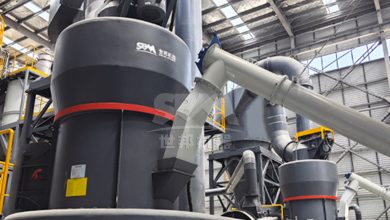
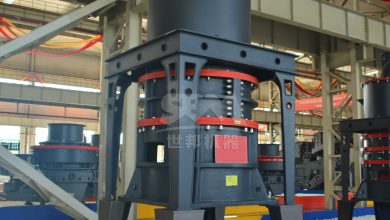
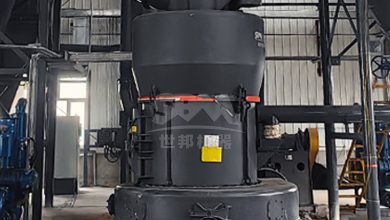
For operations requiring the finest granite powders, particularly in the 5-45μm range, the SCM Series Ultrafine Mill represents a technological breakthrough. Engineered specifically for challenging materials like granite, this mill combines several innovations that address the unique difficulties of ultra-fine granite processing.
The SCM Ultrafine Mill’s vertical turbine classification system achieves remarkable precision in particle size control, with output fineness ranging from 325 to 2500 mesh (D97 ≤5μm). Its unique grinding chamber design utilizes special material rollers and grinding rings that demonstrate exceptional wear resistance against granite’s abrasive components. With capacity ranging from 0.5 to 25 tons per hour depending on model selection, the SCM series provides scalable solutions for operations of various sizes.
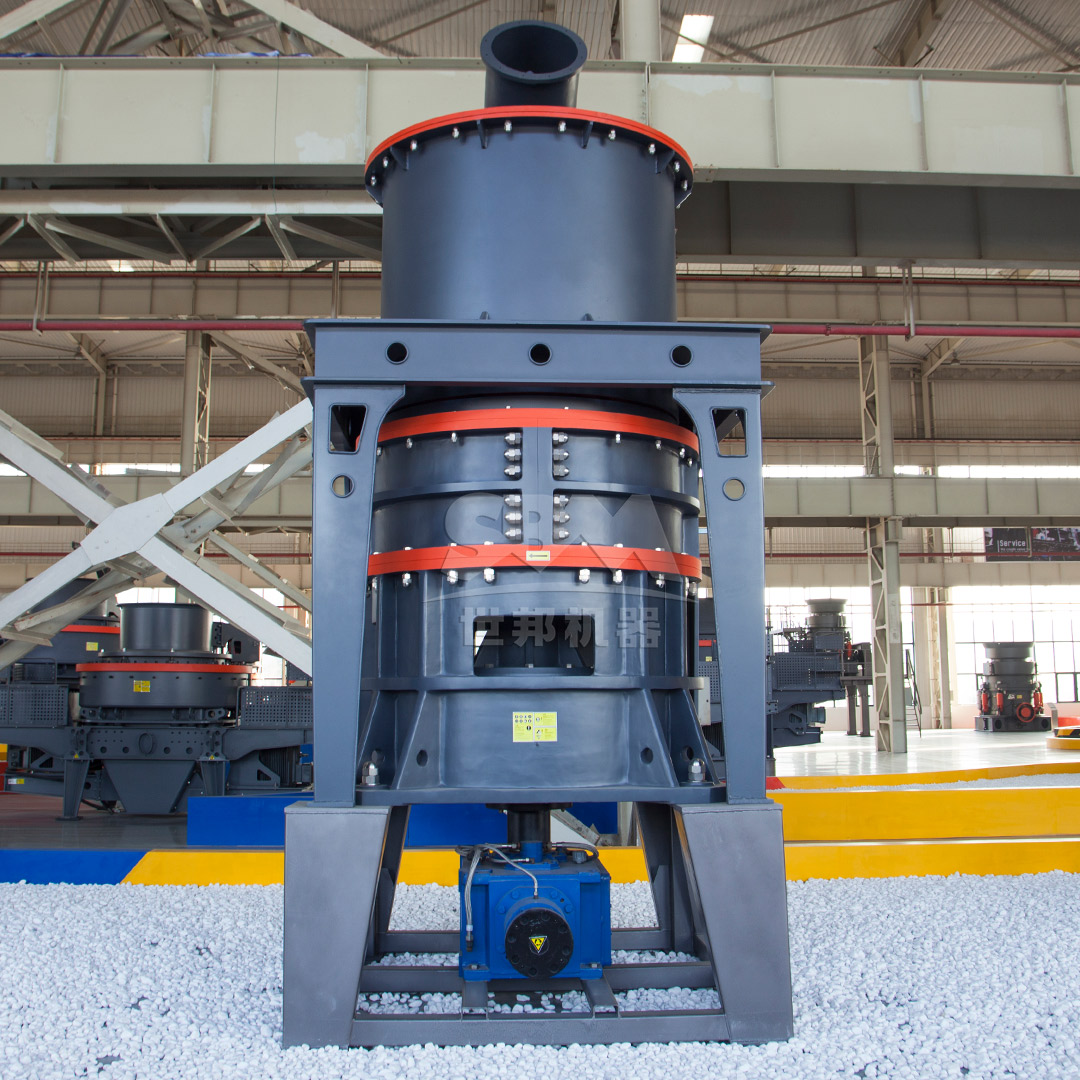
What truly distinguishes the SCM Ultrafine Mill in granite applications is its energy efficiency – achieving approximately 30% lower energy consumption compared to jet mills while delivering twice the output capacity. The intelligent control system automatically monitors and adjusts for optimal particle size distribution, ensuring consistent product quality even as granite composition varies. For operations requiring slightly coarser specifications or handling larger initial feed sizes, the MTW Series Trapezium Mill offers robust performance with input sizes up to 50mm and output ranging from 30-325 mesh.
Operational Considerations in Industrial Granite Grinding
Successful implementation of granite grinding systems requires careful attention to several operational factors beyond equipment selection. Moisture content significantly impacts grinding efficiency, with optimal levels typically below 2-3% for dry milling processes. Feed size distribution must be carefully controlled, as excessive variation can disrupt grinding bed stability and classification efficiency.
Maintenance planning represents another critical consideration. While advanced mills like the SCM series feature extended-wear components, granite processing inevitably accelerates component degradation. Proactive maintenance schedules based on actual production volumes rather than time intervals ensure optimal performance while minimizing unexpected downtime. Many modern mills incorporate remote monitoring capabilities that track operational parameters and provide early warning of potential issues.
Dust collection and noise control present additional challenges in granite milling operations. Advanced pulse-jet dust collectors with filtration efficiencies exceeding 99.9% are essential for controlling silica dust, while integrated acoustic insulation brings operational noise below 75dB in properly configured systems.
Economic Analysis: Balancing Capital and Operational Costs
The economics of granite powder production involve careful balancing of capital investment against long-term operational expenses. While advanced milling systems require significant upfront investment, their superior energy efficiency and reduced wear rates typically deliver compelling returns in high-volume applications. For a typical operation producing 10 tons per hour of 800-mesh granite powder, the energy savings alone from modern vertical roller mills can exceed $100,000 annually compared to traditional ball mill systems.
Equipment selection should consider the complete production lifecycle rather than just initial acquisition costs. Mills with modular designs that facilitate component replacement without full disassembly can reduce maintenance downtime by 40-60%, significantly impacting overall profitability. Similarly, systems with integrated automation reduce labor requirements while improving product consistency.
Future Directions in Granite Comminution Technology
The evolution of granite grinding technology continues with several promising developments on the horizon. High-pressure grinding rolls (HPGR) are being adapted for finer applications, potentially offering even greater energy efficiency for certain granite varieties. Advanced classifier designs incorporating computational fluid dynamics promise tighter particle distribution control, while new ceramic and composite materials may further extend component life in abrasive environments.
Digitalization represents another frontier, with machine learning algorithms beginning to optimize mill operations in real-time based on feed material characteristics and product specifications. These systems can automatically adjust parameters like grinding pressure, classifier speed, and feed rates to maintain optimal performance as conditions change.
Conclusion: Meeting the Granite Challenge with Advanced Milling Solutions
The transformation of raw granite ore into precisely controlled ultra-fine powders represents one of mineral processing’s most demanding applications. Success requires equipment specifically engineered to handle extreme abrasion while delivering exceptional classification precision. Modern mills like the SCM Ultrafine Mill demonstrate how targeted technological innovation can overcome granite’s inherent challenges, enabling efficient production of high-value powders across numerous industrial applications.
As market demands for finer specifications and tighter distributions continue to grow, the importance of selecting appropriate milling technology becomes increasingly critical. Through careful consideration of material characteristics, production requirements, and total operational costs, processors can implement granite grinding solutions that deliver both technical performance and economic viability.