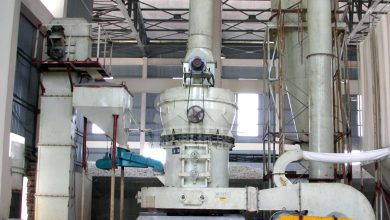
Calcium Carbonate Superfine Vertical Mill: Production Process for Coating-Grade Calcium Carbonate
Introduction
The production of high-quality coating-grade calcium carbonate (CaCO3) demands precise control over particle size distribution, morphology, and surface chemistry. Achieving the stringent fineness requirements—typically ranging from 325 mesh (45μm) to 2500 mesh (5μm) and below—for modern paints, coatings, plastics, and sealants necessitates advanced milling technology. Among various grinding systems, the superfine vertical roller mill has emerged as a superior solution, offering unparalleled efficiency, precision, and environmental compliance. This article delves into the production process for coating-grade calcium carbonate, highlighting the critical role of vertical mill technology and its operational advantages.
1. Raw Material Preparation and Pre-treatment
The journey to premium coating-grade CaCO3 begins with high-purity limestone or marble feedstock. The raw blocks are first subjected to primary and secondary crushing to reduce their size to a manageable range, typically below 50mm. This step is crucial for ensuring consistent feed to the fine grinding mill. Washing and beneficiation processes may follow to remove impurities like silica, iron oxides, and clay, which can adversely affect the brightness and chemical properties of the final product. The pre-crushed material is then dried to an optimal moisture content (usually below 1%) to prevent agglomeration and ensure efficient grinding in the subsequent vertical mill stage.
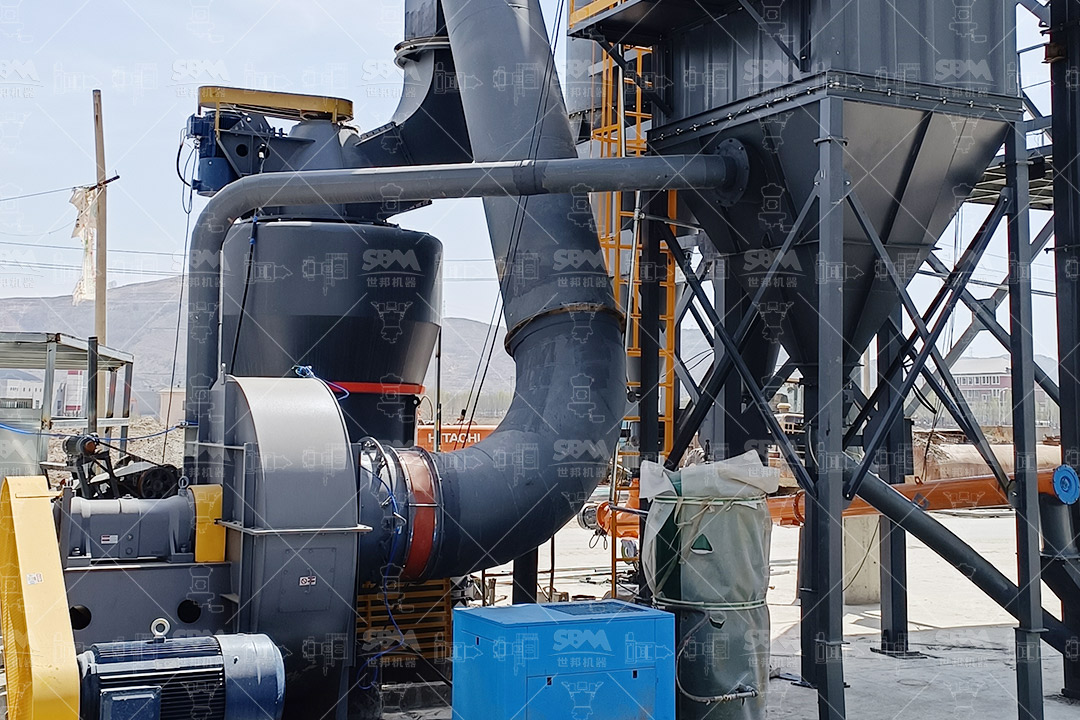
2. The Core Process: Superfine Grinding with Vertical Roller Mills
This stage is the heart of the production line, where the coarse calcium carbonate is transformed into the ultra-fine powder required for coatings. Traditional ball mills or Raymond mills often struggle with the high energy consumption, broad particle size distribution, and heat generation associated with achieving sub-10μm fineness. The superfine vertical roller mill overcomes these limitations through an integrated grinding-classification-drying system.
2.1 Working Principle of a Superfine Vertical Mill
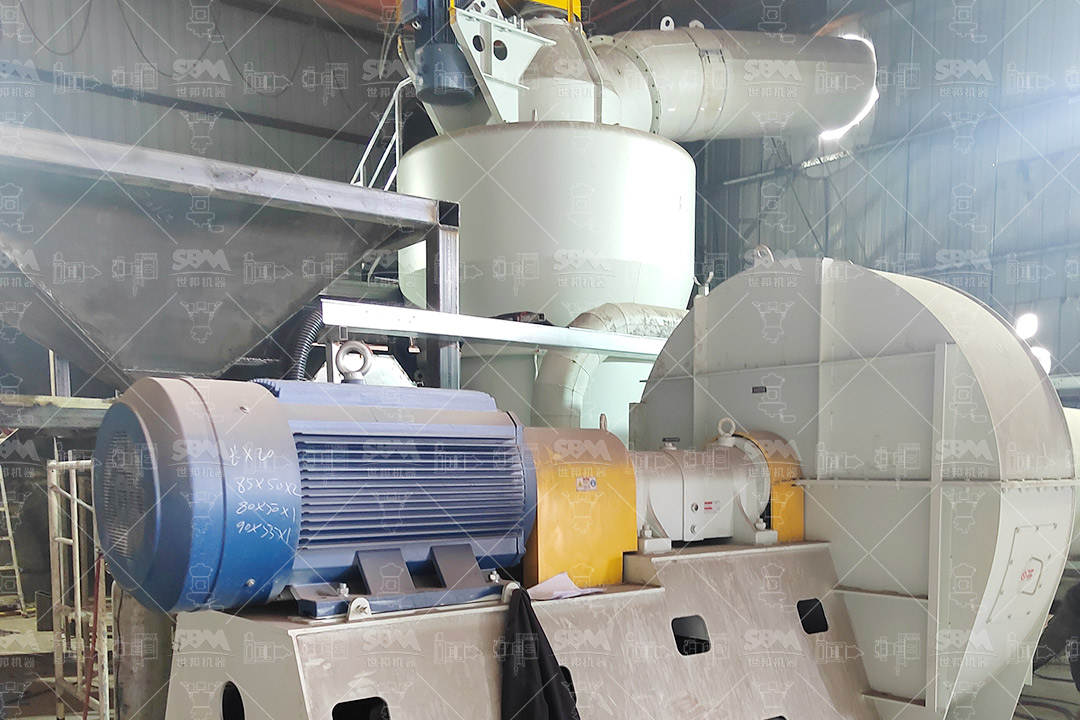
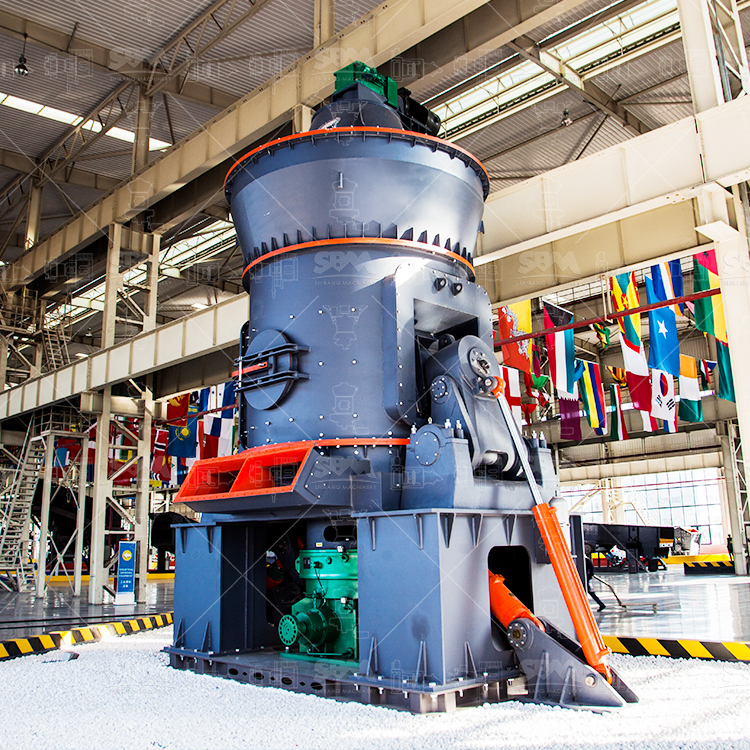
The prepared feed material is conveyed to the mill’s center feed port. A rotating grinding table, driven by a planetary gearbox, disperses the material outward by centrifugal force. Multiple grinding rollers, hydraulically loaded, apply intense pressure to the material bed on the table, causing inter-particle comminution through a combination of compression and shear forces. This “bed grinding” principle is highly efficient and generates less heat compared to impact-based methods. Hot gas (typically from a hot air generator) is introduced from the wind ring at the table’s periphery, simultaneously drying the material and carrying the fine particles upward to an integrated high-precision turbo classifier.
2.2 High-Precision Classification
The classifier is the brain of the system for producing coating-grade products. It precisely separates particles based on size and mass. The rotating turbine generates a controllable centrifugal force field. Particles finer than the target cut-point (e.g., d97 = 5μm) are carried by the airflow through the classifier blades to the collection system. Coarser particles are rejected by the classifier and fall back onto the grinding table for further size reduction. This closed-circuit grinding and classification loop ensures a sharp, narrow particle size distribution—a critical parameter for coating applications where opacity, gloss, and viscosity are paramount.
3. Product Collection and Post-Processing
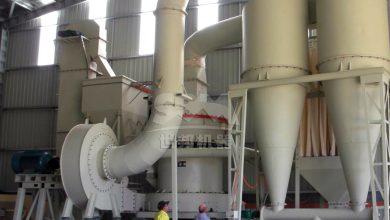
The fine powder-laden air from the mill exits to a high-efficiency cyclone collector, where the majority of the product is separated. The air then passes through a pulse-jet baghouse filter to capture any remaining fines, ensuring dust emissions are well below international environmental standards (often below 20 mg/Nm³). The collected ultra-fine calcium carbonate may undergo surface modification. In a downstream coating unit, stearic acid or titanate coupling agents are applied to render the particles hydrophobic, improving their dispersion and compatibility within organic polymer matrices used in paints and coatings. Finally, the product is pneumatically conveyed to silos for storage, batch testing, and packaging.
4. Advantages of the Superfine Vertical Mill Process
The adoption of superfine vertical mill technology for coating-grade CaCO3 offers transformative benefits:
- High Efficiency & Energy Savings: The bed grinding mechanism and integrated classifier significantly reduce specific energy consumption by 30-50% compared to traditional ball mill systems producing similar fineness.
- Superior Product Quality: The ability to precisely control the classifier speed allows for tight regulation of top particle size (d97) and a steep distribution curve, essential for high-gloss coatings.
- Excellent Drying Capability: The concurrent flow of hot gases enables efficient in-situ drying of the feed material during grinding.
- Compact Footprint & Low Noise: The vertical design integrates multiple functions, reducing the plant’s footprint. Fully enclosed operation and soundproofing keep noise levels low.
- Automation & Stability: Modern mills are equipped with PLC/DCS systems for automatic control of feed rate, grinding pressure, temperature, and classifier speed, ensuring long-term, stable production of consistent quality.
5. Equipment Recommendation: SCM Series Ultrafine Mill
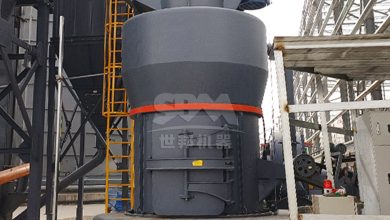
For producers targeting the high-end coating, ink, and plastic markets requiring fineness between 325 and 2500 mesh (45-5μm), the SCM Series Ultrafine Mill represents an optimal technological solution. This mill is engineered specifically for superfine grinding applications.
Its core advantages align perfectly with the demands of coating-grade calcium carbonate production:
- High-Efficiency Grinding: With a capacity up to 2 times that of jet mills and 30% lower energy consumption, it offers outstanding operational economy. Its intelligent control system features automatic finished product granularity feedback for consistent quality.
- High-Precision Classification: The vertical turbine classifier ensures precise particle size cutting, eliminating coarse powder mixing and guaranteeing a uniform, narrow-distribution final product.
- Robust and Durable Design: The use of special material rollers and rings extends service life several times over. A shaftless screw grinding chamber design further enhances operational stability and reduces maintenance.
- Environmentally Friendly Operation: The system is equipped with a pulse dust collector exceeding international standards and a soundproof room design, ensuring clean and quiet plant operation.
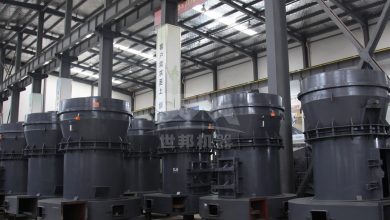
With models like the SCM1000 (1.0-8.5 t/h, 132kW) and the SCM1680 (5.0-25 t/h, 315kW), the SCM Series provides scalable solutions for production lines of various capacities, making it a cornerstone for modern coating-grade calcium carbonate manufacturing.
6. Conclusion
The production of coating-grade calcium carbonate has evolved into a sophisticated process where precision, efficiency, and quality are non-negotiable. The superfine vertical roller mill, with its integrated grinding-classification system, stands as the enabling technology for this evolution. It not only meets the exacting fineness and distribution requirements but does so with remarkable energy savings and environmental stewardship. For manufacturers aiming to lead in the competitive market of functional fillers, investing in advanced vertical milling technology, such as the featured SCM Series Ultrafine Mill, is a strategic decision to ensure product excellence and sustainable profitability.