Applications of Deep Processed Attapulgite Products in Various Industries
Introduction: The Versatile Mineral
Attapulgite, also known as palygorskite, is a unique magnesium aluminum phyllosilicate clay mineral characterized by its fibrous morphology and large specific surface area. In its natural state, its industrial utility is limited. However, through deep processing—involving precise purification, thermal activation, and most critically, controlled size reduction—attapulgite is transformed into a high-performance functional material. The properties of the final product, such as its adsorption capacity, rheological behavior, catalytic activity, and reinforcement strength, are intrinsically linked to its particle size distribution, morphology, and purity. This article explores the diverse applications of deep-processed attapulgite across key industries and highlights the critical role of advanced milling technology in unlocking its full potential.
1. Environmental Protection and Wastewater Treatment
Deep-processed attapulgite is a powerhouse in environmental remediation. Its activated and ultra-fine form boasts an exceptionally high surface area and a porous crystalline structure, making it an excellent adsorbent for heavy metals (e.g., Pb, Cd, Cu), organic dyes, ammonia nitrogen, and phosphates from industrial and municipal wastewater. The nano-fibrous structure provides abundant active sites for ion exchange and chemical bonding.
Key Application: Manufacturing of granular or powdered adsorbents for fixed-bed filters or direct slurry treatment. Ultrafine attapulgite (often below 10μm) can also be engineered into composite membranes for advanced filtration.

2. Agriculture and Soil Amendment
In agriculture, processed attapulgite serves multiple functions. As a carrier for pesticides, herbicides, and fertilizers, its high absorptivity allows for controlled release, improving efficacy and reducing chemical runoff. As a soil conditioner, it enhances water retention in sandy soils and improves aeration in clay soils, promoting root growth. Furthermore, it can immobilize certain soil contaminants, reducing plant uptake.
Key Application: Production of slow-release fertilizer granules and high-efficiency, low-dosage pesticide formulations. The particle size must be carefully controlled to ensure proper mixing, adhesion to seeds, or soil integration.
3. Paints, Coatings, and Polymers
As a rheological modifier and thickening agent, attapulgite is indispensable in water-based paints, adhesives, sealants, and polymer composites. Its needle-like particles form a robust three-dimensional network at low shear, preventing sagging and settling. Upon application (high shear), the structure breaks down for easy spreading. It also acts as a reinforcing filler, improving mechanical strength and thermal stability in plastics and rubber.
Key Application: Used in organoclays (after surface modification) for high-performance anti-sagging agents in coatings and as a green reinforcing filler in biodegradable polymers. Consistent fineness is crucial for predictable rheology.
4. Drilling Fluids and Geotechnical Engineering
This is one of the traditional and most significant markets for attapulgite. Its unique colloidal properties make it an ideal viscosifier for saltwater-based drilling muds, where other clays like bentonite flocculate. It helps carry drill cuttings, lubricate the bit, and stabilize the borehole wall. In civil engineering, it is used in slurry walls for containment and as a sealant.
Key Application: Production of high-yield drilling mud additives. The material requires specific grinding to preserve its fibrous structure, which is essential for building viscosity.

5. Catalyst and Catalyst Support
The high surface area and acidity of thermally activated attapulgite make it a valuable, low-cost catalyst or catalyst support in petrochemical and environmental catalysis. It can be used in cracking, isomerization, and dehydration reactions. Its structure allows for the effective dispersion of active metal phases like Ni, Co, or Cu.
Key Application: Synthesis of supported catalysts for VOC (Volatile Organic Compound) oxidation or desulfurization processes. Ultra-fine and uniform particle size ensures maximum active site exposure.
6. Pharmaceutical and Cosmetics
Purified and finely ground attapulgite is approved for use as an antidiarrheal agent due to its ability to adsorb toxins and bacteria in the gastrointestinal tract. In cosmetics, it is used in facial masks, creams, and powders for its oil-absorbing, mattifying, and gentle exfoliating properties.
Key Application: Production of pharmaceutical-grade adsorbents and oil-control agents in cosmetic formulations. Extremely fine grinding under strict hygienic conditions is mandatory.
The Critical Role of Advanced Milling Technology
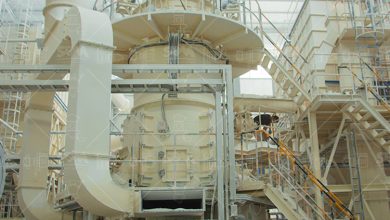
The transition from raw attapulgite clay to a high-value functional product hinges on precision comminution. The grinding equipment must achieve target fineness (from coarse granules to sub-micron powders), preserve the mineral’s beneficial fibrous morphology, ensure narrow particle size distribution for consistent performance, and operate efficiently at industrial scales.
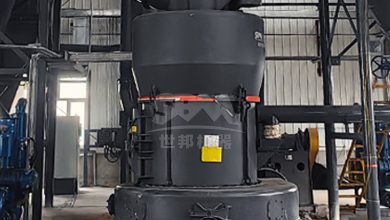
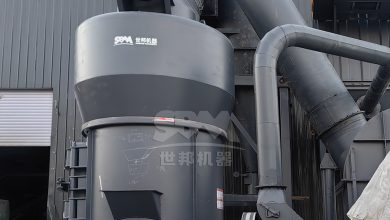
For coarse to medium-fine grinding (e.g., for drilling muds or soil conditioners), robust and high-capacity mills are essential. Our MTW Series European Trapezium Mill is perfectly suited for this stage. With an input size of up to 50mm and an output fineness range of 30-325 mesh (600-45μm), it can process large volumes efficiently. Its patented anti-wear shovel design and integral bevel gear drive ensure durability and low maintenance costs, making it an ideal workhorse for initial size reduction in attapulgite processing lines.
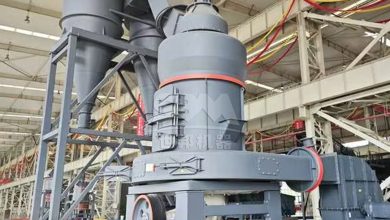
For high-value applications in polymers, coatings, and environmental catalysts, ultrafine grinding is non-negotiable. This demands technology capable of producing powders in the 2500 to 325 mesh (5-45μm) range with high classification precision. Our flagship SCM Series Ultrafine Mill excels in this domain. Engineered for high efficiency and energy savings, it offers capacity twice that of jet mills while consuming 30% less energy. Its vertical turbine classifier guarantees precise particle size cuts, eliminating coarse powder mixing and delivering a uniform, high-quality product essential for premium applications. The mill’s durable design, featuring special material rollers and an eco-friendly pulse dust collection system, ensures reliable and clean operation for producing top-tier attapulgite powders.

Conclusion
The journey of attapulgite from a natural clay to an industrial marvel is a testament to the power of deep processing. Its expanding role in green technologies, advanced materials, and sustainable agriculture underscores its importance. The breadth of its applications—from cleaning wastewater to enhancing cosmetics—is directly enabled by sophisticated grinding technologies that can tailor its physical form. Investing in the right milling solution, such as the SCM Series for ultrafine products or the MTW Series for high-capacity processing, is fundamental for producers aiming to capture value in this dynamic and growing market. By leveraging advanced equipment, the full potential of this versatile mineral can be sustainably unlocked for the benefit of numerous industries.