Application Prospects of Vertical Grinding Mills for Solid Waste Treatment in the Context of Green Development
Introduction: The Imperative for Green Solid Waste Management
The global surge in industrial activity and urbanization has precipitated a corresponding increase in solid waste generation, posing significant environmental and economic challenges. Traditional disposal methods, such as landfilling and incineration, are increasingly scrutinized for their ecological footprint, resource wastage, and potential for secondary pollution. In this context, the paradigm of solid waste management is shifting decisively towards resource recovery and circular economy principles, where waste is viewed as a potential secondary raw material. Green development mandates not only the reduction of waste but also its high-value utilization through processes that are energy-efficient, low-emission, and technologically advanced. Mechanical processing, particularly size reduction via grinding, stands as a critical first step in unlocking the value of diverse solid wastes, from construction and demolition debris to industrial slags and non-metallic minerals. This article explores the transformative role of vertical grinding mill technology in advancing solid waste treatment, aligning economic objectives with the stringent demands of environmental sustainability.
The Technological Edge of Vertical Grinding Mills
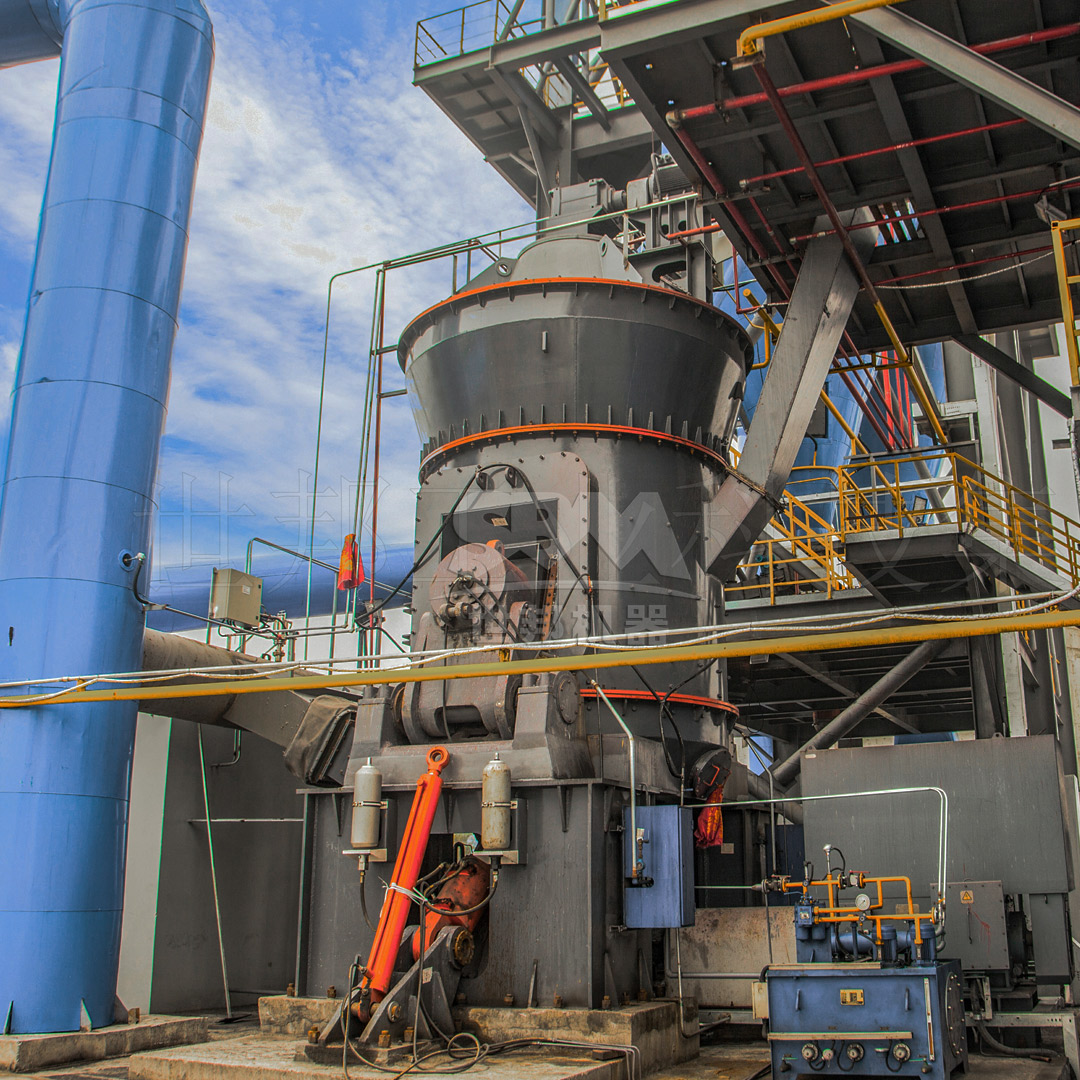
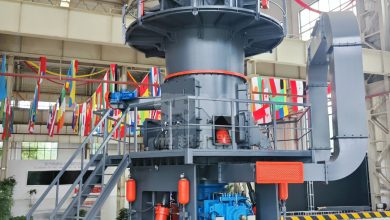
Vertical grinding mills, characterized by their vertical axis and roller-based grinding mechanism, offer distinct advantages over traditional ball mills and horizontal mills for solid waste processing. Their design inherently supports the principles of green manufacturing.
1. Superior Energy Efficiency
The core of a vertical mill’s efficiency lies in its grinding principle. It utilizes a bed of material between rotating rollers and a stationary grinding table. This ‘material-bed comminution’ applies pressure directly to the particle layer, minimizing energy losses associated with impact and attrition in tumbling ball mills. Comparative studies consistently show that vertical mills can reduce specific energy consumption by 30% to 50% for the same fineness of product. For large-scale solid waste processing plants, this translates into massive reductions in operational carbon footprint and electricity costs, a cornerstone of green operation.
2. Integrated Drying, Grinding, and Classification
Modern vertical mills are integrated systems. Hot gases (which can be waste heat from other processes) are introduced at the bottom, flowing upward through the grinding zone. This simultaneously dries moist waste materials (e.g., certain slags or filter cakes) and transports the ground fines to an integrated, high-efficiency classifier at the top. The classifier ensures precise cut-point control, returning oversized particles for regrinding. This closed-circuit, in-system classification eliminates the need for external air separators and multiple conveyors, reducing plant footprint, dust emission points, and overall system complexity. The ability to handle materials with up to 15-20% moisture content in a single pass is particularly valuable for waste streams.
3. Enhanced Environmental Performance
Vertical mills operate under negative pressure, meaning any leakage is inward, preventing the escape of dust. Coupled with high-efficiency pulse-jet baghouse filters or cartridge filters, particulate emissions can be consistently maintained below 20 mg/Nm³, exceeding most international environmental standards. Furthermore, the enclosed design and advanced vibration-damping technologies result in significantly lower noise levels (typically ≤75-80 dB(A)) compared to conventional mills, contributing to better workplace and community environmental quality.
4. Flexibility and Product Quality
The adjustable grinding force and classifier speed allow for rapid changes in product fineness to meet different market specifications for waste-derived powders. Whether producing coarse filler for asphalt or ultra-fine powder for high-performance concrete or chemical applications, vertical mills offer precise control. This flexibility is key to adapting to variable waste feedstocks and evolving product markets.
Application Scenarios in Solid Waste Valorization
The application of vertical grinding mills spans several key waste streams, turning liabilities into assets.
1. Construction & Demolition (C&D) Waste and Concrete Recycling
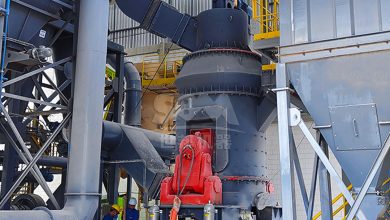
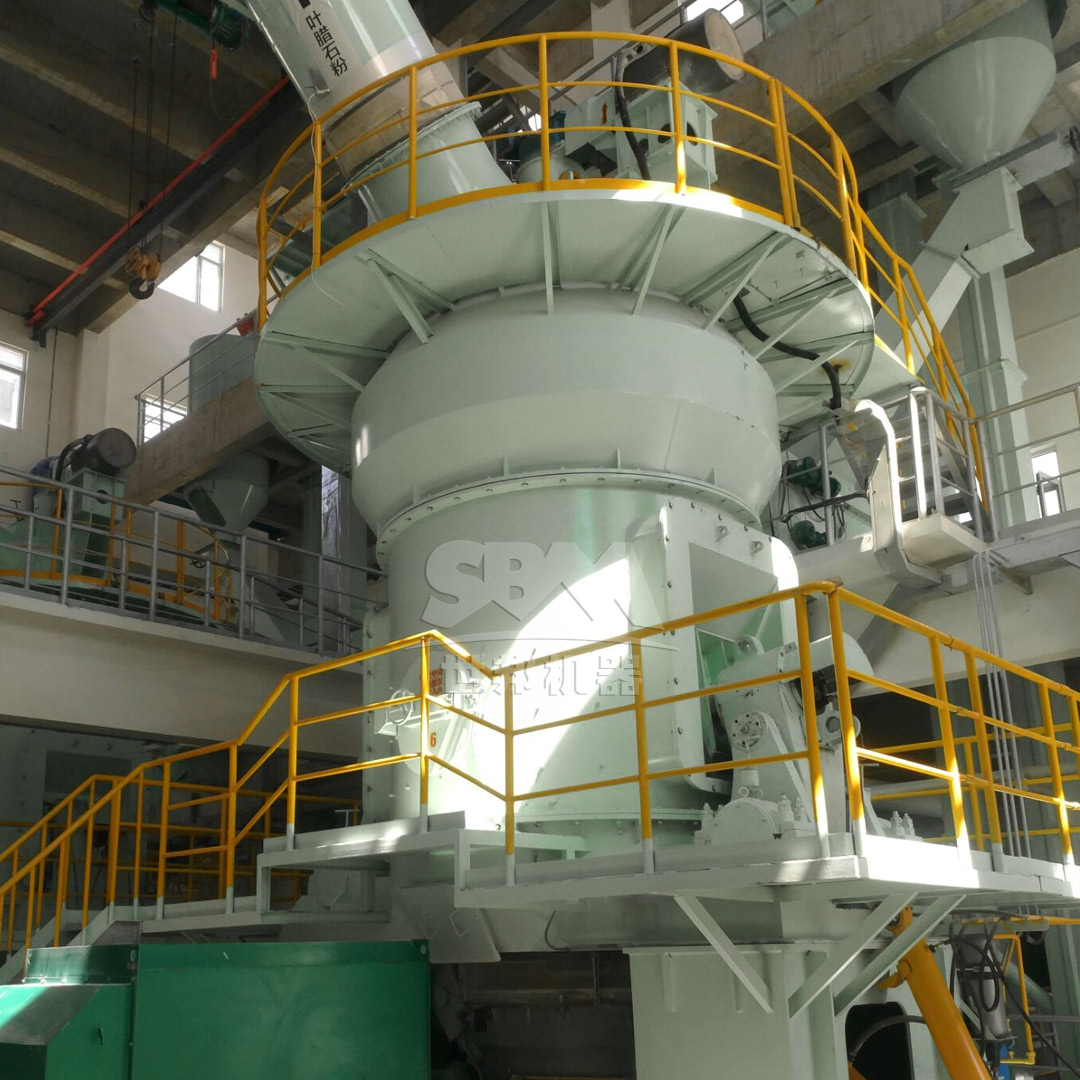
Crushed concrete and masonry can be ground into fine powders. Vertical mills efficiently process these hard, abrasive materials. The resulting powder can be used as a supplementary cementitious material (SCM), reducing the clinker factor in cement production—a major source of CO₂ emissions. Our LM Series Vertical Roller Mill is exceptionally suited for this task. Its集约化设计 integrates multiple functions, reducing plant footprint by 50%. With磨辊与磨盘非接触设计, wear part life is extended significantly when processing abrasive concrete aggregates. Models like the LM220K, with a capacity of 36-105 t/h and the ability to handle ≤50mm feed, are ideal for large-scale C&D recycling plants, directly contributing to the circular construction economy.
2. Granulated Blast Furnace Slag (GBFS) and Steel Slag
GBFS is a premier pozzolanic material. Grinding it to a high fineness (e.g., >420 m²/kg Blaine) is essential to activate its cementitious properties. Vertical slag mills are the industry standard for this application due to their high efficiency and ability to handle the material’s hardness. The grinding process also liberates metallic iron from steel slag, which can be recovered magnetically. Our dedicated Vertical Slag Mill series (e.g., LM190N, LM220N) are engineered specifically for this duty. They feature robust construction to handle邦德功指数≤23kWh/t materials and are designed to achieve the precise比表面积and low出料粉末湿度required for premium slag cement.
3. Industrial By-Product & Non-Metallic Mineral Waste
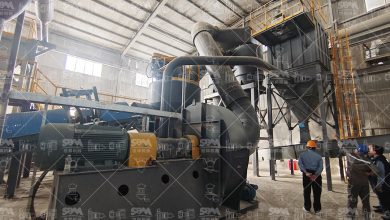
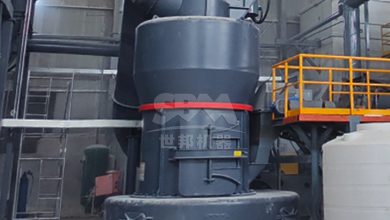
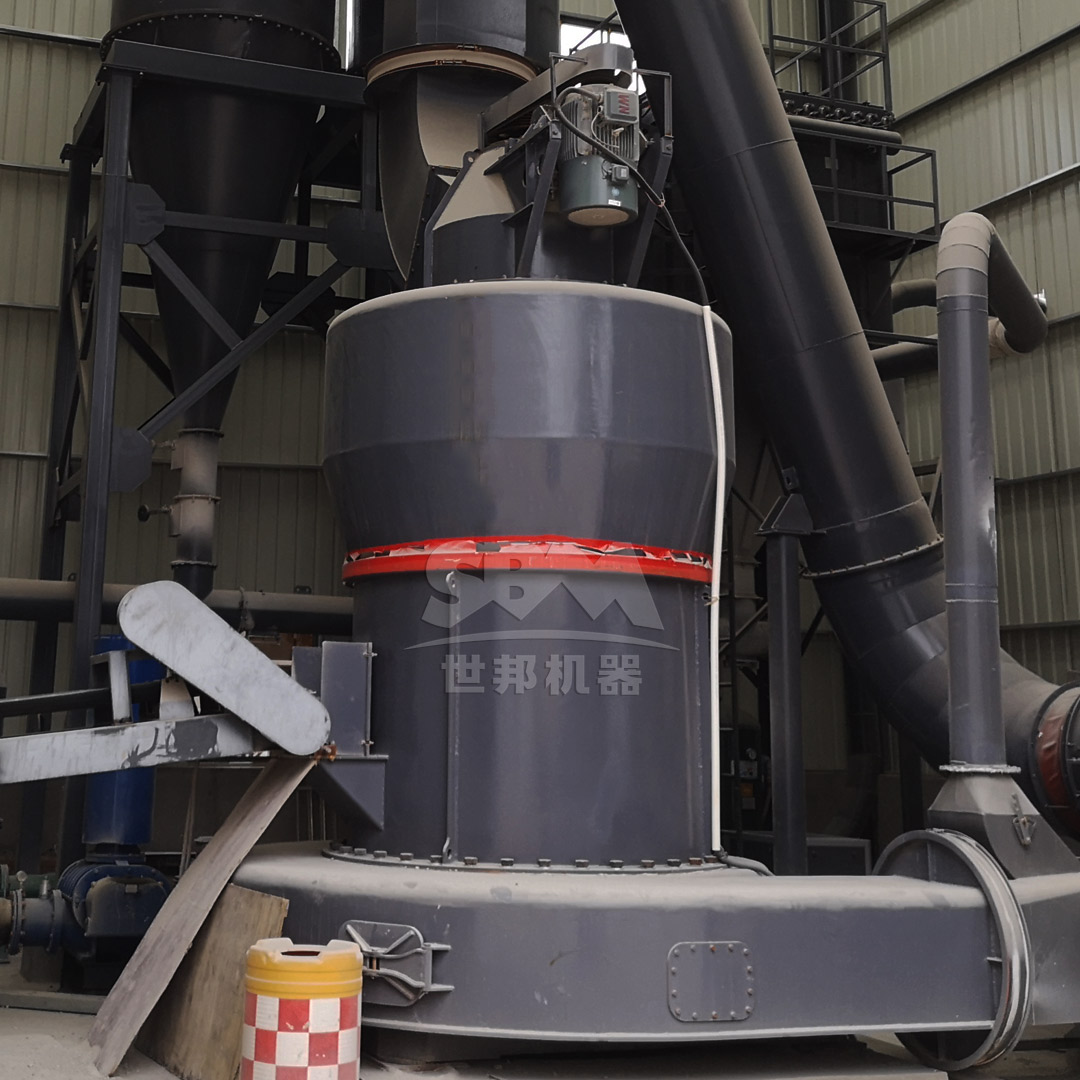
Fly ash, waste glass, ceramic scraps, and tailings from mining operations can be processed into functional fillers or raw materials. For applications requiring ultra-fine powders (e.g., D97 ≤ 5μm for high-value fillers in plastics or coatings), specialized mills are needed. Our SCM Series Ultrafine Mill excels in this domain. It achieves an impressive output细度of 325-2500目(D97≤5μm)from a ≤20mm feed. Its高效节能design offers产能为气流磨2倍,能耗降低30%, making it a cost-effective and green solution for producing high-value powders from waste streams. The垂直涡轮分级器ensures精准粒度切割with无粗粉混入, guaranteeing product uniformity critical for downstream applications.
Integrating Vertical Mills into a Green Treatment System
The full environmental benefit of vertical mills is realized when integrated into a holistic waste treatment line. A typical system includes:
- Pre-sorting & Crushing: Removal of contaminants and primary size reduction to mill feed size.
- Vertical Grinding Mill: The heart of the system, performing drying, fine grinding, and classification.
- Advanced Dust Collection: High-efficiency bag filters with automated cleaning ensure near-zero particulate emissions.
- Product Handling & Storage: Silo storage with automated loading for the finished powder.
- Intelligent Control System: Centralized PLC/SCADA control optimizes energy use, monitors wear, and ensures consistent product quality with minimal manual intervention.
This integrated approach maximizes resource recovery while minimizing energy use, emissions, and waste.
Future Outlook and Conclusion
The trajectory of solid waste management is unequivocally towards greater circularity and sustainability. Vertical grinding mill technology is not merely an option but a necessity in this transition. Its unparalleled energy efficiency, low environmental impact, operational flexibility, and ability to produce high-quality secondary raw materials align perfectly with the goals of green development.
Future advancements will focus on further increasing energy efficiency through digitalization and AI-driven process optimization, enhancing wear resistance for even more abrasive waste streams, and improving the modularity of systems for faster deployment in distributed recycling facilities. The integration of renewable energy sources to power these grinding operations will further cement their green credentials.
For enterprises and municipalities committed to transforming their solid waste from a cost center into a revenue stream while meeting stringent environmental standards, investing in advanced vertical grinding technology is a strategic imperative. Our portfolio, including the robust LM Series for large-scale, coarse-to-medium fine grinding and the precision SCM Ultrafine Mill for high-value applications, provides tailored solutions to meet the diverse challenges of modern solid waste valorization, paving the way for a more sustainable and resource-efficient future.