Application of Vertical Mill in Processing Copper Slag for Cement Production
1. Introduction: The Challenge of Copper Slag Utilization
The global copper industry generates millions of tons of copper slag annually as a by-product of the smelting process. Traditionally considered a waste material requiring landfill disposal, copper slag poses significant environmental and economic challenges. However, its chemical composition, primarily consisting of iron oxides, silica, and alumina, presents a unique opportunity for use as a supplementary cementitious material (SCM) in cement production. The key to unlocking this potential lies in efficient and cost-effective processing to achieve the required fineness and reactivity. This article explores the application of vertical roller mill (VRM) technology as the optimal solution for grinding copper slag, transforming an industrial waste into a valuable resource for sustainable cement manufacturing.
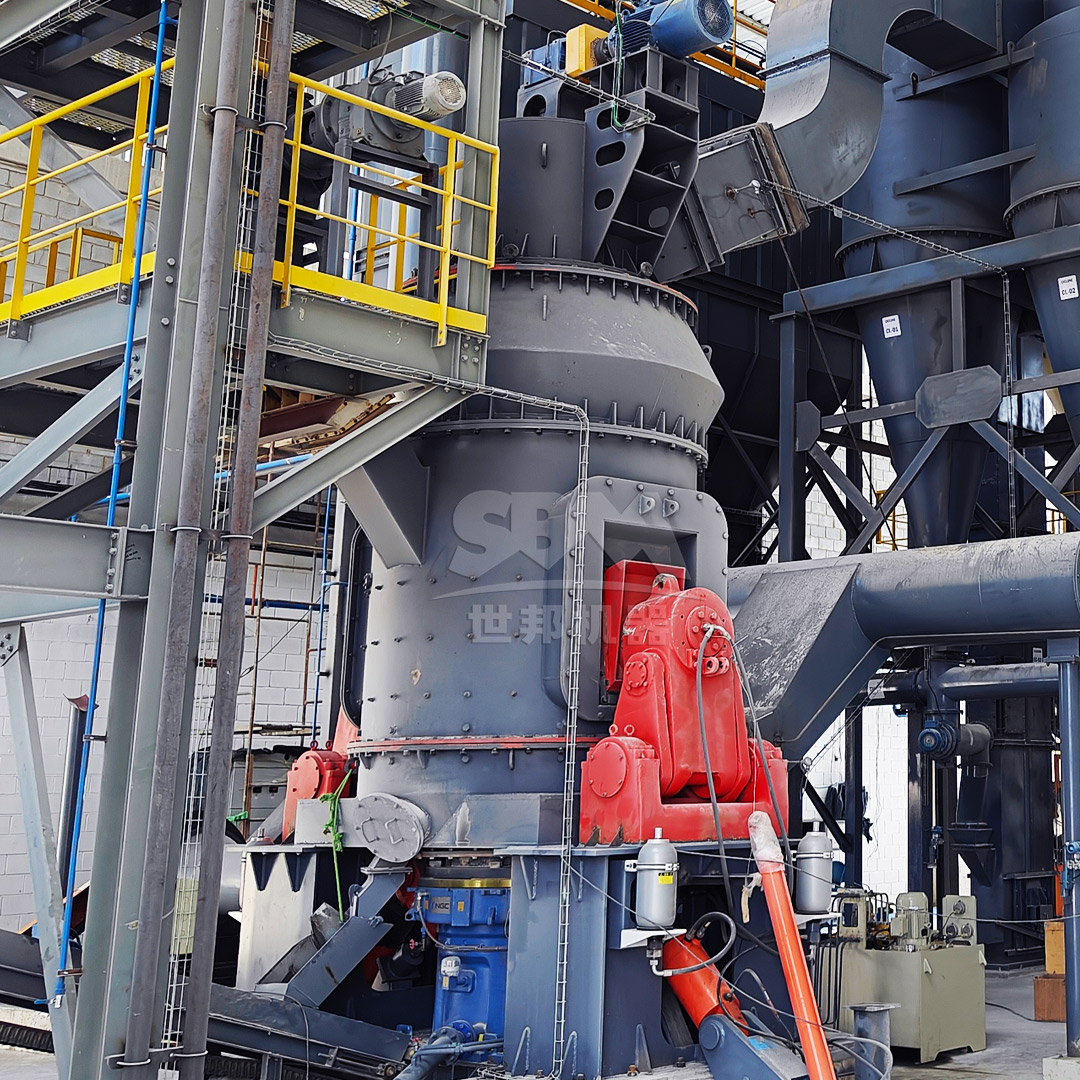
2. Material Characteristics and Processing Requirements
Copper slag is a hard, abrasive, and dense material with a Bond Work Index typically ranging from 18 to 23 kWh/t. Its particle size from the smelter is irregular, often containing lumps up to 50mm. For effective use as a cement additive, it must be ground to a high fineness, usually targeting a specific surface area of 400-550 m²/kg (Blaine) or a particle size distribution where over 90% passes 45 microns (325 mesh). This high degree of fineness is crucial to activate its latent hydraulic properties and ensure it contributes to the strength development of the final cement product. The abrasive nature of the slag demands grinding equipment with exceptional wear resistance and low specific energy consumption to make the process economically viable.
3. Why Vertical Roller Mills are the Ideal Choice
Compared to traditional ball mill systems, Vertical Roller Mills offer distinct advantages for processing hard and abrasive materials like copper slag:
- High Grinding Efficiency & Energy Savings: The VRM operates on the principle of inter-particle comminution within a material bed, which is significantly more energy-efficient than the impact and attrition mechanisms in a ball mill. Energy savings of 30-50% are commonly achieved.
- Superior Wear Resistance: The grinding elements (rollers/tires and table liners) are made from highly wear-resistant alloys. The design allows for the rollers to operate without metal-to-metal contact with the table, further reducing wear.
- Integrated Drying: Hot gas can be introduced directly into the mill, allowing for simultaneous drying of slag with residual moisture (typically <15%), eliminating the need for a separate dryer.
- Precise Particle Size Control: Integrated dynamic classifiers provide accurate cut-point control, ensuring a consistent and narrow product size distribution, which is critical for cement performance.
- Compact Footprint & Low Noise: The vertical design and integrated system components result in a much smaller plant footprint and significantly lower operating noise levels compared to ball mill circuits.
4. Recommended Solution: LM Series Vertical Slag Mill
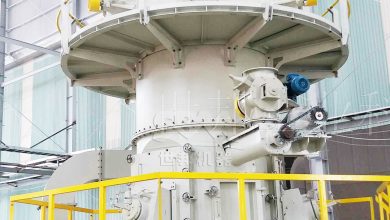
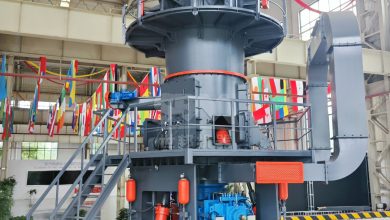
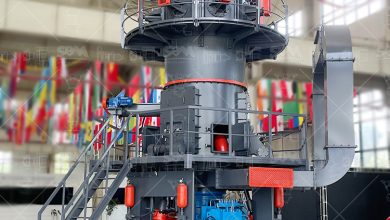
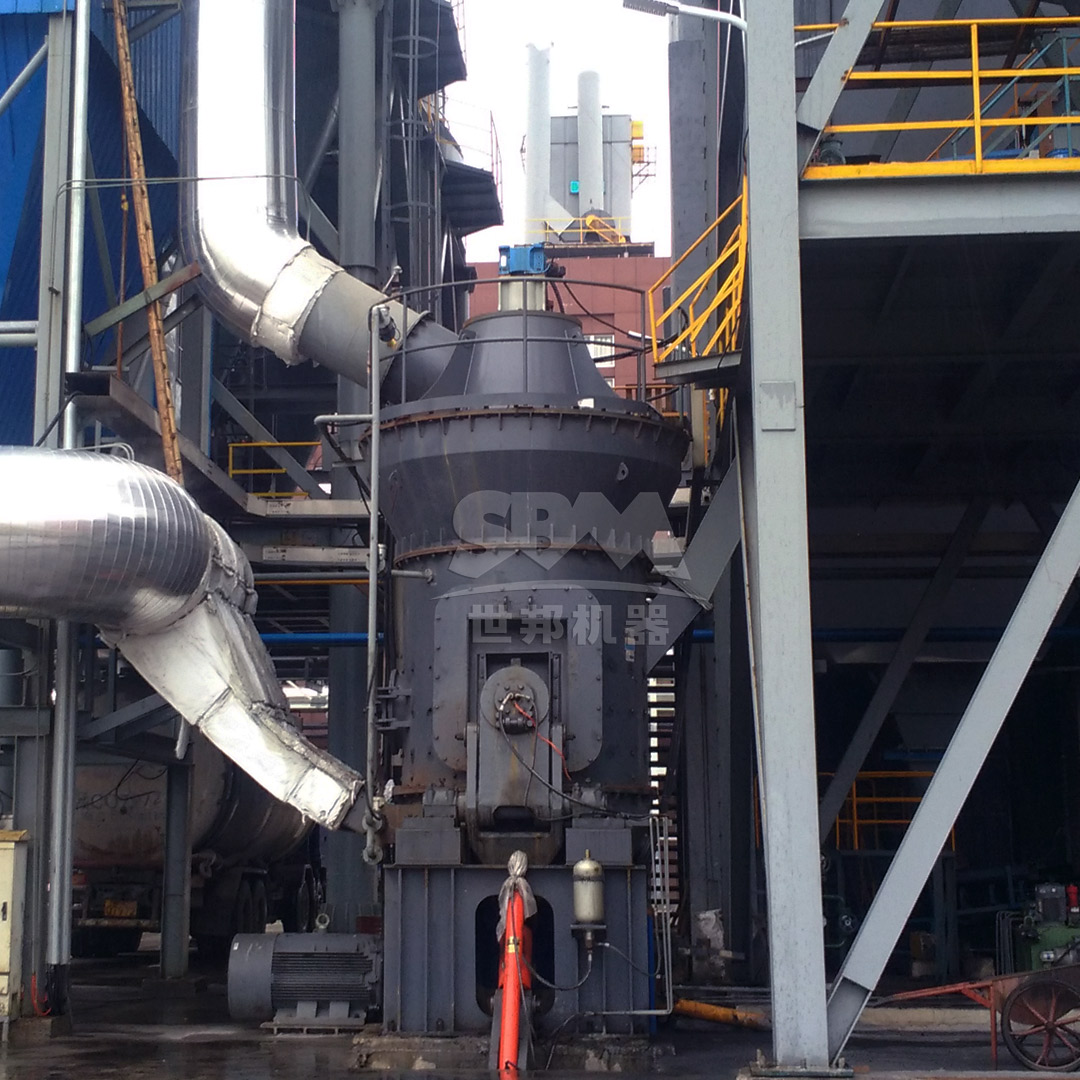
For the dedicated grinding of copper slag to cement-grade fineness, our LM Series Vertical Slag Mill is the engineered solution of choice. This mill series is specifically designed to handle the challenges posed by granulated blast furnace slag and other industrial slags, making it perfectly suited for copper slag.
4.1 Core Advantages for Copper Slag Processing
- Optimized Grinding Geometry: The roller and table profile are designed to create an efficient grinding bed with stable operation, even with fluctuating feed characteristics.
- High Availability & Easy Maintenance: Features like the modular roller assembly with quick-change system minimize downtime for wear part replacement. The hydraulic system allows rollers to be swung out for maintenance.
- Intelligent Process Control: An expert automatic control system continuously monitors parameters like grinding pressure, bed thickness, and power consumption, optimizing the process for maximum efficiency and product quality.
- Environmental Compliance: The fully enclosed, negative-pressure operation ensures dust emissions are kept well below 20 mg/Nm³. The low-noise design, typically ≤80 dB(A), meets strict environmental standards.
4.2 Technical Specifications and Model Selection
The LM Slag Mill series offers a wide range of capacities to match any project scale. Key models include:
- LM190N: With a grinding table diameter of 2400mm and a main motor power of 500-560 kW, this model is ideal for medium-scale operations, delivering a capacity of 10-12 t/h of finished powder with a specific surface area ≥420 m²/kg.
- LM220N: For larger production needs, this model features a 2800mm grinding table and 900-1000 kW main motor power, achieving capacities of 20-26 t/h.
- LM370N: This is our flagship high-capacity slag mill, with a massive 4500mm grinding table and 3150-3300 kW drive. It is designed for mega-projects, delivering 90-110 t/h of high-quality ground slag.
All models accept feed material with a maximum size of ≤50mm and moisture content <15%, producing a dry product with moisture ≤1%.
5. Auxiliary Processing: The Role of Pre-Crushing and Ultra-Fine Grinding
While the LM Slag Mill handles the main grinding duty, a complete copper slag processing line may involve additional stages. For initial size reduction of large slag lumps, our robust Hammer Mill (0-3mm) serves as an excellent pre-crusher, ensuring a consistent and optimal feed size for the vertical mill.
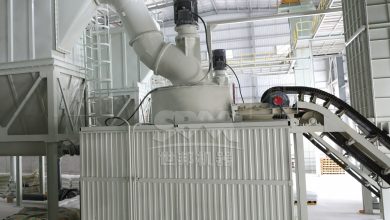
Furthermore, for applications requiring an ultra-fine product to enhance early strength or for use in high-performance concrete, a secondary grinding stage might be considered. Here, our SCM Ultrafine Mill excels. Capable of producing powders from 325 to 2500 mesh (D97 ≤5μm), the SCM mill can take the output from the LM mill and further refine it. Its vertical turbine classifier ensures precise particle cut-off, and its energy-efficient design (30% less energy than jet mills) makes ultra-fine grinding economically feasible for premium cement blends.
6. System Integration and Economic Benefits
Implementing a vertical mill system for copper slag processing is not just about the grinding unit. It involves integrating feeding, grinding, classification, and product collection into a cohesive system. The inherent design of the LM series allows for this integration, reducing overall plant footprint by up to 50% and cutting civil engineering costs by 40% compared to ball mill systems.
The economic benefits are substantial:
- Reduced Clinker Factor: Replacing 20-40% of Portland clinker with ground copper slag directly lowers the most energy-intensive and CO2-emitting component of cement.
- Lower Operational Costs: The 30-40% energy saving in grinding, combined with lower maintenance costs due to superior wear parts, significantly reduces the cost per ton of SCM produced.
- Waste Valorization & Sustainability Credits: Converting a waste liability into a product generates revenue and enhances the environmental profile of both the copper and cement industries, contributing to a circular economy.
7. Conclusion
The application of Vertical Roller Mill technology, specifically models like our LM Series Vertical Slag Mill, represents a paradigm shift in the processing of copper slag for cement production. It provides a technically superior, economically sound, and environmentally responsible pathway to utilize this abundant industrial by-product. By achieving the necessary fineness and quality with high efficiency, vertical mills enable cement producers to manufacture higher-performance, lower-carbon blended cements, turning an environmental challenge into a cornerstone of sustainable construction for the future.