Application of Raymond Mill in Titanium Dioxide Production via Sulfate Process from Ilmenite
Introduction
The sulfate process remains a dominant and mature technology for producing titanium dioxide (TiO₂) pigment from ilmenite ore. This multi-stage process involves digestion, purification, hydrolysis, calcination, and finishing. A critical step that significantly impacts the efficiency, product quality, and overall economics of the process is the preparation of the raw materials and intermediates through grinding. Raymond mill technology, particularly in its modern, high-efficiency iterations, plays a pivotal role in this context. This article explores the specific applications of Raymond mills within the sulfate process, highlighting their importance in achieving optimal particle size for key process steps and ultimately, superior TiO₂ pigment properties.
The Sulfate Process: A Brief Overview
The sulfate process begins with ilmenite ore (FeTiO₃). The ore is digested using concentrated sulfuric acid, producing a solution of titanyl sulfate (TiOSO₄) and iron sulfates. After purification steps to remove iron and other impurities (through crystallization of FeSO₄·7H₂O and reduction), the purified titanyl sulfate solution is hydrolyzed under controlled conditions to form hydrated titanium dioxide (TiO₂·xH₂O). This hydrate is then washed, calcined at high temperatures to form the final TiO₂ crystals, and subjected to surface treatment and finishing (including milling) to produce the commercial pigment.
Key Grinding Applications in the Sulfate Process
Effective grinding is required at several stages:
1. Pre-treatment of Ilmenite Ore
While ilmenite is often used as a sand or fine concentrate, further size reduction can enhance the kinetics and efficiency of the acid digestion reaction. A finer, more uniform feed material increases the surface area exposed to the acid, leading to more complete and faster reaction rates. This step requires a robust mill capable of handling abrasive materials.

2. Grinding of Calcined TiO₂ (Base Pigment)
This is arguably the most critical grinding application. The calciner output, or “base pigment,” consists of sintered aggregates of TiO₂ crystals (primarily in the rutile phase after seeding). These hard aggregates must be de-agglomerated and ground to the target primary particle size distribution, which is crucial for the pigment’s optical properties like opacity (scattering power) and tinting strength. Over-grinding can damage crystal structure and reduce performance, while under-grinding leaves coarse particles that impair gloss and durability in end-use applications.
3. Final Finishing after Surface Treatment
After inorganic (e.g., alumina, silica) and sometimes organic surface treatments are applied in aqueous slurry form, the product is filtered, dried, and often undergoes a light final milling step. This ensures the breakdown of any soft agglomerates formed during drying, resulting in a free-flowing, easily dispersible final powder.
Why Modern Raymond Mill Technology is Ideal
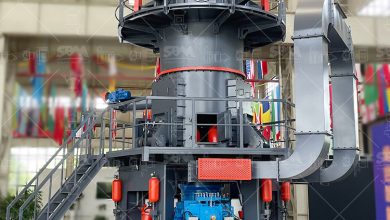
Traditional ball mills, while common, have higher energy consumption, generate more heat (potentially damaging surface treatments), and offer less precise particle size control. Modern Raymond mill systems, specifically vertical roller mills and advanced pendulum mills, offer distinct advantages for TiO₂ processing:
- High Efficiency & Energy Savings: The material is ground in a bed between rollers and a rotating table/ring, which is more energy-efficient than the impact/attrition of a tumbling ball mill.
- Precise Particle Size Control: Integrated dynamic classifiers allow for real-time adjustment of the product fineness (D97) by changing the rotor speed, ensuring tight control over the final pigment’s particle size distribution.
- Low Heat Generation: The grinding principle generates less excess heat compared to ball milling, which is beneficial for heat-sensitive materials, especially during the final finishing of surface-treated grades.
- Dry Process Compatibility: The entire sulfate process after calcination is a dry operation. Raymond mills are inherently dry grinding systems, fitting seamlessly into the process flow.
- Compact Design & Lower Noise: Vertical mill designs have a smaller footprint than equivalent ball mill circuits and operate at lower noise levels.

Recommended Equipment for TiO₂ Production
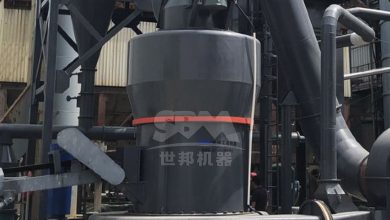
Selecting the right mill depends on the specific stage and required capacity. For the demanding task of grinding calcined TiO₂ base pigment, which requires producing a very fine and uniform powder, we highly recommend our SCM Series Ultrafine Mill.
SCM Ultrafine Mill: Precision for Premium Pigments
Our SCM Ultrafine Mill is engineered to achieve the fine and tightly controlled particle sizes essential for high-grade TiO₂ pigment. Its core advantages align perfectly with the process requirements:
- Ultra-Fine Output: Capable of producing powder in the range of 325-2500 mesh (D97 ≤ 5μm), it is ideal for achieving the sub-micron primary particle size needed for optimal light scattering in TiO₂ pigments.
- High-Precision Classification: The vertical turbine classifier ensures sharp particle size cuts, eliminating coarse particles that can degrade pigment quality. This results in a uniform product with consistent optical properties.
- Efficient & Durable: With a capacity 2 times higher than jet mills and energy consumption reduced by 30%, it offers significant operational savings. The special material rollers and grinding ring are designed for longevity when processing abrasive materials like TiO₂.
- Clean & Quiet Operation: The integrated pulse dust collector exceeds international emission standards, ensuring a clean plant environment. The soundproof room design keeps noise levels below 75dB.
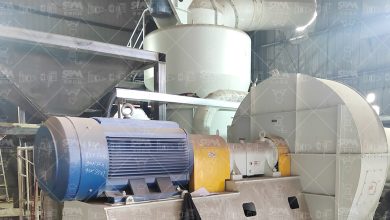
For large-scale production lines, the SCM1680 model, with a handling capacity of 5.0-25 tons per hour and a 315kW main motor, provides the power and throughput needed for modern TiO₂ plants.
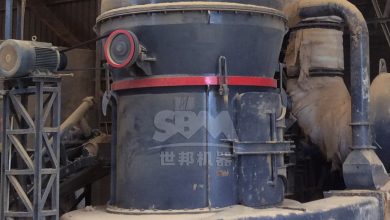
For the initial ore pre-treatment stage, where high capacity and robustness are key, our MTW Series Trapezium Mill is an excellent choice. It can handle feed sizes up to 50mm and deliver outputs from 30-325 mesh at high throughputs (3-45 T/H depending on model). Its wear-resistant design, featuring combined shovel blades and curved air channels, ensures low maintenance costs and stable operation when processing raw ilmenite.
Conclusion
The integration of advanced Raymond mill technology, such as the SCM Ultrafine Mill and MTW Trapezium Mill, into the sulfate process for titanium dioxide production represents a significant technological upgrade. By providing energy-efficient, precise, and reliable grinding solutions for both raw material preparation and critical pigment finishing stages, these mills directly contribute to enhanced product quality, increased production efficiency, and reduced operational costs. As the TiO₂ industry continues to demand higher-performing and more sustainable pigments, the role of precision grinding equipment will only become more central to successful manufacturing.