Application of Overfired Coal Gangue and Coal-series Kaolin in Industrial Production
Introduction
The sustainable utilization of industrial solid wastes and non-metallic minerals has become a critical pathway for achieving green and circular development in modern industry. Among these resources, overfired coal gangue and coal-series kaolin stand out due to their unique mineralogical composition and physicochemical properties. Overfired coal gangue, a byproduct of coal mining and washing that has undergone spontaneous combustion or high-temperature treatment, possesses significant pozzolanic activity. Coal-series kaolin, a clay mineral associated with coal seams, is valued for its high whiteness, fine particle size, and excellent plasticity. The effective processing and application of these materials hinge on advanced grinding technology to achieve the required fineness and particle size distribution for various industrial applications. This article explores their applications and highlights the pivotal role of modern milling equipment in unlocking their full potential.
Properties and Activation of Overfired Coal Gangue
Overfired coal gangue primarily consists of SiO2, Al2O3, and Fe2O3, with its key component being metakaolin formed from the dehydroxylation of kaolinite at high temperatures (550–900°C). This transformation grants it substantial pozzolanic activity, enabling it to react with calcium hydroxide in the presence of water to form cementitious compounds like calcium silicate hydrate (C-S-H) and calcium aluminate hydrate (C-A-H).
The primary industrial application of overfired coal gangue is as a supplementary cementitious material (SCM) in concrete and cement production. Replacing a portion of Portland cement (typically 10-30%) with finely ground overfired coal gangue can significantly reduce the clinker factor, thereby lowering CO2 emissions and energy consumption. It improves concrete’s long-term strength, durability against sulfate attack, and reduces heat of hydration. Beyond construction, it is used in sintered bricks, lightweight aggregates, and as a raw material for synthesizing zeolites or polymer fillers after appropriate treatment.
A critical prerequisite for these applications is achieving a superfine powder with a high specific surface area. The reactivity is directly correlated with fineness; particles need to be ground to a level where D97 is ≤ 45μm, and for high-performance applications, even down to ≤ 10μm or finer (e.g., 2500 mesh). This demands grinding equipment capable of high-efficiency, large-capacity, and energy-saving ultrafine processing.

Applications and Value Addition of Coal-series Kaolin
Coal-series kaolin, often found in coal measure strata, is distinguished by its relatively high purity and fine natural grain size. Its major applications are driven by its whiteness, chemical inertness, and lamellar structure.
- Paper Industry: As a coating and filling pigment, it enhances paper’s brightness, opacity, smoothness, and printability.
- Ceramics and Refractories: Serves as a crucial raw material for porcelain, sanitary ware, and high-alumina refractory bricks due to its high fusion point and plasticity.
- Polymers and Composites: After surface modification, it acts as a functional filler in plastics, rubber, and paints, improving mechanical strength, thermal stability, and barrier properties.
- Advanced Materials: A precursor for synthesizing molecular sieves, catalysts, and high-purity alumina.
The value of kaolin increases exponentially with its fineness and purity. For high-end applications in paper coating or functional polymers, a top-cut particle size (D97) of 2μm or even below 1μm is often required. This necessitates a grinding and classification system that can not only achieve ultrafine sizes but also ensure a narrow particle size distribution without contamination from grinding media.
The Critical Role of Grinding Technology
The transformation of overfired coal gangue and coal-series kaolin from raw materials into high-value products is fundamentally dependent on advanced comminution technology. The ideal grinding system must address several challenges: high hardness and abrasiveness of the feed material, the need for precise particle size control, high energy efficiency, and low operational costs. Traditional ball mills, while robust, often lack energy efficiency and precise classification capabilities for ultrafine grinding.
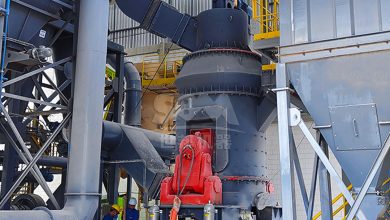
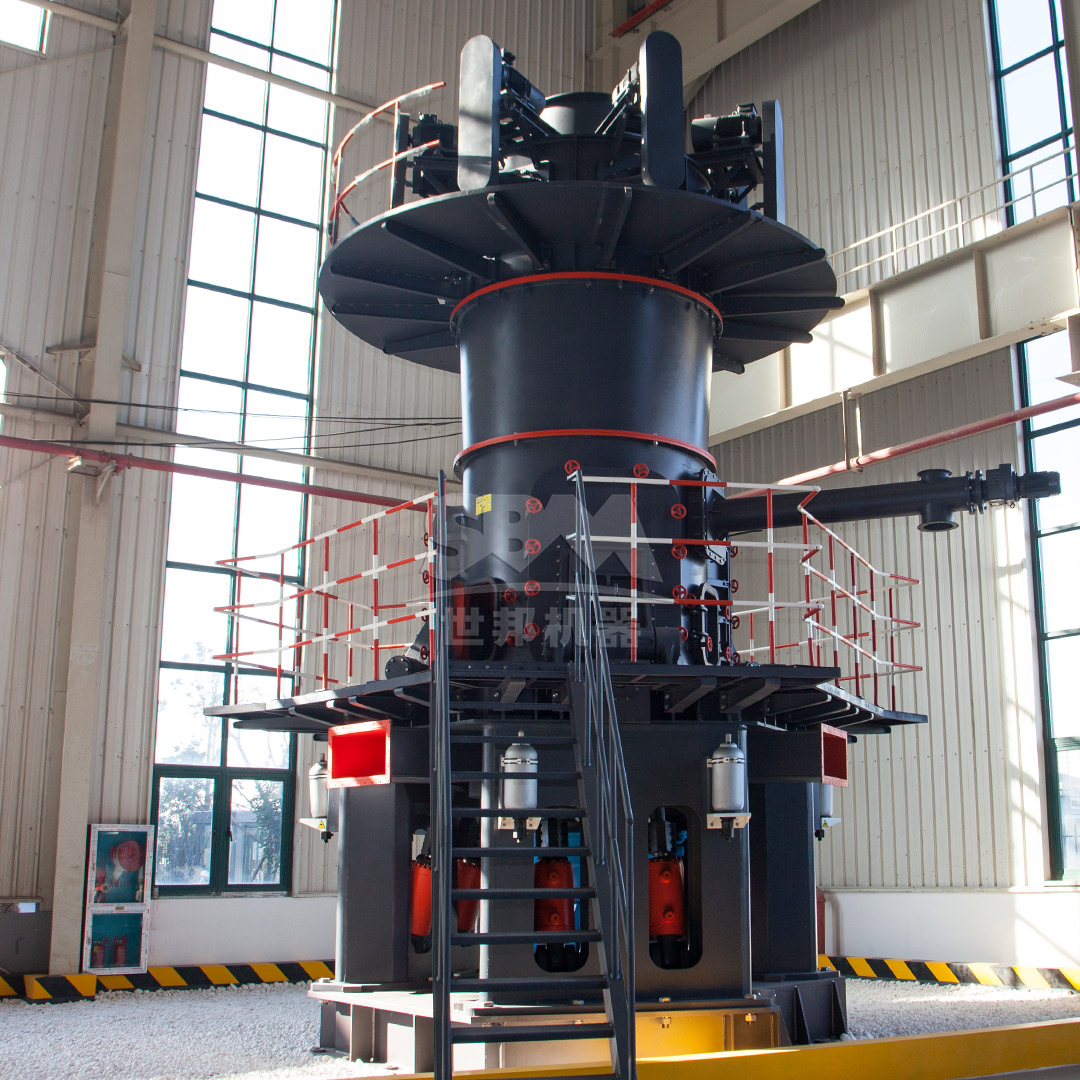
Modern vertical roller mills and ultrafine grinding mills have emerged as superior solutions. They operate on the principle of bed compression grinding, where multiple rollers press against a rotating grinding table, efficiently crushing the material layer. This method offers significantly lower energy consumption per ton of product compared to ball milling. Integrated dynamic classifiers allow for real-time adjustment of product fineness, ensuring a consistent and targeted particle size distribution crucial for activating pozzolanic materials or achieving the desired properties in kaolin pigments.
Recommended Equipment for High-Efficiency Processing
Selecting the right equipment is paramount for the economic and technical success of processing overfired coal gangue and coal-series kaolin. Based on the required fineness ranges and production scales, we highly recommend our SCM Series Ultrafine Mill and LM Series Vertical Roller Mill as optimal solutions.
SCM Series Ultrafine Mill (45-5μm)
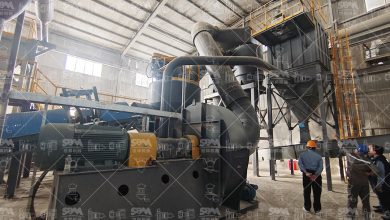
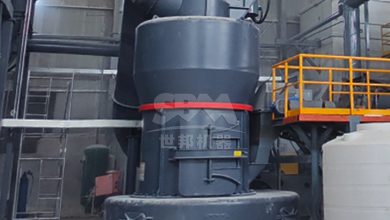
For applications demanding the highest fineness, such as producing highly reactive SCM from gangue or premium-grade coating kaolin, the SCM Ultrafine Mill is the ideal choice. Its core strength lies in producing powders in the range of 325 to 2500 mesh (D97 ≤ 5μm). Key advantages include:
- High Efficiency & Energy Saving: Offers twice the capacity of jet mills while reducing energy consumption by 30%. Its intelligent control system provides automatic feedback on product fineness.
- Precision Classification: Equipped with a vertical turbine classifier that ensures sharp particle size cuts, eliminating coarse particle contamination and delivering a uniform product.
- Robust Design: Features specially hardened grinding rollers and rings that extend service life multiple times. The bearing-less screw design in the grinding chamber ensures stable operation.
- Environmental Compliance: Incorporates a pulse dust collector with efficiency exceeding international standards and a soundproof cabin design keeping noise levels below 75dB.
With models like the SCM1250 (2.5-14 ton/h, 185kW) or the SCM1680 (5.0-25 ton/h, 315kW), it can cater to medium to large-scale production needs for superfine powders.
LM Series Vertical Roller Mill (600-45μm)
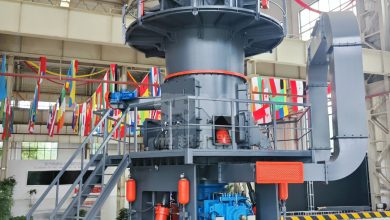
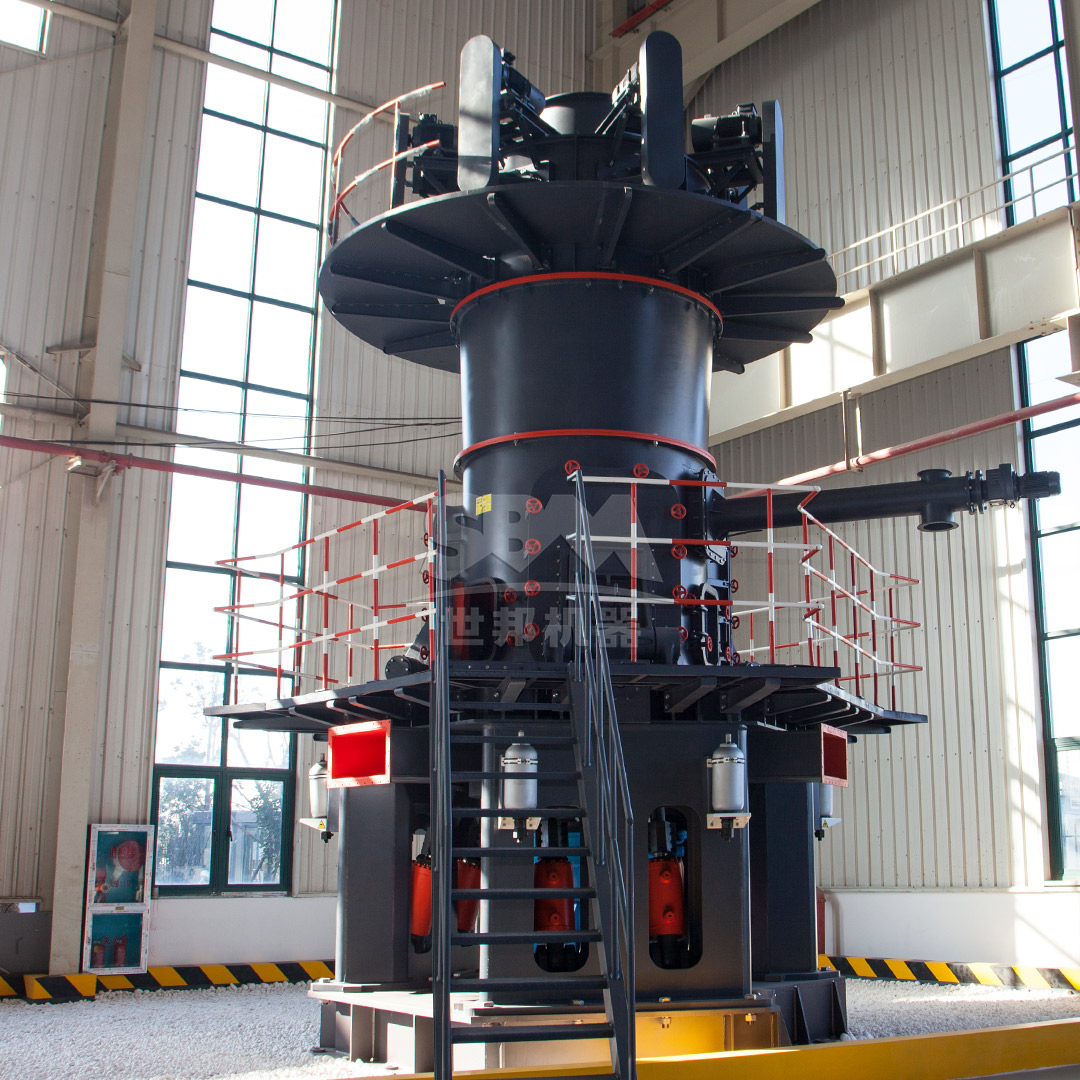
For large-scale production where the target fineness is between 30-325 mesh (600-45μm), such as for standard SCM in ready-mix concrete or filler-grade kaolin, the LM Series Vertical Roller Mill offers unparalleled efficiency and cost-effectiveness. Its standout features are:
- Integrated & Compact Design: Combines crushing, grinding, drying, and classifying in a single unit, reducing footprint by 50% and allowing for open-air installation, cutting infrastructure costs by 40%.
- Low Operational Cost: The non-contact design between rollers and grinding table extends wear part life. Its energy consumption is 30-40% lower than traditional ball mill systems.
- Intelligent Control: Features an expert automatic control system supporting remote operation and real-time parameter monitoring, minimizing manual intervention.
- Eco-friendly Operation: Fully sealed negative-pressure operation ensures dust emissions <20mg/m³ and noise levels ≤80dB(A).
Models such as the LM190K (23-68 t/h, 500kW) or the LM220K (36-105 t/h, 800kW) are perfectly suited for high-tonnage processing lines, delivering consistent quality with remarkable energy savings.
Conclusion
The valorization of overfired coal gangue and coal-series kaolin presents a significant opportunity for industrial sustainability and economic gain. Their successful integration into high-value supply chains for construction, ceramics, paper, and advanced materials is intrinsically linked to advanced powder processing technology. By employing state-of-the-art grinding solutions like the SCM Ultrafine Mill for superfine products and the LM Vertical Roller Mill for large-scale, efficient production, producers can achieve the precise particle characteristics required to maximize material performance. Investing in such technology not only enhances product quality and reduces environmental impact but also ensures a strong competitive edge in the growing market for sustainable industrial minerals.