200 Mesh Ore Grinding Mill Types and How to Choose the Best One
Introduction
In the mineral processing and powder production industries, achieving a target particle size is paramount for product quality, downstream processing efficiency, and overall economic viability. A common and critical specification is 200 mesh, which corresponds to a particle size of approximately 74 microns (0.074 mm). Selecting the right grinding mill to consistently and efficiently produce 200-mesh powder is a complex decision that hinges on multiple factors beyond just the final fineness. This article provides a comprehensive overview of the primary types of grinding mills capable of reaching 200 mesh, detailing their working principles, advantages, and typical applications. Furthermore, it outlines a systematic framework to guide you in choosing the optimal mill for your specific operation, and highlights advanced solutions from our product portfolio that excel in this fineness range.
Common Mill Types for 200 Mesh Grinding
Several mill designs are engineered to operate effectively in the medium to fine grinding range encompassing 200 mesh. The choice among them depends on capacity, feed size, material characteristics, and desired particle size distribution.
1. Raymond Mill (Pendulum Roller Mill)
A long-standing workhorse in the industry, the Raymond mill is designed for grinding non-flammable and non-explosive materials with Mohs hardness less than 7 and humidity below 6%. Its classic design features spring-loaded rollers that swing outward and press against a stationary grinding ring.
Working Principle: The central shaft rotates, causing the grinding rollers to revolve around their own axes and travel around the inner surface of the grinding ring due to centrifugal force. Shovels feed material between the rollers and the ring, where it is crushed and ground. A built-in classifier allows the fine powder to pass while returning coarse material for further grinding.
Typical Output: 30-325 mesh (0.613-0.044mm). Reaching a consistent 200 mesh is well within its standard operating range.
Advantages: Proven reliability, relatively low capital cost, easy maintenance, and good energy efficiency for its capacity range. It is suitable for medium and small-scale production.
Limitations: Lower capacity compared to larger vertical mills, not ideal for very hard materials or ultra-fine grinding beyond 325 mesh.
2. Vertical Roller Mill (VRM)
Vertical Roller Mills represent a modern, efficient solution for large-scale grinding. They integrate crushing, grinding, drying, and classifying in a single unit.
Working Principle: Material is fed onto the center of a rotating grinding table. Centrifugal force moves it outward under grinding rollers, which apply pressure. Ground material is transported by air to a classifier above the table. Coarse particles fall back for regrinding, while fine product is collected by a cyclone and bag filter.
Typical Output: Widely adjustable, commonly from 30-325 mesh (600-45μm), with special configurations capable of finer products.
Advantages: High grinding efficiency and low specific energy consumption (30-50% less than ball mills), large capacity, excellent drying capability, integrated process, and lower noise levels.
Limitations: Higher initial investment, more complex operation and maintenance, sensitive to feed material size and grindability variations.

3. Ball Mill
The ball mill is one of the most universal grinding devices, capable of both dry and wet grinding in open or closed circuit.
Working Principle: A rotating cylindrical shell, partially filled with grinding media (steel balls), imparts a tumbling and cascading action. The impact and attrition between the balls and the ore particles achieve size reduction.
Typical Output: Can be tuned from coarse (0.8mm) to very fine (0.074mm and below). 200 mesh is a standard operational target.
Advantages: Extreme versatility, can handle a wide variety of materials and fineness requirements, simple in concept, suitable for batch or continuous operation.
Limitations: Relatively high energy consumption, significant wear on liners and media, large footprint, and can be noisy.
4. Ultrafine Grinding Mill
For applications demanding consistent, high-quality powder at 200 mesh and finer (up to 2500 mesh), specialized ultrafine mills are required. These mills often combine enhanced mechanical grinding forces with highly precise air classification.
Working Principle: Building upon traditional roller mill designs, they incorporate multiple grinding rings and rollers for staged size reduction. A critical component is a high-precision, independently driven turbo classifier that ensures sharp particle size cuts and prevents coarse particles from contaminating the final product.
Typical Output: 325-2500 mesh (45-5μm). Producing 200-mesh powder is easily achieved with exceptional uniformity.
Advantages: Produces very fine and uniform powder, high classification accuracy, often more energy-efficient than traditional jet mills for comparable fineness, and designed for stable, long-term operation with durable wear parts.
Limitations: Higher investment cost, requires careful feed size control, and is primarily for dry fine grinding applications.

Key Factors for Choosing the Best 200 Mesh Mill
Selecting the ideal mill requires a holistic analysis of your project parameters. Here are the critical factors to consider:
1. Material Characteristics
- Hardness (Mohs Scale): Harder materials require more robust mills with higher grinding pressure and wear-resistant components (e.g., VRM with hardfaced rollers, ball mill).
- Moisture Content: Mills with hot air supply (like VRMs and some Raymond mills) can dry and grind simultaneously. Ball mills can be adapted for wet grinding if moisture is inherent.
- Abrasiveness: Highly abrasive materials accelerate wear. Consider mills with easily replaceable wear parts or special alloy linings.
- Chemical Properties: Consider corrosion potential, explosivity, and temperature sensitivity, which influence material choices for mill internals and may necessitate inert gas systems.
2. Production Requirements
- Capacity (Ton/Hour): This is a primary driver. Raymond/MTW mills suit small to medium scale. VRMs and large ball mills are for high-tonnage operations. Ultrafine mills cover a range but are optimized for fine product value.
- Product Fineness & Distribution: While 200 mesh is the target, the required particle size distribution (PSD) is crucial. Applications needing a narrow, consistent PSD benefit from mills with advanced, external classifiers (e.g., Ultrafine Mills, modern VRMs).
- System Integration: Do you need a simple standalone mill or a complete system with feeding, grinding, classifying, and dust collection? VRMs and packaged ultrafine mills often offer more integrated solutions.
3. Economic Considerations
- Capital Expenditure (CAPEX): Ball mills and basic Raymond mills often have lower initial costs. VRMs and ultrafine mills represent a higher investment.
- Operational Expenditure (OPEX): Evaluate energy consumption (kWh/ton), wear part lifetime and cost, and maintenance labor. VRMs typically offer lower energy OPEX. Ultrafine mills balance energy use with high-value product output.
- Total Cost of Ownership (TCO): The most important metric. Combine CAPEX, energy costs, maintenance downtime, and consumable costs over the mill’s lifespan.
4. Operational & Environmental Factors
- Footprint: VRMs have a smaller footprint than ball mills of similar capacity.
- Noise & Dust Emission: Modern mills are designed with sound enclosures and efficient, negative-pressure pulse jet bag filter systems to meet stringent environmental standards (e.g., dust emission <20mg/m³, noise ≤75-80dB).
- Automation Level: Consider the need for PLC control, remote monitoring, and automatic feedback loops for consistent product quality and reduced labor.
Recommended Solutions from Our Product Portfolio
Based on the diverse needs for 200-mesh grinding, we offer two exemplary mill series that provide superior performance, reliability, and value in their respective segments.
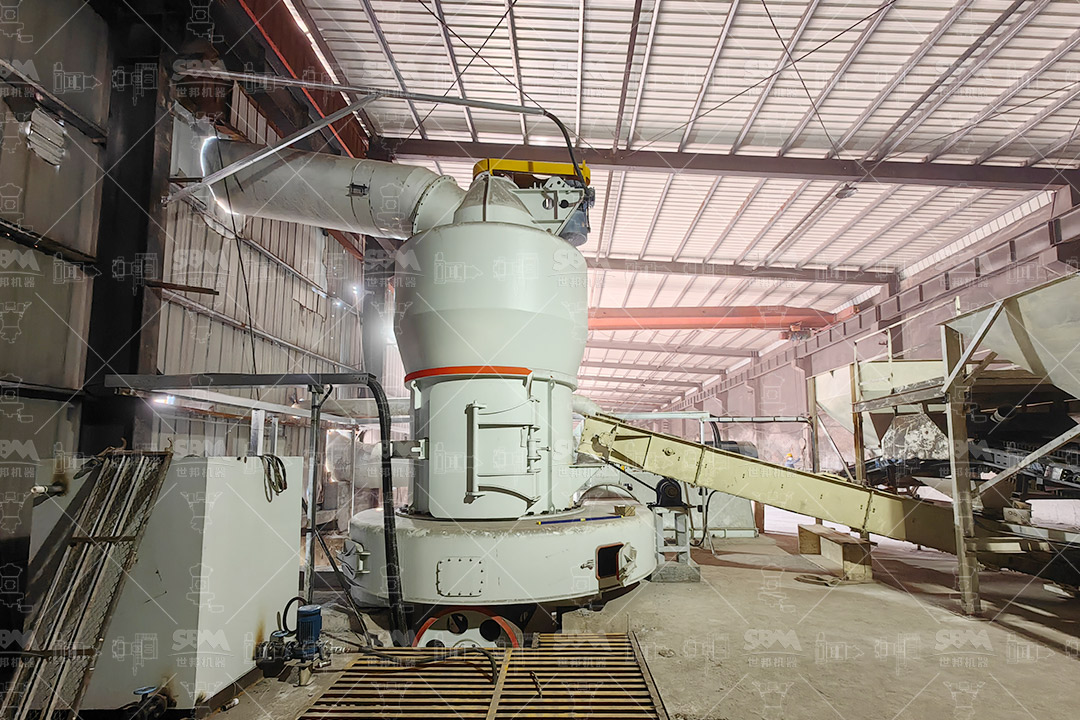
1. For High-Capacity, Efficient Grinding: MTW Series Trapezium Mill
When your project demands robust, high-capacity production in the 30-325 mesh range (perfectly encompassing 200 mesh), our MTW Series Trapezium Mill is an outstanding choice. This advanced iteration of the European-style trapezium grinder incorporates several patented technological upgrades.
Its curved air duct minimizes flow resistance and increases efficiency. The integral transmission with bevel gears delivers power with up to 98% efficiency in a compact design. A key feature for maintaining consistent 200-mesh output is its advanced internal classifier system, which ensures precise particle separation. Furthermore, the wear-resistant volute and modular shovel design significantly reduce maintenance costs and downtime. With capacities ranging from 3 to 45 tons per hour and the ability to handle feed sizes up to 50mm, the MTW series is engineered for large-scale, cost-effective operations where reliability and low operating costs are critical.
2. For Precision Ultra-Fine Grinding: SCM Series Ultrafine Mill
For applications where the target is not just 200 mesh, but a consistent, high-quality fine powder where top-cut control and uniformity are paramount—or if you require the flexibility to produce even finer products up to 2500 mesh—our SCM Series Ultrafine Mill is the definitive solution.
This mill excels in producing powder in the range of 325 to 2500 mesh (45-5μm). Its core advantage lies in the high-precision vertical turbine classifier, which guarantees a sharp particle size cut, eliminating coarse powder contamination. The grinding mechanism utilizes multiple grinding rings and rollers for staged, efficient size reduction. It is also designed for sustainability and stability: featuring special material rollers and rings for extended service life, an intelligent control system that auto-adjusts for consistent fineness, and a fully sealed system with pulse dust collection ensuring emissions meet the strictest international standards while operating at low noise levels (≤75dB). If your goal is premium-grade fine powder with exceptional consistency, the SCM Ultrafine Mill delivers unmatched performance.
Conclusion
Selecting the best grinding mill for 200-mesh production is a strategic decision that impacts your plant’s productivity, product quality, and profitability. There is no one-size-fits-all answer. By carefully evaluating your material properties, capacity needs, economic constraints, and operational goals against the capabilities of different mill types—from the reliable Raymond mill and versatile ball mill to the efficient Vertical Roller Mill and precision Ultrafine Mill—you can make an informed choice.
For operators seeking high-volume efficiency, our MTW Series Trapezium Mill offers a robust, high-capacity solution. For those prioritizing precision, uniformity, and the ability to reach ultra-fine grades, our SCM Series Ultrafine Mill stands as a technologically advanced leader. We recommend consulting with our technical experts to analyze your specific requirements and tailor the optimal grinding solution for your success.