What Equipment is Used to Process Calcium Carbonate into Powder?
Introduction to Calcium Carbonate Processing
Calcium carbonate (CaCO₃) is one of the most versatile and widely used industrial minerals, with applications spanning from plastics and paints to pharmaceuticals and construction materials. The transformation of raw calcium carbonate ore into fine powder requires specialized equipment designed to achieve specific particle size distributions, purity levels, and production capacities. This comprehensive guide explores the various types of grinding mills and auxiliary equipment used in calcium carbonate processing, with particular focus on advanced technologies that deliver superior efficiency, precision, and environmental performance.
Primary Crushing: The First Step in Size Reduction
Before fine grinding can occur, raw calcium carbonate materials typically undergo primary crushing to reduce large rocks and quarried stone to manageable sizes. Jaw crushers and hammer mills are commonly employed for this initial size reduction stage.
Hammer Mills for Preliminary Size Reduction
Hammer mills provide an efficient solution for reducing calcium carbonate from larger chunks to particles typically under 3mm. These robust machines feature rotating hammers that impact the material against stationary liners, fracturing it through repeated impacts. Modern hammer mills incorporate high-manganese steel components for extended wear resistance and optimized chamber designs that maximize throughput while minimizing energy consumption.
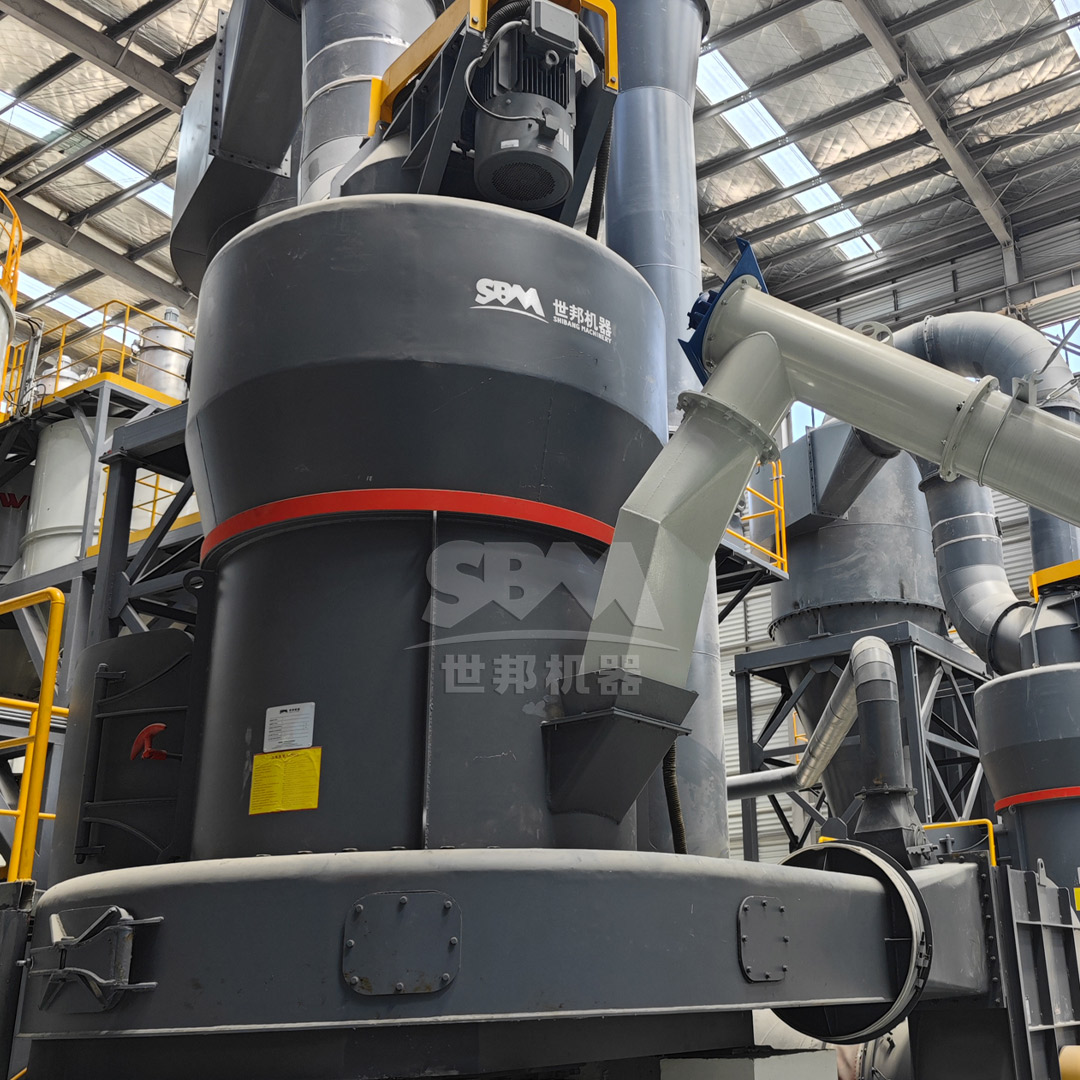
For operations requiring high-capacity preliminary crushing with minimal fines generation, hammer mills offer an excellent balance of performance and operating costs. Their relatively simple design translates to lower maintenance requirements and easier operation compared to more complex crushing systems.
Fine Grinding Equipment for Calcium Carbonate
The heart of any calcium carbonate processing plant is its fine grinding equipment. Different mill types are selected based on the desired final product specifications, production capacity requirements, and economic considerations.
Ball Mills: The Traditional Workhorse
Ball mills represent one of the oldest and most reliable technologies for grinding calcium carbonate to medium fineness (typically 0.074-0.8mm). These rotating cylinders containing grinding media (usually steel balls) utilize both impact and attrition forces to reduce particle size. While ball mills offer straightforward operation and can handle a wide range of feed materials, they tend to be less energy-efficient than more modern grinding technologies, particularly for achieving very fine particle sizes.
MTW Series Trapezium Mill: Balanced Performance for Medium-Fine Applications
For operations requiring calcium carbonate powders in the 30-325 mesh range (approximately 600-45μm), the MTW Series Trapezium Mill delivers exceptional performance with significantly better energy efficiency than traditional ball mills. This advanced grinding system incorporates several innovative features that make it particularly well-suited for calcium carbonate processing.
The MTW Series features a revolutionary curved air duct design that minimizes airflow resistance and improves material conveying efficiency. Its bevel gear overall transmission system achieves remarkable 98% transmission efficiency while saving space and reducing installation complexity. The wear-resistant volute structure eliminates flow obstruction, further enhancing air classification performance and reducing maintenance requirements by approximately 30% compared to conventional designs.

With capacity ranging from 3-45 tons per hour depending on model selection, the MTW Series accommodates everything from small specialized operations to large-scale production facilities. The combination of wear-resistant shovel design, optimized grinding element geometry, and precise classification system ensures consistent product quality with minimal oversize particles. For calcium carbonate processors seeking to balance production capacity, product quality, and operating costs in the medium-fineness range, the MTW Series Trapezium Mill represents an optimal solution.
Vertical Roller Mills: Efficiency for High-Capacity Operations
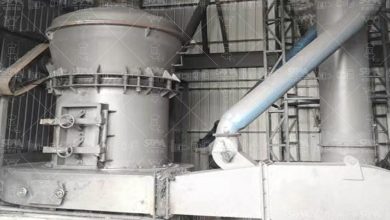
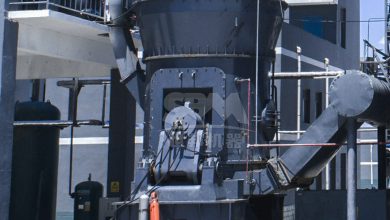
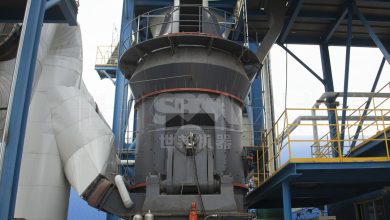
Vertical roller mills (VRMs) have gained significant popularity in the calcium carbonate industry due to their exceptional energy efficiency and ability to handle high throughput rates. These integrated systems combine grinding, drying, and classification functions within a single compact unit, dramatically reducing footprint requirements compared to traditional grinding circuits.
Modern vertical mills like the LM Series utilize a bed compression grinding principle where material is ground between a rotating table and rollers pressed against it. This mechanism is substantially more energy-efficient than the impact and attrition grinding employed in ball mills, typically reducing specific energy consumption by 30-40%. Additionally, the integrated drying capability allows VRMs to process materials with moisture contents up to 15-20% without requiring separate drying equipment.
Ultra-Fine Grinding Technologies
Many advanced applications demand calcium carbonate powders with particle sizes significantly finer than what conventional mills can economically produce. For these requirements, specialized ultra-fine grinding equipment is essential.
SCM Ultrafine Mill: Precision Engineering for Superior Fineness
When product specifications call for calcium carbonate powders in the 325-2500 mesh range (D97 ≤ 5μm), the SCM Ultrafine Mill stands as the technology of choice for discerning processors. This advanced grinding system represents the culmination of decades of research and development in ultra-fine powder processing technology.
The SCM Ultrafine Mill delivers remarkable performance characteristics that set it apart from conventional grinding equipment. With energy consumption approximately 30% lower than jet mills and capacity twice that of comparable fluidized bed opposed jet mills, it establishes new benchmarks for efficiency in ultra-fine grinding applications. This exceptional performance stems from its innovative design featuring a vertical turbine classifier that provides precise particle size cuts without coarse powder contamination, ensuring exceptional product uniformity.
Durability represents another key advantage of the SCM series. Special material roller and ring designs extend service life multiple times over conventional components, while the bearing-free screw grinding chamber enhances operational stability and reduces maintenance requirements. From an environmental perspective, the integrated pulse dust collection system exceeds international standards for emissions control, and comprehensive sound insulation maintains operational noise levels below 75dB.

The operational principle of the SCM Ultrafine Mill involves a main motor driving multiple layers of grinding rings to rotate. Material is dispersed into the grinding path by centrifugal force, undergoing sequential compression and grinding operations before final collection through a cyclone separator and pulse dust collection system. This multi-stage approach ensures optimal particle size distribution with minimal energy input.
With models ranging from the SCM800 (0.5-4.5 ton/hour capacity) to the high-capacity SCM1680 (5.0-25 ton/hour), the series offers solutions for operations of all scales. For calcium carbonate processors targeting the premium ultra-fine powder market, the SCM Ultrafine Mill provides the technological edge needed to produce superior products with exceptional economic efficiency.
Auxiliary Equipment in Calcium Carbonate Processing
A complete calcium carbonate processing circuit requires several auxiliary systems to support the primary grinding operation.
Classification Systems
Modern classification technology is essential for achieving tight particle size distributions. Air classifiers separate fine particles from coarse material based on aerodynamic properties, allowing precise control over the final product’s top size and size distribution. Advanced classifiers incorporate multiple rotor stages and adjustable parameters to optimize separation efficiency across different product specifications.
Dust Collection and Material Handling
Given the dusty nature of calcium carbonate processing, efficient dust collection is critical for both product recovery and environmental compliance. Pulse-jet baghouse filters represent the current industry standard, offering collection efficiencies exceeding 99.9%. These systems are typically complemented by appropriate material handling equipment including screw conveyors, bucket elevators, and pneumatic conveying systems designed to handle fine powders without degradation or segregation.
Selecting the Right Equipment for Your Application
The optimal equipment selection for a calcium carbonate processing operation depends on multiple factors including:
- Desired final product specifications (particle size distribution, brightness, etc.)
- Required production capacity
- Feed material characteristics (hardness, moisture content, impurities)
- Available utilities (power costs, water availability)
- Capital and operating budget constraints
- Environmental regulations and space limitations
As a general guideline, hammer mills serve well for primary crushing applications, while MTW Series Trapezium Mills offer excellent performance for medium-fine products. For ultra-fine applications demanding precise particle size control down to the micron range, the SCM Ultrafine Mill represents the current state of the art in grinding technology.
Conclusion
The transformation of raw calcium carbonate into precisely specified powder products requires carefully selected processing equipment matched to specific application requirements. From primary crushing through ultra-fine grinding, modern milling technologies offer unprecedented levels of efficiency, control, and reliability. By understanding the capabilities and advantages of different equipment types—from the robust MTW Series Trapezium Mill for medium-fine applications to the cutting-edge SCM Ultrafine Mill for premium ultra-fine products—processors can optimize their operations for quality, efficiency, and profitability in an increasingly competitive marketplace.