
Can Coal Gangue Be Used to Produce Kaolin? Process and Applications Explained
The mining and energy industries face a significant challenge in managing the vast quantities of coal gangue, a byproduct of coal mining and washing. Traditionally considered a waste material, coal gangue poses environmental risks through land occupation, spontaneous combustion, and potential leaching of heavy metals. However, recent advancements in mineral processing technology have revealed a promising pathway: transforming this industrial waste into a valuable resource—high-quality kaolin. This article delves into the feasibility, detailed process, and applications of producing kaolin from coal gangue, highlighting the critical role of advanced grinding equipment in this value-added recycling endeavor.
From Waste to Resource: The Compositional Basis
Coal gangue is not a uniform material; its composition varies significantly based on the geological formation of the coal seam. Crucially, a substantial portion of coal gangue contains high levels of kaolinite (Al2Si2O5(OH)4), the primary mineral constituent of kaolin. Other common components include quartz, carbonaceous matter, mica, and feldspar. The process of converting gangue into kaolin essentially involves separating and purifying the kaolinite from these associated impurities. The feasibility hinges on the gangue’s kaolinite content, which can range from 20% to over 80% in suitable sources, making selective mining and feedstock pre-sorting the first critical step.
The Production Process: A Step-by-Step Breakdown
The transformation of raw coal gangue into commercial-grade kaolin is a multi-stage process requiring precise mechanical and chemical interventions.
1. Pre-Treatment and Crushing
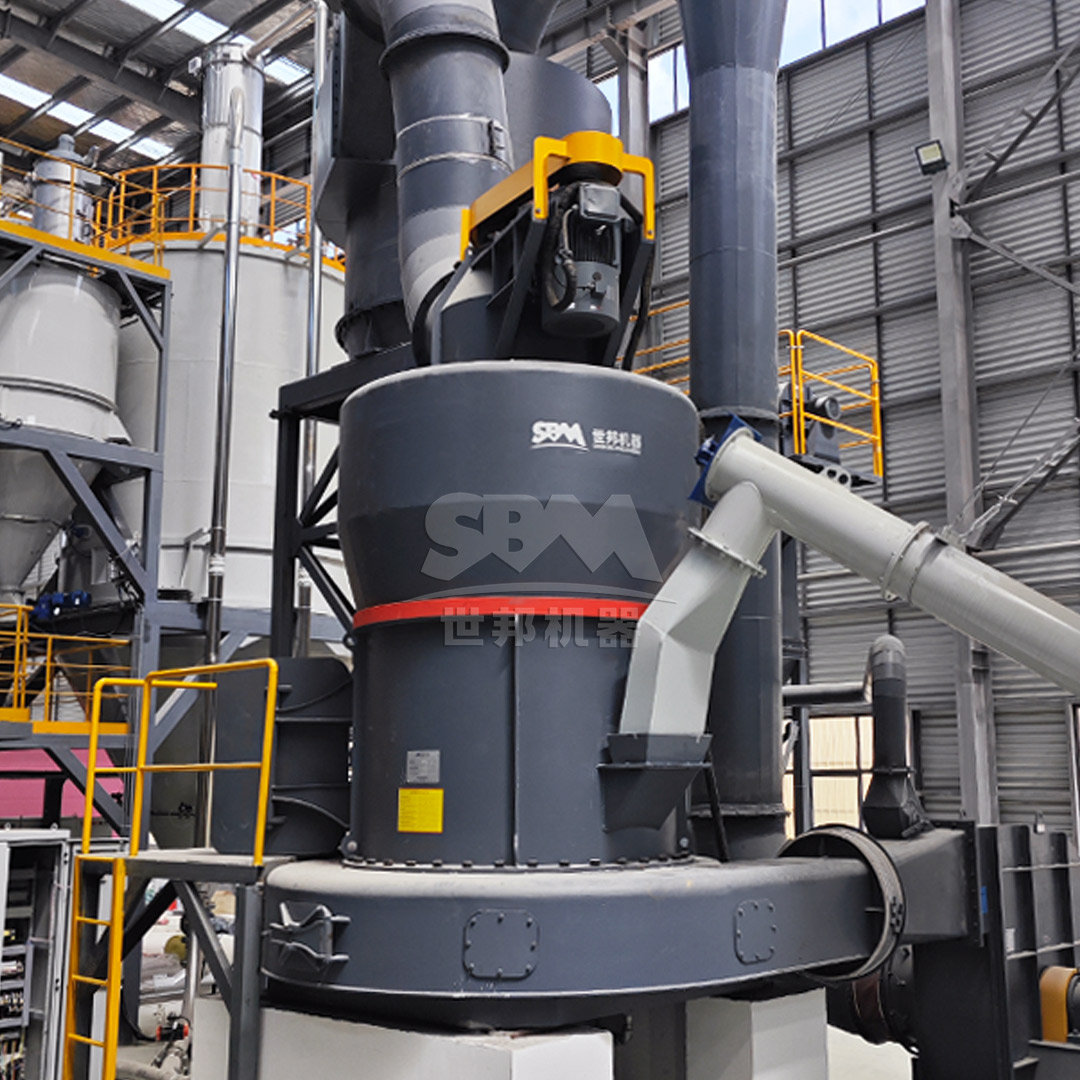
The raw gangue is first subjected to washing to remove loose dirt and soluble salts. It is then crushed to a manageable size, typically below 50mm, using primary crushers like jaw crushers. This step prepares the material for subsequent liberation of kaolinite particles from the gangue matrix.
2. Calcination (For Calcined Kaolin)
For producing calcined kaolin—a product valued for its brightness, opacity, and abrasiveness—the crushed gangue is fed into a rotary kiln or flash calciner. Controlled heating to temperatures between 600°C and 1050°C drives off chemically bound water (dehydroxylation), removes organic carbon, and alters the crystal structure of kaolinite to metakaolin or mullite, depending on the temperature. This process significantly enhances whiteness and chemical inertness.
3. Grinding and Classification: The Heart of the Process
This is the most critical stage for determining the final product’s fineness, particle size distribution (PSD), and quality. Whether processing raw or calcined material, ultra-fine grinding is essential to liberate kaolinite platelets and achieve the desired fineness (often from 325 mesh to 2500 mesh or 45μm down to 5μm). Efficient grinding directly impacts brightness, viscosity, and other key performance indicators of the kaolin.
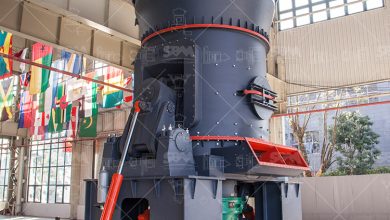
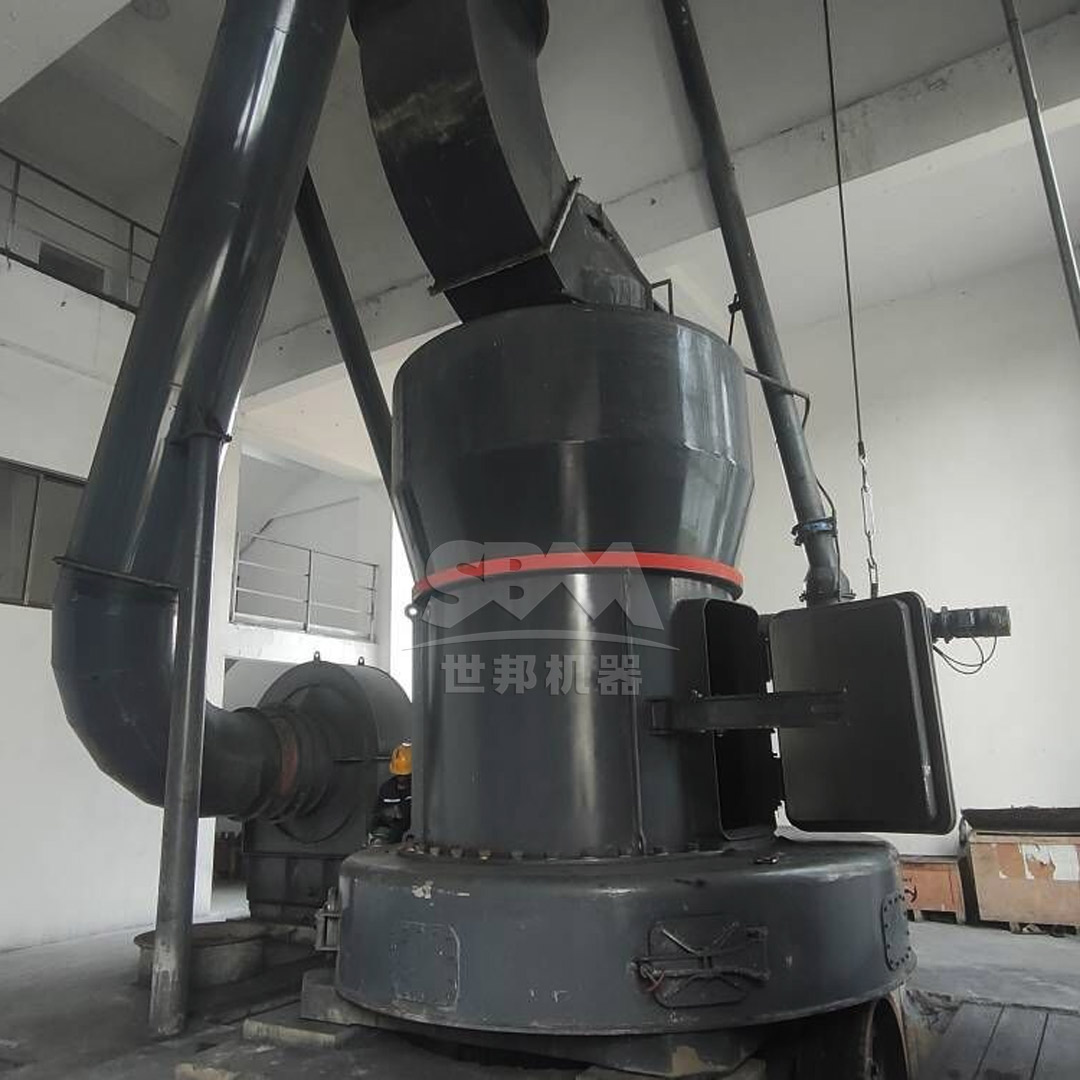
For the coarse to medium-fine grinding stage (e.g., from 50mm down to 30-325 mesh or 600-45μm), the MTW Series European Trapezium Mill is an exemplary choice. Its advantages are perfectly suited for this duty:
- High Capacity & Robustness: With an input size of up to 50mm and capacity ranging from 3 to 45 tons per hour, it can handle the initial high-volume reduction of pre-crushed gangue efficiently.
- Optimized Grinding Efficiency: The anti-wear shovel design and curved grinding rollers ensure effective crushing of the abrasive gangue material while extending wear-part life and reducing maintenance costs.
- Precise Preliminary Classification: Its integral bevel gear drive and optimized arc air duct work in tandem with the classifier to provide a consistent, controlled product fineness in the 30-325 mesh range, preparing material for further ultra-fine processing or serving as a final product for certain industrial applications.
4. Ultra-Fine Grinding and Purification
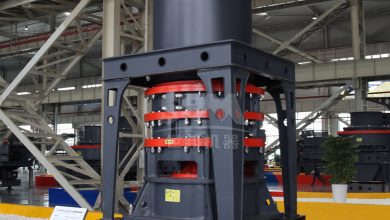
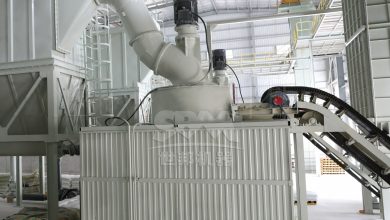
To produce high-value, coating-grade kaolin, the material from the MTW mill or after calcination must be ground to sub-micron levels. This requires specialized ultra-fine grinding technology. Here, the SCM Series Ultrafine Mill excels. It is specifically engineered for producing powders in the 325-2500 mesh (45-5μm) range, which is ideal for premium kaolin.
- Exceptional Fineness & Uniformity: Equipped with a high-precision vertical turbine classifier, the SCM mill ensures sharp particle size cuts, eliminating coarse particles and delivering a uniform product essential for kaolin’s performance in paper, paint, and ceramics.
- Energy-Efficient Operation: Its grinding principle offers capacity twice that of jet mills while consuming 30% less energy, significantly lowering the operational cost of producing ultra-fine kaolin.
- Durable & Eco-friendly: The mill features special material rollers and rings for extended service life when processing abrasive materials. Its fully sealed system with high-efficiency pulse dust collection ensures a clean production environment, a must for high-purity mineral processing.
5. Beneficiation and Surface Treatment
The ground kaolin slurry may undergo further beneficiation processes like magnetic separation to remove iron impurities, froth flotation to remove titania, or chemical bleaching to enhance brightness. Finally, for specialized applications, the kaolin may be surface-modified with silanes or other agents to improve its compatibility with polymer matrices in plastics and rubber.
Applications of Gangue-Derived Kaolin
The kaolin produced from coal gangue finds extensive applications across industries, mirroring those of primary kaolin:
- Paper Industry: As a filler and coating pigment to improve paper’s brightness, opacity, smoothness, and printability.
- Ceramics: A vital component in porcelain, sanitaryware, and tiles, providing plasticity, strength, and whiteness to the fired body.
- Paints & Coatings: Used as an extender and opacifier, improving suspension, brushability, and film durability.
- Plastics & Rubber: As a functional filler to enhance mechanical strength, electrical resistance, and dimensional stability.
- Construction Materials: In fiberglass, cement, and concrete as a pozzolanic material (especially metakaolin from calcined gangue) to improve performance.
- Advanced Applications: Calcined and ultra-fine kaolin is used in catalysts, pharmaceuticals, and as a carrier for pesticides.
Conclusion: A Sustainable and Economical Pathway
Producing kaolin from coal gangue is not only technically feasible but also represents a paradigm shift towards a circular economy in the mining sector. It transforms an environmental liability into a commercially valuable product, reducing waste stockpiles and the need for virgin kaolin mining. The success of this transformation heavily relies on advanced, efficient, and reliable grinding technology. Equipment like the MTW Series European Trapezium Mill for primary grinding and the SCM Series Ultrafine Mill for final product refinement are indispensable in this process, enabling producers to achieve the precise particle sizes and high-quality standards demanded by the market. By adopting such integrated processing solutions, industries can unlock the hidden value in coal gangue, contributing to both economic gain and environmental sustainability.