How Vanadium-Titanium Slag Grinding Technology Enables the Use of Low-Activity Slag in Building Materials
Introduction: The Challenge of Low-Activity Vanadium-Titanium Slag
The metallurgical industry generates vast quantities of vanadium-titanium slag as a by-product of steel and titanium production. While possessing latent cementitious properties, its inherent low hydraulic activity, high hardness, and complex mineralogical composition have historically limited its large-scale application in high-value building materials like cement and concrete. The key to unlocking this industrial solid waste as a sustainable supplementary cementitious material (SCM) lies in advanced grinding technology. By transforming the physical and chemical characteristics of the slag particles, modern grinding systems can significantly enhance its reactivity, paving the way for its effective utilization and contributing to a circular economy.
The Science of Activation: From Inert Waste to Reactive Powder
The low activity of raw vanadium-titanium slag stems from its stable crystalline structure, primarily composed of minerals like perovskite and spinel. To activate it, grinding serves a dual purpose:
- Physical Activation (Increasing Specific Surface Area): The primary goal is to reduce particle size, thereby exponentially increasing the specific surface area available for reaction with water and calcium hydroxide during cement hydration. Finer particles provide more nucleation sites and accelerate pozzolanic reactions.
- Mechanochemical Activation (Disrupting Crystal Structure): High-intensity grinding imparts significant mechanical energy to the slag particles. This energy can induce lattice distortion, create micro-cracks, and even partially amorphize the crystal surfaces. This structural disordering lowers the activation energy required for the slag to react, effectively “waking up” its latent hydraulic properties.
For vanadium-titanium slag, achieving an optimal balance between extreme fineness (often exceeding 450 m²/kg Blaine) and controlled particle size distribution is critical. An overly broad distribution or insufficient top-cut size can leave unreacted coarse particles that act as weak spots in the final matrix.
Core Requirements for Vanadium-Titanium Slag Grinding Systems
Grinding this challenging material places specific demands on milling equipment, which must excel in several key areas:
- High Grinding Efficiency & Wear Resistance: The slag’s abrasiveness necessitates grinding elements (rollers, tables, liners) made from special alloy materials to withstand prolonged operation and maintain consistent output quality.
- Precise Classification & Particle Size Control: An integrated, high-efficiency classifier is non-negotiable. It must ensure sharp cuts to remove coarse particles and guarantee a uniform, ultra-fine product, directly influencing the slag’s reactivity index.
- Energy Efficiency: The grinding process is energy-intensive. Systems must employ optimized grinding principles (e.g., bed crushing) and intelligent drives to minimize specific energy consumption (kWh/ton), making the process economically viable.
- System Reliability & Automation: Stable, continuous operation with minimal downtime is essential for industrial production. Advanced control systems that monitor key parameters like pressure, temperature, and fineness are crucial for consistent product quality.
Technological Solutions: Advanced Mill Configurations
Several grinding system architectures have proven effective for processing vanadium-titanium slag, each with distinct advantages.
Vertical Roller Mills (VRM): The Industry Workhorse
Vertical Roller Mills have become the standard for slag grinding due to their integrated design and efficiency. Material is ground between rotating rollers and a stationary table, with hot air simultaneously drying and transporting the powder to an integrated classifier.
Advantages for Slag: Excellent energy efficiency (30-50% less than ball mills), combined drying-grinding-classification in a single unit, and relatively low wear rates due to the bed-compaction grinding principle.
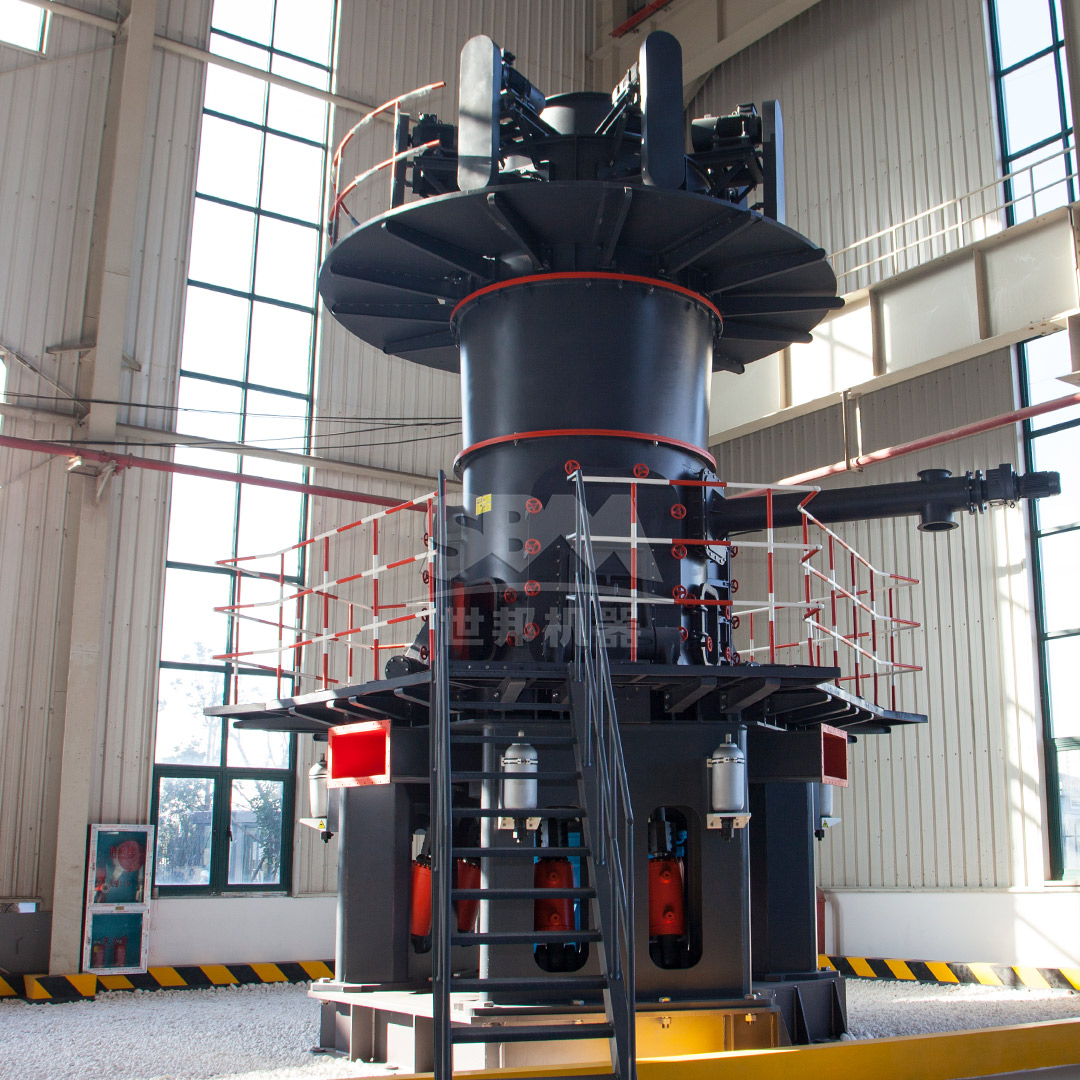
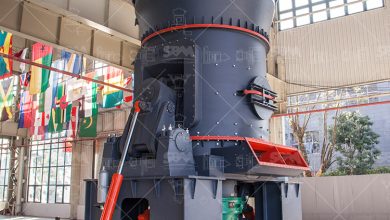
For large-scale production of vanadium-titanium slag powder, our LM Series Vertical Roller Mill is an exemplary solution. Its integrated design crushes, grinds, dries, and classifies in one unit, reducing floor space by 50%. Crucially, its non-contact design between rollers and table and the use of special wear-resistant materials extend service life significantly—a vital feature for abrasive slags. With energy consumption 30-40% lower than traditional ball mill systems and a fully sealed negative pressure operation ensuring dust emissions meet the strictest standards, the LM series, such as the LM190K or LM220K models, offers a reliable and economical pathway to producing high-quality slag powder at capacities from 23 to over 100 tons per hour.
Ultrafine Grinding Mills: Unlocking Maximum Reactivity
To push the fineness and reactivity of slag powder to its maximum potential—for specialized applications like high-performance concrete or as a direct cement replacement—ultrafine grinding technology is employed.
Advantages for Slag: Capable of producing powders in the range of 5-45μm (325-2500 mesh) with a very narrow particle size distribution. This extreme fineness maximizes the specific surface area and mechanochemical activation, yielding a highly reactive product.
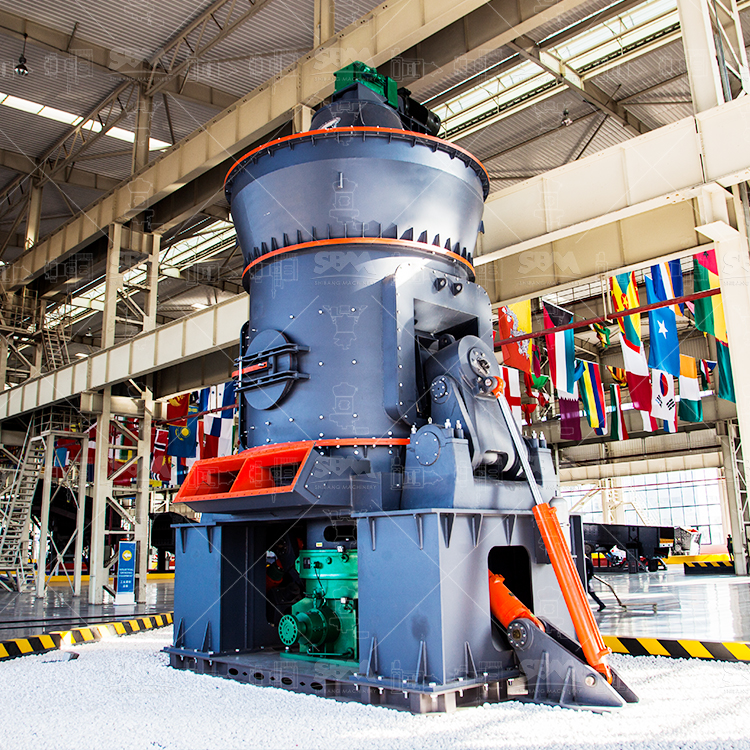
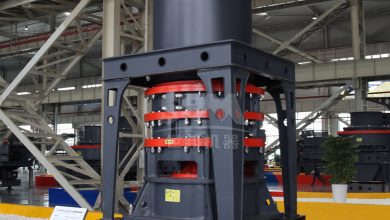
When the project goal is to produce the highest-activity slag powder for premium building materials, our SCM Series Ultrafine Mill is the technology of choice. Engineered for precision, it features a vertical turbine classifier that achieves precise particle size cuts, ensuring no coarse powder mixes into the final, uniformly fine product. Its capacity is twice that of comparable jet mills while consuming 30% less energy. Models like the SCM1250 can process 2.5-14 tons per hour of vanadium-titanium slag to a fineness of 325-2500 mesh (45-5μm), activating its latent properties to the fullest. The durable design, with special material rollers and rings, stands up to the demanding grinding task, ensuring long-term, stable operation.
Integration into Building Material Production
The high-quality powder produced by these advanced grinding systems can be utilized in multiple ways:
- Blended Cement: Directly interground or blended with Portland cement clinker to produce Portland-slag cement, reducing clinker factor and CO₂ emissions.
- Concrete Addition: Used as a Type II addition in concrete production, partially replacing cement to improve long-term strength, reduce permeability, and enhance durability against sulfate attack.
- Geopolymer Binders: The activated, amorphous slag can serve as a prime precursor for alkali-activated geopolymer binders, offering a low-carbon alternative to traditional cement.
Conclusion: A Sustainable Synergy
The transformation of low-activity vanadium-titanium slag into a valuable building material resource is a triumph of process engineering. Advanced grinding technology, exemplified by robust Vertical Roller Mills and high-precision Ultrafine Mills, is the critical enabler. By providing the necessary mechanical energy to refine and activate the slag particles, these systems close the industrial loop, turning waste into wealth. This not only addresses solid waste management challenges for the metallurgical sector but also provides the construction industry with a high-performance, sustainable material, driving both sectors toward a more resource-efficient and environmentally responsible future.