Introduction to Steel Slag Vertical Roller Mill Technology
Introduction to Steel Slag Vertical Roller Mill Technology
The steel industry generates vast quantities of slag as a by-product, a material that, if not processed efficiently, represents both an environmental challenge and a wasted resource. The utilization of steel slag in applications such as cement production, road construction, and soil stabilization requires fine grinding to unlock its latent hydraulic properties. Vertical Roller Mill (VRM) technology has emerged as the preeminent solution for this demanding task, offering unparalleled efficiency, reliability, and control compared to traditional ball mill systems. This article delves into the core principles, technological advantages, and operational specifics of VRM technology for steel slag grinding.
1. The Imperative for Efficient Slag Processing
Steel slag is a hard, abrasive material with a high Bond Work Index, making it notoriously difficult to grind. Traditional ball mills, while robust, are energy-intensive, noisy, and offer limited control over the final product’s particle size distribution. The modern construction and cement industries demand finely ground slag with a high specific surface area (often >420 m²/kg) to act as a high-quality supplementary cementitious material (SCM). This necessitates a grinding technology that is not only powerful but also precise and economical. The Vertical Roller Mill answers this call by fundamentally rethinking the comminution process.
2. Core Working Principle of a Vertical Roller Mill for Slag
The operation of a Vertical Roller Mill for slag is an elegant integration of multiple processes into a single, compact unit. The key stages are:
- Feed Introduction: Dried steel slag with a moisture content typically below 15% and an input size of ≤50mm is fed onto the center of a rotating grinding table via a sealed airlock feeder.
- Grinding: As the table rotates, centrifugal force moves the material outward under the grinding rollers. Hydropneumatic springs or hydraulic cylinders exert significant pressure (grinding force) onto the material bed, causing inter-particle comminution and fracture. This ‘bed grinding’ principle is far more efficient than the impact and attrition methods of ball mills.
- Drying and Classification: Hot gases (often from a dedicated hot gas generator) are introduced into the mill housing. These gases simultaneously dry the moisture in the slag and transport the finer particles upwards to an integrated, high-efficiency dynamic classifier.
- Separation: The classifier, a precision turbine, spins at adjustable speeds. Centrifugal force rejects oversize particles, which fall back onto the grinding table for further size reduction. The correctly sized fines are carried by the gas stream out of the mill housing.
- Product Collection: The gas-powder mixture enters a highly efficient baghouse or pulse-jet dust collector, where the final product is separated and collected. The clean gas is then recirculated or discharged, meeting stringent environmental standards with emissions often below 20 mg/Nm³.

3. Technological Advantages Over Traditional Systems
The VRM’s design confers several critical advantages for slag grinding applications:
- High Grinding Efficiency & Low Energy Consumption: The direct grinding of material on the table eliminates the need for lifting media (like steel balls), reducing energy consumption by 30-50% compared to ball mills. The focused pressure on the bed of material is a highly efficient method of size reduction.
- Precise Particle Size Control: The integrated dynamic classifier allows for instant and precise adjustment of the product fineness by changing its rotor speed. This ensures a consistent, narrow particle size distribution critical for slag’s reactivity in cement.
- Integrated Drying: The ability to use hot gases enables the mill to handle materials with significant moisture content, eliminating the need for a separate, energy-intensive drying system.
- Compact Footprint & Low Noise: VRMs have a significantly smaller footprint than ball mill circuits of equivalent capacity. Their fully enclosed design also results in much lower noise levels, typically below 80 dB(A).
- Excellent Reliability & Wear Protection: Critical wear parts like rollers and table liners are made from advanced composite materials with high hardness and toughness, offering extended operational lifetimes. Modern designs feature modular roller assemblies that can be replaced quickly, minimizing downtime.

4. Introducing Our LM Series Vertical Slag Mill
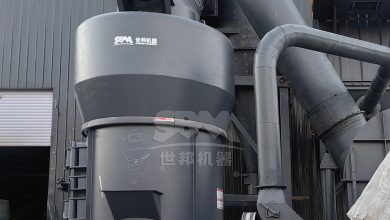
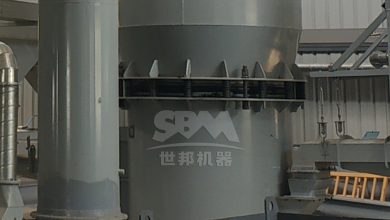
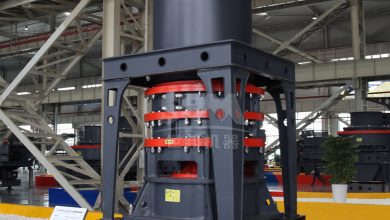
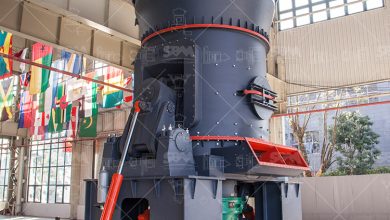
For the most demanding steel slag grinding applications, we highly recommend our flagship LM Series Vertical Slag Mill. This mill is engineered from the ground up to handle the abrasive and hard nature of granulated blast furnace slag and steel slag, transforming it into a valuable product.
The LM series embodies all the technological advantages discussed. Its集约化设计 (Intensive Design) integrates crushing, grinding, drying, and classification into one unit, reducing space requirements by 50% and slashing foundation costs. It operates with remarkably low running costs; its non-contact grinding curve design and premium wear materials extend service life by a factor of three while reducing energy consumption by 30-40% versus traditional systems.
Operators benefit from an expert automatic control system that allows for remote monitoring and adjustment of key parameters, ensuring optimal performance with minimal manual intervention. Furthermore, its fully sealed negative-pressure operation guarantees that dust emissions are maintained below 20 mg/m³, making it an environmentally sound choice.
The LM series is available in a comprehensive range of models to match any production requirement, from pilot-scale projects to massive industrial outputs. Key models include the LM130N (4-6 t/h), LM190N (10-12 t/h), and the high-capacity LM220N (20-26 t/h) and LM280N (50-60 t/h), all capable of producing powder with a specific surface area exceeding 420 m²/kg and a moisture content of ≤1%.
5. Conclusion
The adoption of Vertical Roller Mill technology is a decisive step forward in the value-added processing of steel slag. Its superior efficiency, precise control, and environmental benefits make it the undisputed benchmark in the industry. By investing in advanced VRM systems like our LM Series Vertical Slag Mill, producers can not only improve their bottom line through significant energy savings and high availability but also contribute to a more sustainable circular economy by effectively converting an industrial by-product into a high-performance construction material.