What Are the Uses of Ultra-Fine Composite Steel Slag Powder and Can Vertical Mill Produce It?
Introduction: Transforming Waste into a High-Value Resource
The global steel industry generates vast quantities of steel slag as a by-product, traditionally viewed as a waste material requiring disposal. However, with advancements in processing technology, this industrial residue is being transformed into a valuable resource known as Ultra-Fine Composite Steel Slag Powder (UFCSSP). This finely ground powder, typically with a particle size distribution where D97 is ≤ 5μm (equivalent to over 2500 mesh), unlocks significant latent hydraulic and pozzolanic activity. This article explores the diverse applications of UFCSSP and critically examines the production capabilities of vertical roller mills, the leading technology for its efficient and high-quality manufacture.
Comprehensive Applications of Ultra-Fine Composite Steel Slag Powder
The value of UFCSSP lies in its chemical composition—primarily calcium silicates—and its ultra-fine physical structure, which dramatically increases its surface area and reactivity.
1. High-Performance Cement and Concrete
This is the primary and most significant application area. UFCSSP acts as a high-quality supplementary cementitious material (SCM).
- Partial Cement Replacement (30-70%): It significantly reduces the clinker factor in cement production, leading to a drastic decrease in CO2 emissions and energy consumption. The resulting composite cement offers improved long-term strength, enhanced durability against sulfate attack and chloride penetration, and lower heat of hydration.
- Ultra-High Performance Concrete (UHPC): The ultra-fine particles fill the microscopic voids between cement grains, creating a denser matrix. This leads to exceptional mechanical strength (compressive strength often exceeding 150 MPa), extremely low permeability, and superior durability, making it ideal for critical infrastructure like bridges, high-rise buildings, and marine structures.
- Specialty Grouts and Repair Mortars: Its fine particle size and controlled reactivity make it perfect for non-shrink grouts, injection grouts, and high-bond repair mortars where flowability, final strength, and dimensional stability are paramount.
2. Advanced Construction Materials
Beyond conventional concrete, UFCSSP enables innovative material solutions.
- Autoclaved Aerated Concrete (AAC): It serves as a key silica-rich component, reacting with lime under high-pressure steam to form strong calcium silicate hydrates, contributing to the lightweight and insulating properties of AAC blocks.
- Precast Concrete Elements: The improved early and final strength gain allows for faster demolding cycles and higher production efficiency in precast plants, while also yielding products with better surface finish and durability.
- Soil Stabilization: UFCSSP can be used to treat soft or expansive soils, improving their bearing capacity and reducing swell potential for road subgrades and foundation works.

3. Non-Construction Industrial Uses
The applications extend into other industrial sectors.
- Raw Material in Ceramics and Glass: Its iron, calcium, and silica content can be utilized in the production of certain glass types and ceramic frits.
- Adsorbent for Wastewater Treatment: The high surface area and chemical composition allow UFCSSP to adsorb heavy metals and phosphates from industrial wastewater.
- Agricultural Soil Amendment: In controlled applications, it can provide essential micronutrients like silicon, calcium, and magnesium to improve soil structure and plant health.
The Production Challenge: Why Vertical Mills Are the Ideal Solution
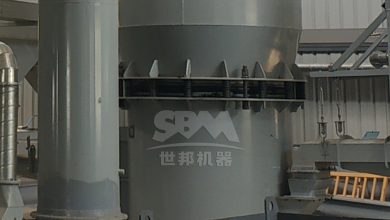
Producing UFCSSP is technologically demanding. The goal is to achieve a consistent, ultra-fine powder (D97 ≤ 5μm) from a hard, abrasive feed material (steel slag) with high efficiency and low operational cost. Traditional ball mills are energy-intensive and struggle to achieve such fine sizes efficiently. This is where modern vertical roller mill (VRM) technology excels.
Key Advantages of Vertical Mills for UFCSSP Production
- High Grinding Efficiency & Low Energy Consumption: VRMs employ a bed-compression grinding principle, where multiple rollers press against a rotating grinding table. This method is far more energy-efficient than the impact and attrition in ball mills, typically reducing specific energy consumption by 30-50%.
- Integrated Drying and Grinding: Hot gas can be introduced directly into the grinding chamber, simultaneously drying moist slag (up to 15-20% moisture) and transporting the ground powder. This eliminates the need for a separate, energy-intensive dryer.
- Precise Particle Size Control: An integrated dynamic classifier (often a high-efficiency turbine type) is mounted atop the mill. It allows for real-time, precise control of the product fineness by adjusting the rotor speed, ensuring the consistent production of D97 ≤ 5μm powder.
- Compact Footprint and Low Noise: VRMs have a significantly smaller footprint than a ball mill circuit of equivalent capacity. Their fully enclosed design also results in lower noise levels (typically below 80 dB) and contains dust effectively.
Recommended Solution: The LM Series Vertical Slag Mill
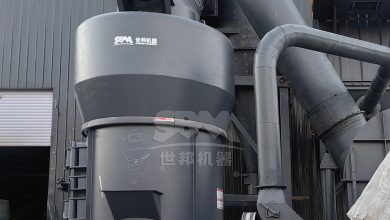
For the dedicated, large-scale production of high-quality Ultra-Fine Composite Steel Slag Powder, our LM Series Vertical Slag Mill is the engineered solution of choice. This mill is specifically designed to handle the abrasive and hard characteristics of granulated blast furnace slag and steel slag, transforming it into a premium SCM.

The LM Slag Mill series incorporates several critical features for this application:
- Robust, Wear-Resistant Design: Key wear parts like grinding rollers and the grinding table liner are made from special alloy materials with exceptional hardness and durability, extending service life and reducing maintenance downtime.
- Advanced Grinding Technology: The optimized grinding curve and pressure ensure efficient particle breakage and a narrow particle size distribution, which is crucial for the reactivity of the final slag powder.
- High-Efficiency SLS Dynamic Classifier: This integrated classifier is capable of achieving the stringent fineness requirements for UFCSSP, producing powder with a specific surface area consistently exceeding 420 m²/kg (Blaine).
- Intelligent Control System: An expert automation system monitors and controls all parameters—feed rate, grinding pressure, gas flow, and classifier speed—ensuring stable operation at optimal efficiency and consistent product quality.
- Proven Performance: With models like the LM220N (capacity: 20-26 t/h, main motor power: 900-1000 kW) and the LM370N (capacity: 90-110 t/h, main motor power: 3150-3300 kW), this series offers scalable solutions from pilot plants to the world’s largest slag grinding stations.
Alternative for Finer or Specialized Requirements: The SCM Ultrafine Mill
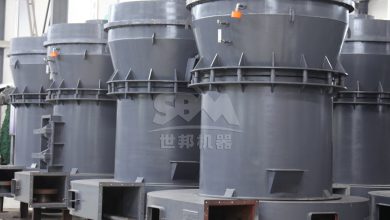
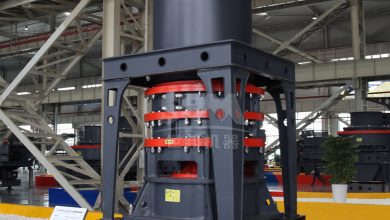
For projects requiring even finer grinding (towards the upper limit of 2500 mesh/5μm D97) or for smaller to medium-scale production, our SCM Series Ultrafine Mill presents an excellent alternative. While not a traditional vertical roller mill in the LM sense, it is a vertical shaft, ring-roller micro-grinding mill designed explicitly for ultra-fine powder production.
Its advantages for specialized UFCSSP applications include:
- Exceptional Fineness: Guaranteed output in the range of 325-2500 mesh (45-5μm), making it ideal for producing the finest grades of slag powder for UHPC and specialty chemicals.
- High-Precision Turbine Classifier: Ensures accurate particle size cuts with no coarse powder contamination, yielding a uniform product.
- Energy Efficiency: Offers approximately 30% lower energy consumption compared to traditional jet mills for similar fineness.
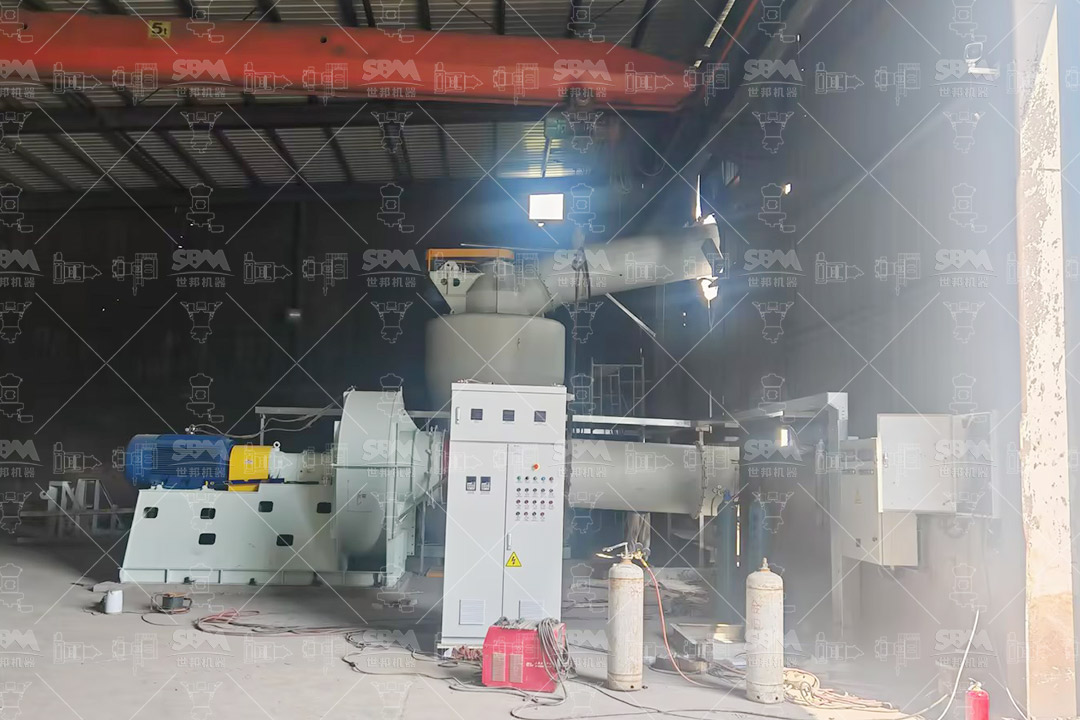
- Compact and Environmentally Friendly: Features high-efficiency pulse dust collection and low-noise operation (<75 dB). Models like the SCM1000 (1.0-8.5 t/h, 132 kW) provide a flexible solution for niche or high-value UFCSSP production lines.
Conclusion: A Sustainable Future Built on Advanced Technology
The utilization of Ultra-Fine Composite Steel Slag Powder represents a cornerstone of the circular economy in heavy industry, turning waste into a high-performance, sustainable construction material. The successful economic production of this powder is intrinsically linked to advanced grinding technology. Vertical roller mills, particularly specialized series like our LM Vertical Slag Mill for large-scale production and the SCM Ultrafine Mill for ultra-fine or specialized needs, provide the necessary efficiency, precision, and reliability to make UFCSSP a commercially viable and technically superior product. By adopting these technologies, the steel and construction industries can significantly reduce their environmental footprint while enhancing material performance, paving the way for a more sustainable built environment.