What Equipment is Used for Calcium Carbonate Production? Introduction to Calcium Carbonate Grinding Plant
Introduction
The production of calcium carbonate (CaCO₃) powder is a cornerstone of numerous industries, including plastics, paints, coatings, paper, rubber, and construction. The quality, particle size distribution, and production efficiency of the final powder are critically dependent on the grinding equipment and process technology employed. A modern calcium carbonate grinding plant is a sophisticated system integrating crushing, grinding, classification, and collection stages. This article provides a comprehensive overview of the key equipment used in calcium carbonate production, detailing their working principles, applications, and how to select the right machinery for specific requirements.
Key Stages in a Calcium Carbonate Grinding Plant
A typical plant operates in a sequential flow:
- Primary Crushing: Large limestone or marble rocks (often >1m) are reduced to a manageable size (typically <50mm) using jaw crushers or impact crushers.
- Secondary Crushing/Pre-Grinding: For finer feed to the main mill, hammer mills or vertical pre-grinding mills are used to achieve a size of 0-20mm or smaller.
- Grinding & Classification: The core stage where the pre-crushed material is pulverized to the target fineness. An integrated or separate classifier ensures precise particle size control.
- Collection & Packaging: The fine powder is separated from the air stream using cyclone collectors and high-efficiency baghouse filters (pulse jet dust collectors) before being conveyed to storage silos and packaging units.

Core Grinding Equipment for Calcium Carbonate
The choice of grinding mill is paramount and depends primarily on the desired product fineness (mesh size or micron) and required production capacity.
1. For Coarse to Medium Fineness (30-325 mesh / 600-45μm)
This range is common for fillers in plastics, rubber, and construction materials.
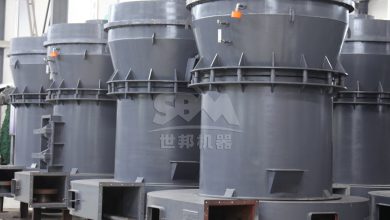
- MTW Series Trapezium Mill: This advanced version of the Raymond mill offers high efficiency and reliability. Its curved air duct, geared transmission, and wear-resistant design make it suitable for high-capacity production of 325-mesh powder. It is an excellent choice for projects requiring stable output of medium-fine calcium carbonate.
- Ball Mill: A traditional and versatile workhorse. It is highly reliable and can produce powder in a wide range of fineness through wet or dry grinding. However, it is generally less energy-efficient than modern roller mills for producing fine powders below 325 mesh and has a larger footprint.
2. For Fine to Ultra-Fine Fineness (400-2500 mesh / 38-5μm)
This range is essential for high-value applications like high-grade paper coatings, premium paints, and plastics requiring exceptional surface finish and reinforcement.
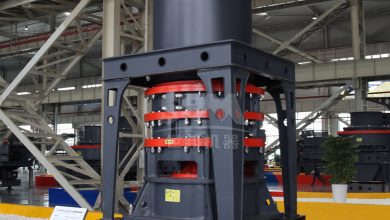
- SCM Series Ultrafine Mill: This mill is specifically engineered for producing ultra-fine and consistent powders. It integrates grinding and classification seamlessly. A key recommendation for high-end calcium carbonate production is our SCM Ultrafine Mill. Its vertical turbine classifier enables precise particle size cuts from 325 to 2500 mesh (D97 ≤5μm), ensuring no coarse particles contaminate the final product. With features like an energy-efficient design (30% lower consumption than jet mills), durable grinding components, and an environmentally friendly pulse dust collector system, the SCM series, such as the SCM1000 model (1.0-8.5 ton/h capacity), provides an optimal solution for profitable ultra-fine powder manufacturing.
- LUM Ultrafine Vertical Mill: Represents the latest vertical mill technology, combining high grinding efficiency with superior classification accuracy for ultra-fine powders. Its multiple-rotor classifier and intelligent control system are significant advantages.

3. For Large-Scale & Integrated Production (30-400 mesh / 600-38μm)
For mega-projects, such as those supplying the paper or cement industry, integrated and high-capacity systems are vital.
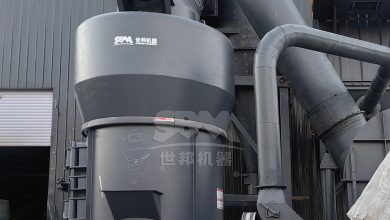
- LM Series Vertical Roller Mill: This is the equipment of choice for large-scale, high-tonnage production. It integrates crushing, grinding, drying, and classification in a single compact unit, offering remarkable energy savings (30-40% less than ball mills) and a small footprint. For large-scale calcium carbonate projects requiring capacities from tens to hundreds of tons per hour, our LM Vertical Roller Mill is an industry-leading solution. Its集约化设计 (Intensive Design) reduces plant area by 50% and its料层粉磨原理 (material-bed grinding principle) with non-contact roller design drastically lowers wear part consumption and energy costs. Models like the LM220K (36-105 t/h) are engineered for continuous, reliable, and eco-friendly operation with dust emissions below 20mg/m³.
Auxiliary and Supporting Equipment
A grinding plant’s performance relies on its supporting systems:
- Hammer Mill (Pre-Grinding): Efficiently reduces 0-40mm feed to 0-3mm, optimizing the feed size for the main mill and boosting overall system efficiency.
- Classifier: Whether integrated (as in SCM or LM mills) or standalone, dynamic classifiers are critical for achieving sharp particle size distributions.
- Dust Collector: Pulse-jet baghouse filters are standard, ensuring plant cleanliness and meeting strict environmental regulations by capturing over 99.9% of particulates.
- Feeding & Conveying System: Includes vibrating feeders, belt conveyors, and bucket elevators for stable material transport.
- Control System: Modern PLC-based automation controls the entire process, ensuring consistent product quality, operational safety, and ease of monitoring.
Selecting the Right Equipment: Key Considerations
Choosing the optimal grinding solution involves a detailed analysis of several factors:
- Target Product Fineness: The most critical parameter. Define the required top cut (D97 or D98) and the full particle size distribution.
- Required Capacity (tons/hour): Both immediate needs and future expansion plans must be considered.
- Raw Material Characteristics: Hardness (Mohs scale), moisture content, and chemical composition of the limestone/marble.
- Energy Consumption & Operating Costs: Evaluate the total cost of ownership, where vertical roller mills and ultrafine mills often have a significant advantage over traditional ball mills in terms of kWh/ton.
- Plant Space & Layout: Vertical mills and integrated systems offer compact designs.
- Environmental Regulations: Ensure the plant design includes adequate noise suppression and dust collection technology.

Conclusion
The production of high-quality calcium carbonate powder demands a carefully engineered grinding plant with equipment matched to specific product goals. From the high-capacity efficiency of the MTW Trapezium Mill and the large-scale prowess of the LM Vertical Roller Mill to the precision ultra-fine capabilities of the SCM Ultrafine Mill, the modern market offers specialized solutions for every need. Investing in the right technology not only guarantees product quality but also optimizes energy use, minimizes operational costs, and ensures environmental compliance, securing long-term profitability and sustainability in the competitive calcium carbonate industry.