Key Applications of Mechanical Ultrafine Grinding Equipment in Ultrafine Powder Processing
Introduction: The Critical Role of Ultrafine Powder
The demand for ultrafine powders, typically defined as particles with a diameter below 10 micrometers (D97 ≤ 10μm), has surged across a diverse range of modern industries. These materials exhibit unique properties such as enhanced chemical reactivity, improved dispersion, superior mechanical strength in composites, and novel optical or electrical characteristics. From high-performance ceramics and advanced battery materials to pharmaceuticals, coatings, and functional fillers, the quality and consistency of the final product are intrinsically linked to the precision of the grinding process. Mechanical ultrafine grinding equipment has thus evolved from a simple size-reduction tool into a sophisticated technological cornerstone for material science and industrial production.
This article explores the key applications of mechanical ultrafine grinding technology and highlights how advanced mill designs are meeting the stringent requirements of modern powder processing.
Core Challenges in Ultrafine Grinding
Achieving consistent, sub-10-micron powders presents significant technical hurdles. Key challenges include:
- Energy Consumption: The energy required for comminution increases exponentially as particle size decreases, making efficiency paramount.
- Heat Generation: Intensive grinding can generate excessive heat, potentially degrading heat-sensitive materials.
- Particle Contamination: Wear of grinding media and internal components must be minimized to preserve powder purity.
- Precise Classification: Effective separation of correctly sized particles from the grinding circuit is essential to prevent over-grinding and ensure a narrow particle size distribution (PSD).
- Agglomeration: Ultrafine particles have a strong tendency to re-agglomerate, counteracting the grinding effort.
Principal Industrial Applications of Ultrafine Grinding
1. Advanced Materials and New Energy
This sector is one of the most demanding drivers for ultrafine grinding technology.
- Lithium-Ion Battery Materials: The performance of cathode materials (e.g., Lithium Iron Phosphate – LFP, Nickel Manganese Cobalt – NMC) and anode materials (e.g., graphite, silicon composites) is highly dependent on particle size and morphology. Ultrafine, uniformly sized powders increase electrode density, improve lithium-ion diffusion rates, and enhance overall battery capacity and cycle life. Grinding equipment must offer precise control over fineness (often down to D97=5-10μm) while avoiding metal contamination from wear parts.
- High-Performance Ceramics: Materials like alumina, zirconia, and silicon carbide require ultrafine, high-purity starting powders to achieve the desired sintered density, transparency, or mechanical strength. The grinding process must deliver exceptional uniformity and often requires the use of ceramic or specially hardened linings to prevent impurity introduction.
2. Chemicals, Coatings, and Pigments
Here, the focus is on surface properties and dispersion.
- Functional Fillers: Minerals like calcium carbonate, talc, and kaolin are ground to ultrafine sizes (e.g., 2-10μm) to act as functional modifiers in plastics, paints, and rubber. They improve mechanical properties, opacity, gloss control, and reduce raw material costs. High brightness and low abrasiveness are critical.
- Pigments and Dyes: Ultrafine grinding (often called “micronizing”) is essential for organic and inorganic pigments to develop full color strength, transparency, and stability in formulations. The process must be gentle enough to avoid destroying crystal structures that define the color.
- Specialty Chemicals: Many catalysts, flame retardants, and other additive powders require a high specific surface area to maximize their reactivity or functionality, which is achieved through ultrafine milling.
3. Pharmaceuticals and Nutraceuticals
This application area prioritizes purity, sterility, and controlled particle size for bioavailability.
- Bioavailability Enhancement: Reducing the particle size of poorly water-soluble Active Pharmaceutical Ingredients (APIs) is a standard method to increase their dissolution rate and absorption in the body. Mills must be capable of producing stable nanocrystalline suspensions or dry powders down to the micron and sub-micron range.
- Dry Powder Inhalers (DPIs): The efficacy of inhaled medicines depends critically on achieving an aerodynamic particle size distribution between 1-5μm. This requires extremely precise grinding and classification in a controlled, contaminant-free environment.
4. Food and Agricultural Products
Applications range from creating novel textures to improving nutrient delivery.
- Food Ingredients: Ultrafine grinding of spices, fibers, proteins, and starches can improve flavor release, texture, mouthfeel, and stability in emulsions. Equipment must meet food-grade hygiene standards (e.g., easy cleanability, stainless steel construction).
- Agrochemicals: Pesticides and herbicides benefit from ultrafine particle sizes, which improve adhesion to plant surfaces, dispersion in spray tanks, and overall efficacy.
Technological Evolution: Meeting Application Demands
Modern mechanical ultrafine grinders have moved beyond traditional ball mills to address the aforementioned challenges. The evolution centers on several key technological advancements:
- Integrated Classification Systems: The most significant advancement is the integration of high-precision, often turbo-type, air classifiers within the grinding loop. This allows for immediate removal of product-sized particles, preventing energy-wasting over-grinding and enabling tight control over the top-size (D97) of the product.
- Efficient Grinding Mechanisms: Technologies like roller/ring (pendulum) milling, vertical roller milling, and bed compression milling offer higher energy efficiency compared to impact-based systems for fine grinding, as they apply pressure to particle beds.
- Advanced Material Science: The use of wear-resistant alloys, ceramics (e.g., silicon carbide, alumina), and specialized coatings for grinding elements drastically reduces contamination, extends maintenance intervals, and is crucial for high-purity applications.
- Intelligent Process Control: Modern mills are equipped with PLC systems that monitor and automatically adjust parameters like feed rate, classifier speed, and grinding pressure. This ensures consistent product quality and optimizes energy use.
- Comprehensive Environmental Design: Full-system negative pressure operation, coupled with high-efficiency pulse-jet baghouse filters, ensures dust emissions are far below regulatory limits, protecting both workers and the environment.
Spotlight on Advanced Solutions: The SCM Ultrafine Mill
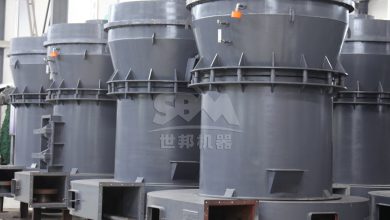
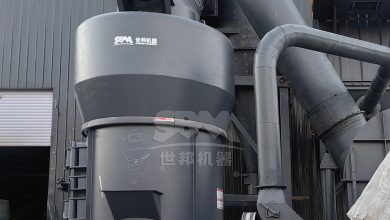
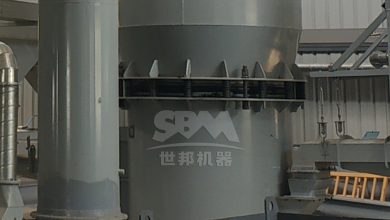
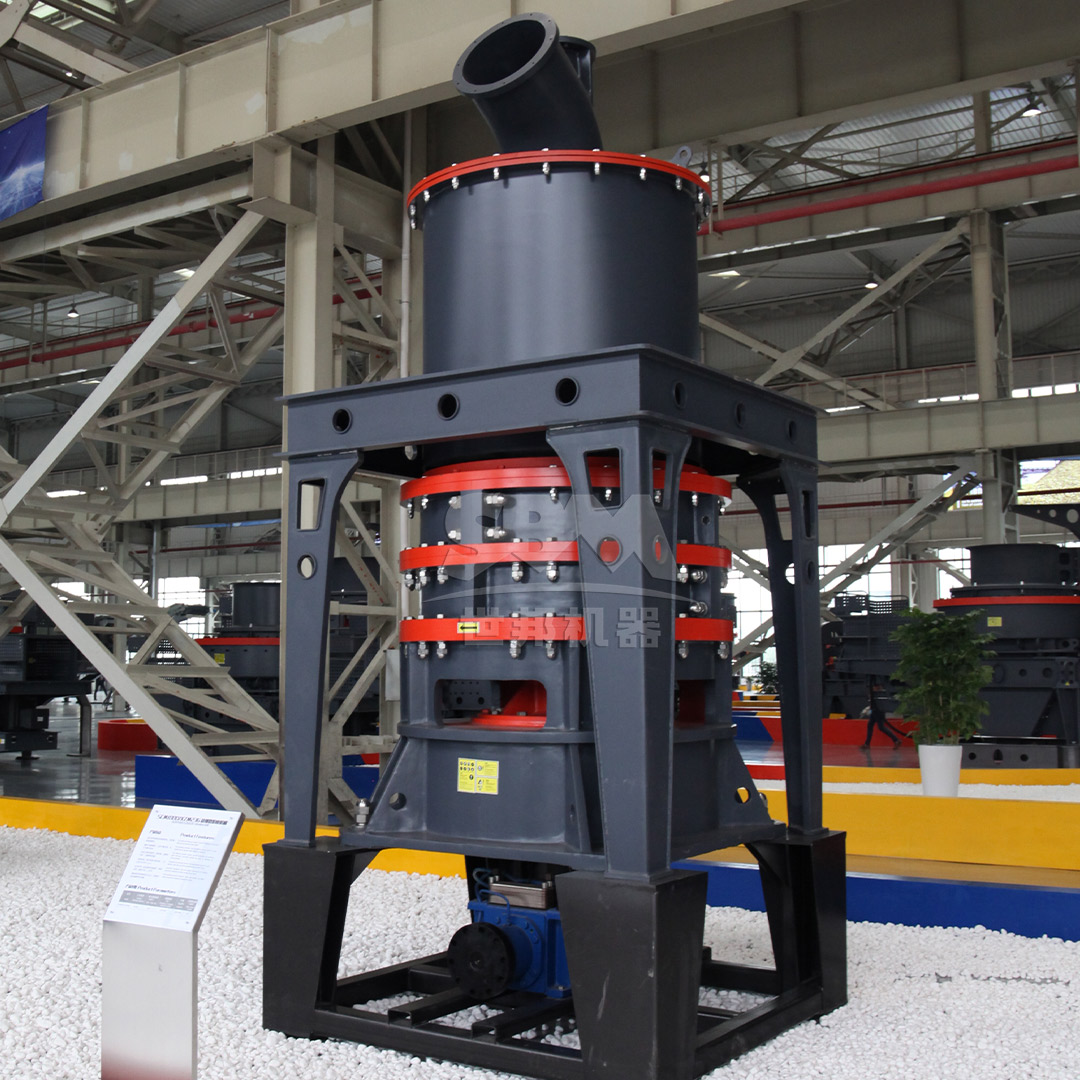
In the landscape of specialized ultrafine grinding equipment, our SCM Series Ultrafine Mill stands out as a premier solution designed specifically for high-value, precision applications requiring fineness between 325 and 2500 mesh (D97 ≤ 5μm).
This mill embodies the technological evolution needed for modern industries. Its core advantages directly address the critical challenges in ultrafine processing:
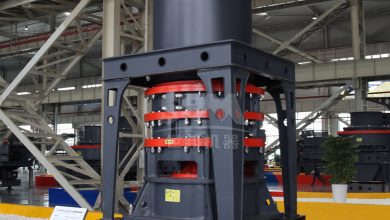
- Superior Energy Efficiency: The SCM Mill’s unique three-layer grinding ring and roller design creates a highly efficient multi-stage compression grinding zone. Compared to traditional jet mills, it can deliver double the production capacity while reducing specific energy consumption by up to 30%.
- Unmatched Product Uniformity: At the heart of its performance is the integrated vertical turbine classifier. This system provides precise aerodynamic cut-point control, ensuring that no oversized particles contaminate the final product. The result is a consistently narrow particle size distribution critical for applications in batteries, advanced ceramics, and high-end coatings.
- Exceptional Reliability and Purity: Key components like grinding rollers and rings are manufactured from special wear-resistant materials, extending service life by multiples compared to standard parts. Furthermore, its innovative “bearingless screw” grinding chamber design enhances mechanical stability and minimizes potential failure points and contamination sources.
- Eco-Friendly Operation: The system is designed as a closed-loop, negative-pressure production unit. Its high-efficiency pulse dust collector exceeds international emission standards, while comprehensive sound insulation keeps operational noise below 75dB, ensuring a clean and compliant working environment.
With models ranging from the compact SCM800 (0.5-4.5 t/h) to the high-capacity SCM1680 (5-25 t/h), the SCM Series offers a scalable solution for pilot-scale development and full-scale industrial production of the most demanding ultrafine powders.
Conclusion: The Path Forward
The processing of ultrafine powders is no longer a niche operation but a fundamental step in the value chain for a multitude of advanced industries. The success of these applications hinges on grinding equipment that delivers not just fineness, but also precision, purity, efficiency, and reliability. As material science continues to push boundaries—demanding ever-smaller, more uniform, and functional particles—mechanical grinding technology must continue to innovate.
The future lies in even smarter, more integrated systems that offer predictive maintenance, real-time particle size analysis feedback loops, and adaptable grinding geometries for different material properties. Solutions like the SCM Ultrafine Mill represent the current pinnacle of this technology, providing the controlled, efficient, and clean processing environment necessary to turn raw materials into the high-performance powders that will define tomorrow’s products. Selecting the right grinding technology is, therefore, a strategic decision that directly impacts product quality, production cost, and ultimately, market competitiveness.