Future Trends of Graphite Anode Materials for Lithium-ion Batteries
Introduction: The Central Role of Graphite in Energy Storage
The relentless global push towards electrification of transportation and the integration of renewable energy sources has placed lithium-ion batteries (LIBs) at the forefront of technological advancement. Within the LIB ecosystem, the anode material is a critical determinant of performance, safety, and cost. For decades, graphite has been the dominant commercial anode material due to its excellent balance of electrochemical stability, conductivity, and relatively low cost. However, the demands of next-generation applications—such as electric vehicles requiring faster charging and higher energy density—are driving significant innovation in graphite anode technology. This article explores the key future trends shaping the development of graphite anodes and the pivotal role of advanced material processing equipment in enabling these advancements.
1. The Drive Towards Enhanced Performance: Key Trends
The evolution of graphite anodes is guided by several interconnected trends aimed at overcoming existing limitations.
1.1. Particle Size and Morphology Engineering
Conventional graphite anodes use particles in the range of 10-20 microns. The future lies in precisely engineered particles. Ultrafine and nano-sized graphite particles (often below 5μm) offer shorter lithium-ion diffusion paths, which can significantly enhance rate capability—a crucial factor for fast charging. Furthermore, controlling particle morphology (spherical vs. flake) and optimizing the particle size distribution (PSD) are essential for achieving high tap density (for volumetric energy density) and forming stable, low-porosity electrode films.
1.2. Surface Modification and Coating
Pure graphite suffers from irreversible capacity loss during the first cycle due to solid electrolyte interphase (SEI) formation and can exhibit poor performance at low temperatures. Advanced surface coatings, such as amorphous carbon, metal oxides, or conductive polymers, are becoming standard. These coatings can:
- Suppress electrolyte decomposition and create a more stable SEI.
- Improve electronic conductivity at the particle surface.
- Mitigate exfoliation caused by solvent co-intercalation.
The uniformity and thickness of these coatings, often applied via chemical vapor deposition (CVD) or other sophisticated methods, are paramount and depend on the consistency of the base graphite powder.
1.3. Blending with Silicon and Other Alloying Materials
While silicon offers a much higher theoretical capacity, its severe volume expansion limits its standalone use. The most pragmatic near-future trend is the development of graphite-silicon composite anodes. Silicon (typically nano-sized) is incorporated into a graphite matrix, aiming to boost overall capacity while using graphite to buffer silicon’s expansion and maintain electrical connectivity. The success of this approach hinges on achieving a homogeneous, intimate mixture at the micron and nano scale, which again places extreme demands on the processing and dispersion of the constituent powders.
1.4. The Rise of Synthetic and Modified Natural Graphite
While natural graphite is abundant and cost-effective, synthetic graphite (produced from petroleum coke or pitch) offers higher purity, consistency, and better performance at high rates. The trend is towards hybrid or modified materials, where natural graphite is purified and shaped (spheroidized) to mimic the superior properties of synthetic graphite at a lower cost. The spheroidization process, which rounds off flake edges, requires precise mechanical grinding and classification.
2. The Foundational Challenge: Precision Powder Processing
All the aforementioned trends converge on a single, critical industrial challenge: the ability to process graphite and related materials into powders with exact and consistent particle size, shape, and surface characteristics at a commercial scale. The performance gains promised by material science can only be realized if the manufacturing equipment can deliver the required precision, efficiency, and reliability.
2.1. The Need for Ultrafine Grinding and Precise Classification
Producing sub-5μm graphite powders, creating spherical natural graphite, or preparing fine silicon for composites requires grinding technology that can operate in the ultrafine range without causing excessive contamination or thermal damage. Crucially, the grinding system must be coupled with a highly precise air classifier to ensure a narrow PSD. A broad PSD leads to poor packing density and uneven current distribution in the electrode, degrading battery life and safety.
2.2. Efficiency and Sustainability Imperatives
As battery production scales to terawatt-hour levels, the energy consumption and environmental footprint of material processing become major cost and sustainability factors. Equipment must move beyond mere capability to offer superior energy efficiency, low wear, minimal waste, and integrated dust collection to meet stringent environmental standards.
3. Enabling the Future: Advanced Processing Solutions
To meet the stringent demands of next-generation anode manufacturing, equipment must evolve. We offer engineered solutions designed specifically for the challenges of battery material processing.
3.1. For Ultrafine and Nano-Graphite Production: The SCM Ultrafine Mill
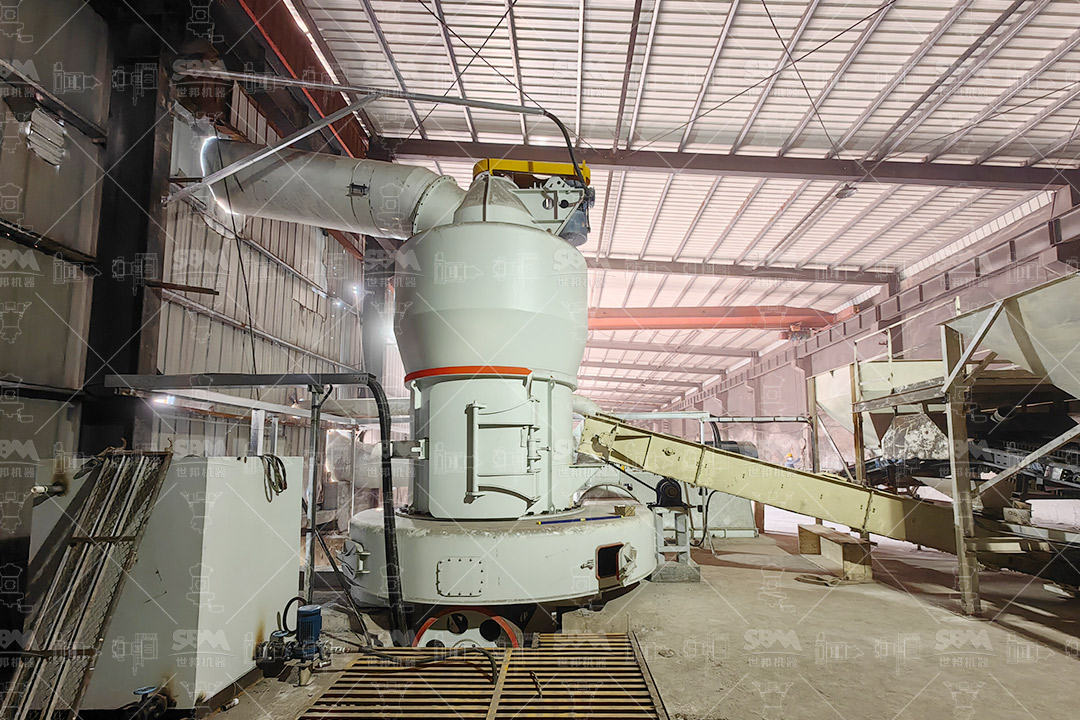
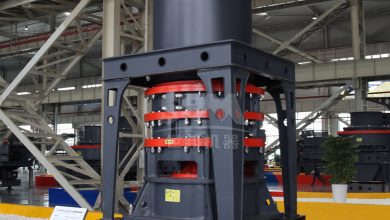
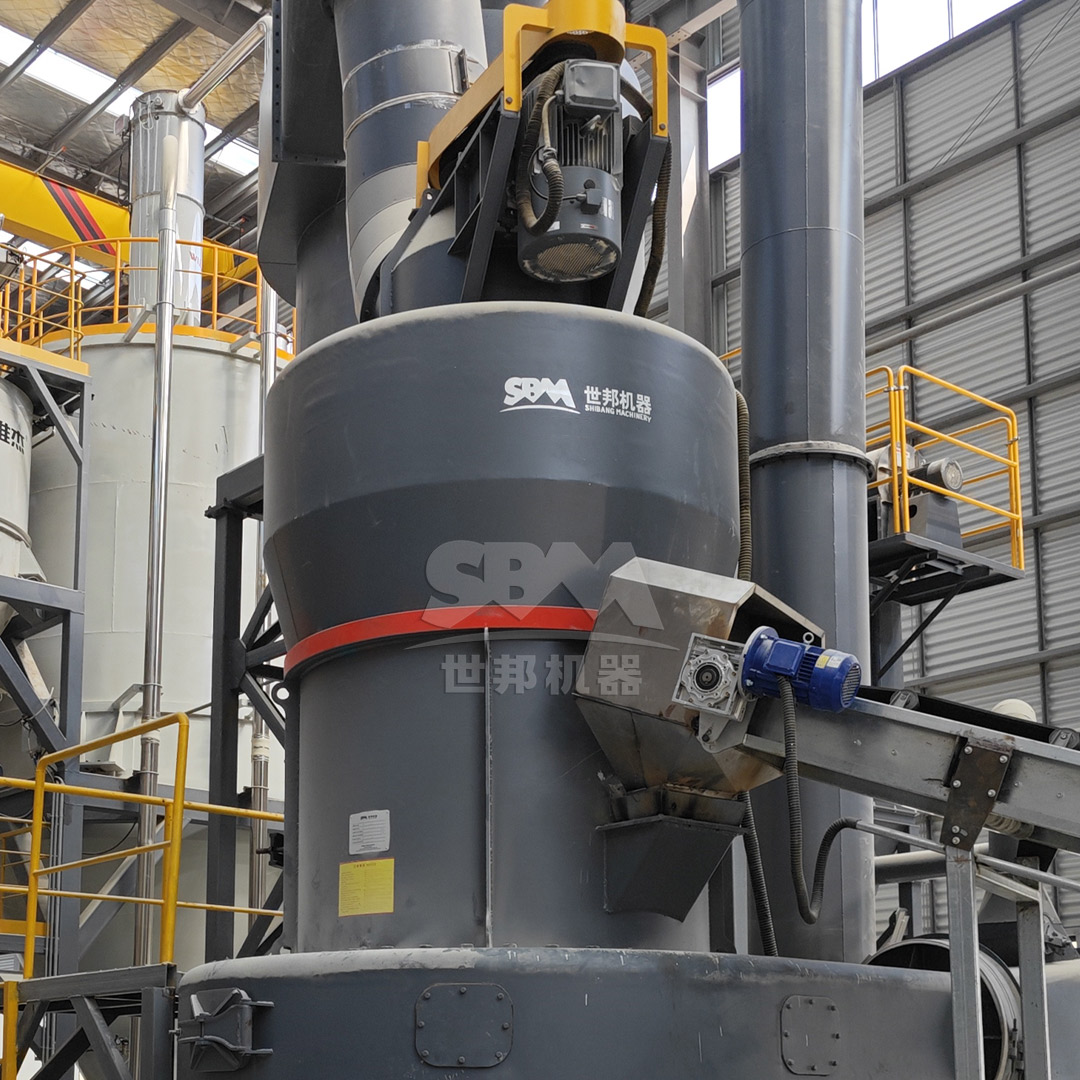
When the application calls for pushing the boundaries of fineness—such as producing the base material for high-rate anodes or preparing feedstocks for advanced coatings—the SCM Series Ultrafine Mill is the optimal choice. This mill is engineered to deliver consistent output in the critical range of 325 to 2500 mesh (D97 ≤ 5μm), directly addressing the trend towards ultrafine particles.
- High-Efficiency & Energy Saving: Its innovative grinding mechanism delivers up to twice the capacity of a traditional jet mill while reducing energy consumption by 30%. An intelligent control system provides automatic feedback on product fineness, ensuring batch-to-batch consistency.
- Precision Classification: The integrated vertical turbine classifier enables sharp particle size cuts, guaranteeing a uniform product without coarse particle contamination—a non-negotiable requirement for high-performance anode slurry.
- Durability & Purity: Special wear-resistant materials for rollers and grinding rings extend service life dramatically. Its bearing-less screw design in the grinding chamber ensures stable operation and minimizes the risk of metallic contamination, a key concern for battery manufacturers.
- Clean Operation: With a pulse dust collector exceeding international standards and a noise level below 75dB, the SCM series fits seamlessly into modern, environmentally conscious production facilities.
For pilot-scale development or full-scale production of advanced anode powders, models like the SCM1000 (1.0-8.5 ton/h, 132kW) or the high-capacity SCM1680 (5.0-25 ton/h, 315kW) provide the scalability needed for the evolving battery industry.
3.2. For High-Volume Processing and Precise Size Control: The MTW Series Trapezium Mill
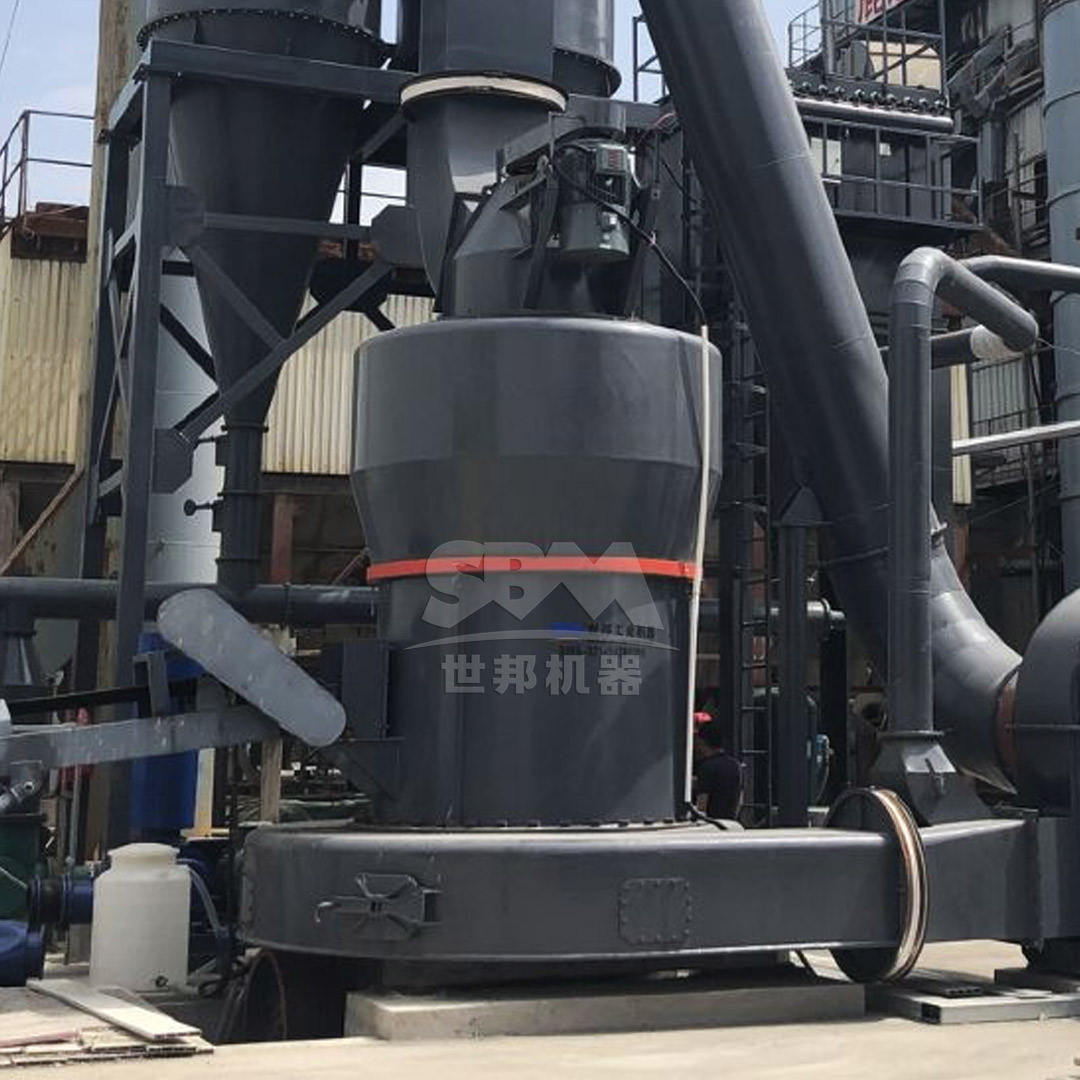
For the large-scale production of modified natural graphite, spheroidization, or the processing of precursor materials where precise control in the 30-325 mesh (0.6-0.045mm) range is vital, the MTW Series Trapezium Mill offers an unbeatable combination of capacity, precision, and reliability.
- Optimized for Consistency: Its curved air channel and advanced blade design reduce energy loss and ensure smooth material flow, leading to a stable and uniform product output.
- Robust and Low-Maintenance: The patented wear-resistant volute and combined shovel blades significantly reduce maintenance costs and downtime. The integral gear transmission achieves 98% efficiency, saving both energy and space.
- Scalable Solutions: The MTW series offers a wide range of models to match any production need. For example, the MTW215G model handles capacities from 15 to 45 tons per hour with a main motor power of 280kW, making it ideal for flagship anode material plants requiring massive, consistent output.
This mill is particularly suited for the processing steps involved in creating the spherical graphite used in high-density anodes, where precise shape and size control directly impact battery performance.
4. Conclusion: Synergy Between Material Innovation and Processing Excellence
The future of graphite anode materials is bright, characterized by smarter materials—smaller, coated, blended, and engineered at the particle level. However, this future is contingent upon parallel advancements in industrial processing technology. The ability to reliably, efficiently, and cleanly produce tons of powder with nanometer-level precision is what will bridge the gap between laboratory breakthroughs and commercial battery cells.
Investing in advanced grinding and classification technology is not merely an operational decision; it is a strategic imperative for companies aiming to lead in the lithium-ion battery supply chain. By partnering with equipment providers who understand the specific nuances of battery material processing, anode producers can ensure they have the foundational capability to turn the promising trends of today into the high-performance products of tomorrow.