What is Lithium Spodumene Slag Powder Used For? | Comprehensive Guide
Introduction: Unveiling a Valuable By-Product
The global surge in demand for lithium, driven primarily by the electric vehicle (EV) and energy storage revolutions, has intensified mining and processing of lithium-bearing ores like spodumene. A significant by-product of this process is lithium spodumene slag. Once considered a waste material requiring disposal, this slag is now recognized as a valuable resource with diverse applications. This comprehensive guide explores the nature, processing, and multifaceted uses of lithium spodumene slag powder, highlighting its role in promoting sustainability and circular economy principles within the lithium industry.
What is Lithium Spodumene Slag?
Lithium spodumene slag is a solid residue generated during the high-temperature (around 1100°C) calcination and sulfuric acid leaching process used to extract lithium from spodumene concentrate (α-spodumene). The primary goal of this process is to convert the natural crystalline structure of spodumene (α-phase) into a more reactive, metastable β-phase, allowing for efficient lithium extraction. The remaining silicate matrix, along with impurities like iron, aluminum, and calcium, forms the slag.
Chemically, it is primarily an aluminosilicate material with a vitreous (glassy) structure. Its specific composition varies depending on the source ore and processing parameters but generally includes SiO₂, Al₂O₃, Fe₂O₃, CaO, and residual alkali compounds. The key to its utility lies in transforming this coarse, granulated slag into a fine, reactive powder through grinding and milling.

Key Applications of Lithium Spodumene Slag Powder
The activation of slag through fine grinding unlocks its latent hydraulic and pozzolanic properties, making it suitable for several high-value applications.
1. Construction and Building Materials
This is the largest and most promising application area, where the powder acts as a supplementary cementitious material (SCM).
- Partial Cement Replacement in Concrete: Finely ground slag powder exhibits pozzolanic activity, reacting with calcium hydroxide (portlandite) produced during cement hydration to form additional calcium silicate hydrate (C-S-H) gel. This improves long-term strength, reduces permeability (enhancing durability against chloride ingress and sulfate attack), and lowers the heat of hydration in mass concrete pours.
- Production of Geopolymer Binders: The aluminosilicate nature of the slag makes it an excellent precursor for geopolymerization. When activated with an alkaline solution (e.g., sodium silicate or hydroxide), it can form a strong, durable binder with a carbon footprint significantly lower than ordinary Portland cement (OPC).
- Component in Autoclaved Aerated Concrete (AAC): The fine powder can be used in AAC blocks, contributing to the silicate reactions during autoclaving and improving the final product’s strength and dimensional stability.
2. Ceramics and Glass-Ceramics
The chemical composition of spodumene slag is similar to that of raw materials used in ceramics. It can be used in:
- Ceramic Frits and Glazes: As a source of silica and alumina, it can lower the melting temperature of glaze batches.
- Sintered Ceramic Products: The powder can be formed and sintered to produce tiles, sanitary ware, or refractory materials, with the residual lithium sometimes acting as a flux to aid sintering.
- Glass-Ceramics: Controlled crystallization of the slag can produce strong, thermally stable glass-ceramic materials for architectural or industrial uses.
3. Soil Stabilization and Amendment
The fine powder can be used to improve the engineering properties of weak or expansive soils. Its pozzolanic reactions, when mixed with soil and a source of calcium (like lime), can form stable cementitious compounds, increasing soil strength and reducing swell potential. It can also adjust soil pH.
4. Potential in New Lithium Recovery
Research is ongoing into more efficient methods to extract the residual lithium (typically 0.5-2% Li₂O) still present in the slag. Advanced hydrometallurgical or direct carbonation processes aim to recover this lithium, making the primary extraction process more efficient and reducing final waste.
5. Other Niche Applications
- Abrasive Media: Harder varieties of the slag can be processed into blasting abrasives.
- Fillers: In plastics, paints, or rubber, though this requires very fine and consistent particle size.
- Adsorbents: Its porous structure, once activated, may be explored for wastewater treatment to adsorb heavy metals.

The Critical Role of Grinding Technology
The transformation of granulated slag into a high-value powder is entirely dependent on efficient, precise, and economical grinding technology. The target fineness (often 400-600 m²/kg Blaine or 325-800 mesh) and the need to maintain consistent particle size distribution are paramount for activating its pozzolanic properties. This is where advanced milling equipment becomes indispensable.
For processing lithium spodumene slag, two primary grinding approaches are common, depending on the required fineness and production scale:
For Coarse to Medium-Fine Grinding (30-325 mesh / 45-600μm)
Initial size reduction or direct grinding to fineness suitable for applications like soil stabilization or coarser SCM blends often employs robust, high-capacity mills.
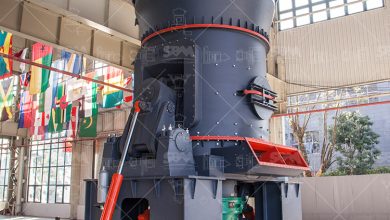
Our MTW Series European Trapezium Mill is exceptionally well-suited for this stage. Engineered for high efficiency and durability, it handles feed sizes up to 50mm and delivers outputs from 30 to 325 mesh. Its advantages for slag processing include:
- High Capacity & Stability: With models like the MTW215G offering throughputs up to 45 tons per hour, it is ideal for large-scale slag valorization projects.
- Durable, Low-Maintenance Design: The wear-resistant shovel blade and curved air duct minimize wear part replacement costs and energy loss, ensuring stable long-term operation.
- Efficient Classification: The integrated powder classifier ensures precise particle size control, crucial for consistent product reactivity.
For Ultra-Fine and High-Value Powder Production (325-2500 mesh / 5-45μm)
To unlock the highest pozzolanic activity and enable use in high-performance concrete or specialty applications, grinding to ultra-fine levels is required. This demands technology capable of producing narrow particle size distributions at high energy efficiency.
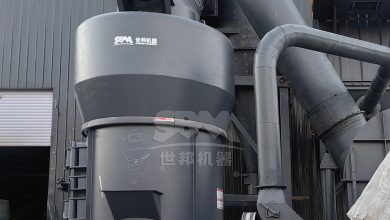
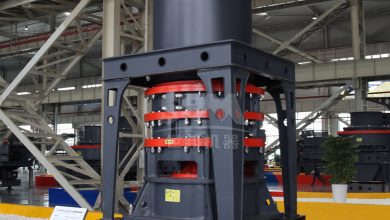
Our flagship SCM Ultrafine Mill is the industry benchmark for this task. Specifically designed to produce powders in the 325 to 2500 mesh range (D97 ≤ 5μm), it transforms slag into a premium product.
- Unmatched Fineness & Uniformity: The vertical turbine classifier achieves precise size cuts, ensuring no coarse particles contaminate the final product, which is vital for maximizing chemical reactivity.
- Superior Energy Efficiency: Compared to traditional jet mills, the SCM series offers twice the capacity while reducing energy consumption by approximately 30%, dramatically lowering operational costs.
- Robust and Intelligent Operation: Featuring special-material grinding rollers and rings for extended lifespan and an intelligent control system that automatically adjusts for target fineness, it guarantees reliable and consistent output. Models like the SCM1680 can process up to 25 tons per hour, making ultra-fine grinding commercially viable on a large scale.

Processing and Quality Considerations
Producing consistent quality slag powder involves more than just grinding:
- Pre-Drying: Slag moisture content must be reduced (typically below 1-2%) before fine grinding to prevent clogging and ensure efficiency.
- Quality Control: Key parameters to monitor include chemical composition (especially reactive silica and alumina content), fineness (specific surface area), particle size distribution, and activity indices (e.g., strength activity index with cement).
- Environmental Compliance: The entire process, from feeding to grinding and collection, must be enclosed with efficient dust collection systems (like pulse jet baghouses) to meet stringent emission standards.
Conclusion: From Waste to Worth
Lithium spodumene slag powder has successfully transitioned from an industrial waste liability to a versatile and valuable resource. Its application as a high-performance SCM in construction presents a substantial opportunity to reduce the carbon footprint of the built environment while providing technical benefits. Realizing this potential hinges on sophisticated grinding technology that can deliver the required fineness, uniformity, and efficiency at an industrial scale.
Investing in the right milling equipment, such as our MTW Series Trapezium Mill for robust medium-fine grinding or our SCM Ultrafine Mill for producing premium high-reactivity powders, is the critical step in building a profitable and sustainable slag valorization business. By doing so, the lithium industry can move closer to a zero-waste model, contributing to a more circular and resource-efficient economy.