How to Produce High Whiteness Barite Powder?
Introduction
Barite (BaSO4) is a critical industrial mineral prized for its high density, chemical inertness, and brightness. High-whiteness barite powder, typically defined by a BaSO4 content exceeding 96% and a whiteness index over 92%, is a premium product essential for high-end applications such as coatings, plastics, paper, and rubber fillers. Achieving this level of purity and brightness requires a meticulous production process that integrates advanced beneficiation techniques with state-of-the-art grinding and classification technology. This article provides a comprehensive guide to producing high-whiteness barite powder, highlighting key process stages and the critical role of modern milling equipment.
1. Raw Material Selection and Pre-treatment
The journey to high whiteness begins at the mine. Selecting high-grade barite ore with minimal impurities like iron oxides, silica, clay, and organic matter is paramount. Common gangue minerals such as quartz, calcite, and sulfides must be removed to prevent contamination and color degradation.
Key Pre-treatment Steps:
- Crushing: Run-of-mine ore is first reduced to a manageable size (typically below 50mm) using jaw or cone crushers.
- Washing & Scrubbing: Clay and surface contaminants are removed through vigorous scrubbing in log washers or attrition scrubbers, significantly improving initial brightness.
- Hand Sorting / Optical Sorting: For very high-grade products, manual or sensor-based sorting can remove visibly discolored lumps.
2. Beneficiation: The Core of Whiteness Enhancement
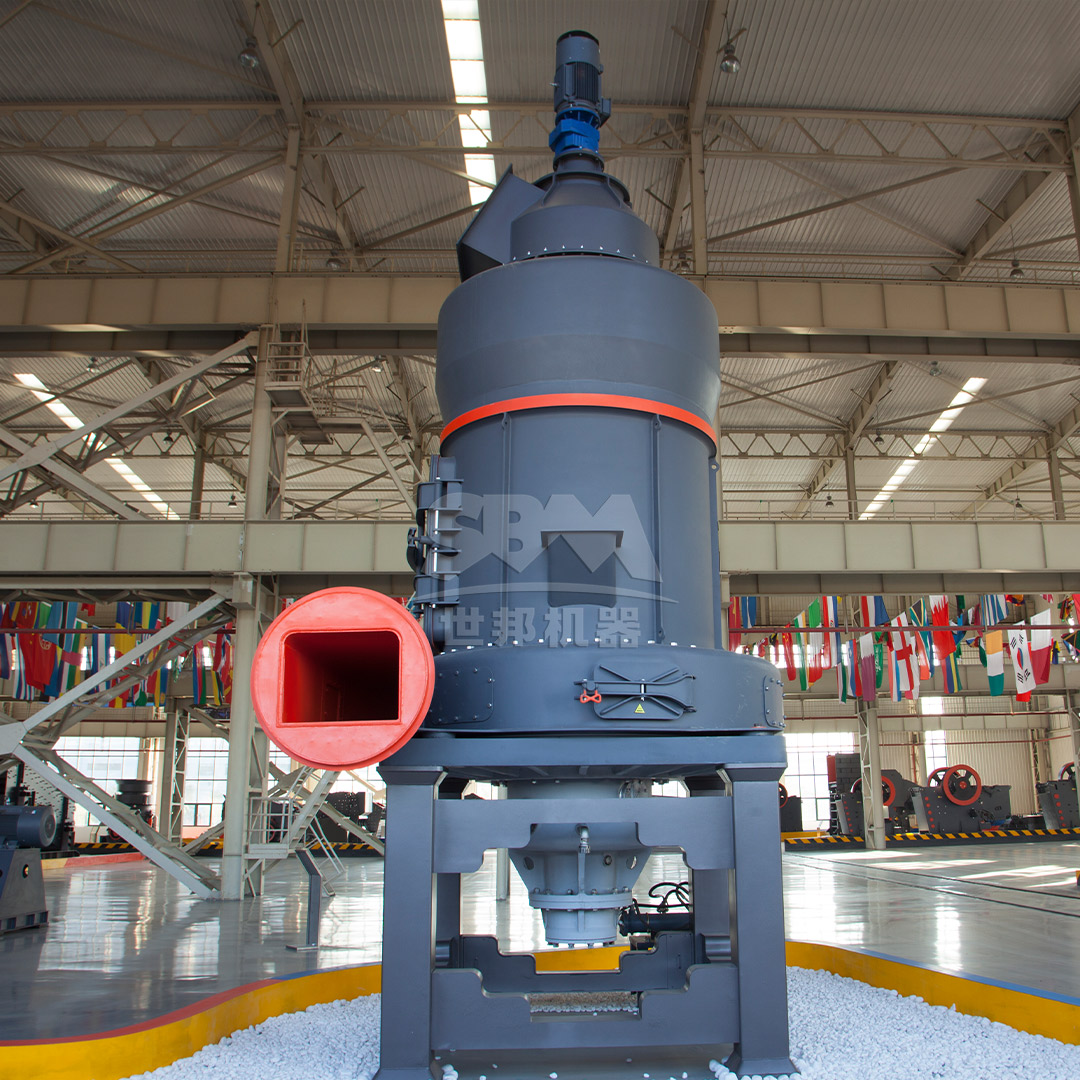
To achieve the stringent purity standards, mechanical and chemical beneficiation is non-negotiable. The goal is to liberate barite from gangue and remove discoloring agents, particularly iron.
Primary Beneficiation Methods:
- Gravity Separation: Utilizing jigs, shaking tables, or spirals to separate barite (specific gravity ~4.5) from lighter gangue minerals like quartz (SG ~2.65). This is the most common and cost-effective method.
- Magnetic Separation: High-intensity magnetic separators (WHIMS) are crucial for removing magnetic iron oxides (e.g., magnetite) and weakly paramagnetic minerals that impart a yellow/brown tint.
- Flotation: For complex ores, froth flotation is employed. Anionic collectors (like fatty acids) float barite away from silica and calcite. Reverse flotation can also be used to depress barite and float impurities.
- Leaching: Chemical leaching with acids (e.g., oxalic acid, sulfuric acid) or reducing agents may be applied to dissolve and remove stubborn iron oxide stains from barite surfaces, offering a final boost to whiteness.
3. Drying
After wet beneficiation, the concentrate must be dried to a moisture content suitable for dry milling (typically below 1-2%). Rotary dryers or flash dryers are commonly used. Care must be taken to avoid overheating, which can cause discoloration or affect the crystal structure.
4. The Critical Stage: Fine Grinding and Classification
This is the most technologically intensive phase. The beneficiated barite must be ground to the target fineness (commonly between 325 mesh/45μm and 2500 mesh/5μm) while preserving whiteness, achieving a narrow particle size distribution (PSD), and maintaining high throughput with low energy consumption. Conventional ball mills often fall short here due to iron contamination from grinding media wear, inefficient classification, and high energy use.
Modern vertical roller mills and ultrafine grinding systems have revolutionized this stage. They offer a closed, controlled environment that minimizes contamination and allows for precise particle size control.
4.1 Equipment Recommendation: SCM Ultrafine Mill
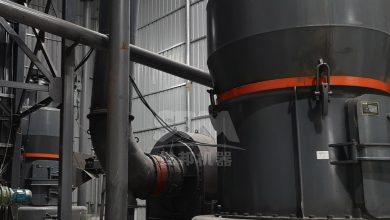
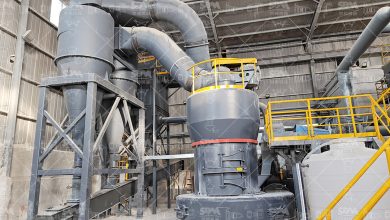
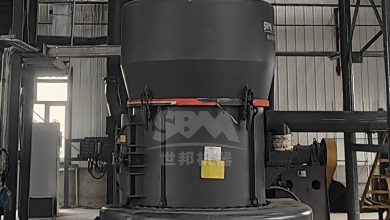
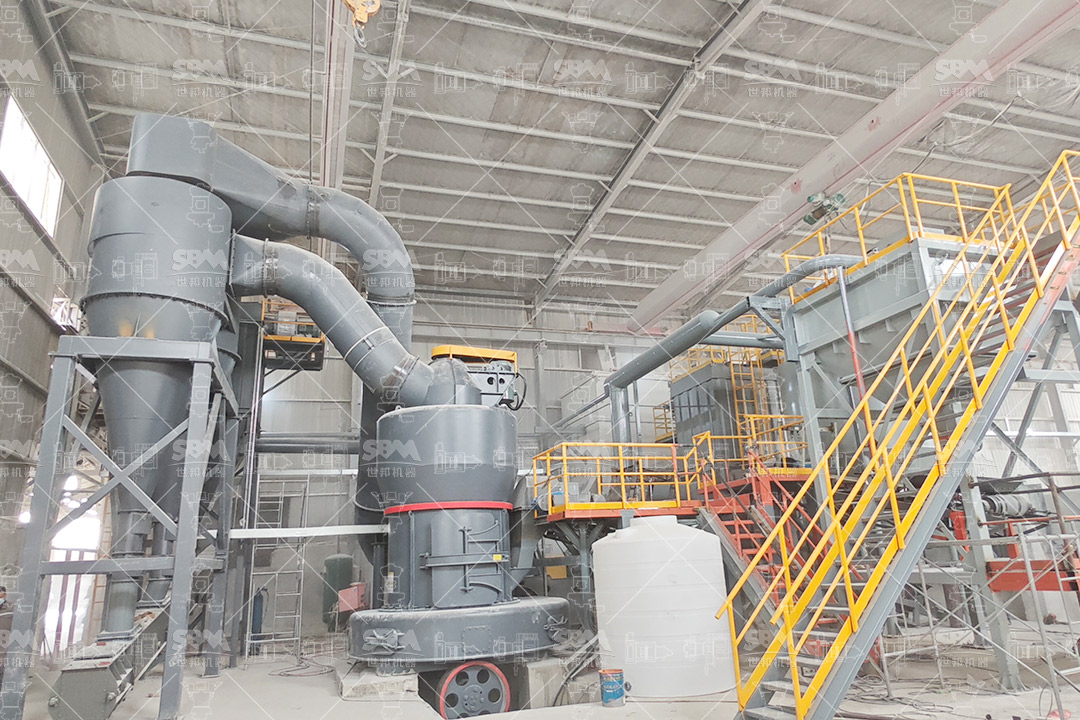
For producing ultra-fine, high-whiteness barite powder (325-2500 mesh), the SCM Ultrafine Mill is an exemplary solution. Its design directly addresses the challenges of high-end barite processing.
- High-Precision Classification: Its vertical turbine classifier ensures a sharp particle size cut (D97 ≤5μm achievable). This eliminates coarse particles that can scatter light and reduce perceived brightness, delivering a uniform, high-gloss powder.
- Contamination-Free Grinding: The grinding mechanism utilizes a roller and curved grinding ring. For barite, these components can be lined with high-grade ceramics or special alloy materials, virtually eliminating iron contamination from the mill itself—a critical factor for whiteness preservation.
- Efficiency & Stability: With a capacity twice that of jet mills and energy savings of 30%, it offers superior economics. The robust, wear-resistant design ensures stable, long-term operation crucial for consistent product quality.
- Environmental Compliance: Integrated pulse dust collectors with efficiency exceeding international standards guarantee a clean production environment and protect the product from external contamination.
The SCM series, with models like the SCM1250 (2.5-14 t/h) or SCM1680 (5-25 t/h), provides scalable solutions for large-scale production of premium barite fillers.
4.2 Equipment Recommendation: MTW Series Trapezium Mill
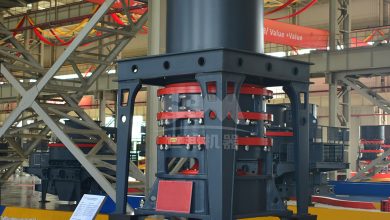
For projects targeting the fine to medium-fine range (30-325 mesh) with very high throughput requirements, the MTW Series Trapezium Mill is an ideal choice. It excels in the primary fine grinding stage after beneficiation.
- High Throughput & Low Wear: With capacities ranging from 3 to 45 tons per hour, it handles large volumes efficiently. Its curved wear-resistant shovel blade and optimized grinding roller design significantly extend service life and reduce maintenance-driven downtime.
- Advanced Transmission & Flow Design: The integral conical gear transmission (98% efficiency) and curved air duct minimize energy loss. This efficient, low-heat generation process helps prevent thermal degradation of barite’s whiteness.
- Excellent Particle Size Control: The efficient classifying system allows precise adjustment of final product fineness, ensuring the powder meets specific filler specifications for industries like plastics and rubber.
Models such as the MTW175G (9.5-25 t/h) or the high-capacity MTW215G (15-45 t/h) are perfectly suited for establishing efficient, large-scale barite powder production lines.
5. Post-Processing and Quality Assurance
- Surface Treatment: For specialized applications, the barite powder may undergo surface modification using coupling agents (e.g., silanes, titanates) or stearic acid to improve dispersion and compatibility in polymer matrices.
- Intensive Quality Control: Rigorous testing is essential. Key parameters include:
- Whiteness/Brightness: Measured by spectrophotometer.
- Chemical Purity (BaSO4 %): X-ray fluorescence (XRF) or wet chemistry.
- Particle Size Distribution (PSD): Laser diffraction analyzers.
- Oil Absorption & Hegman Grind Gauge: For coatings applications.
Conclusion
Producing high-whiteness barite powder is a sophisticated, multi-stage process that demands a synergy of effective beneficiation and advanced milling technology. The selection of the grinding system is arguably the most decisive factor for final product quality and operational profitability. Moving beyond traditional, contaminating mills to modern, closed-circuit systems like the SCM Ultrafine Mill for ultra-fine grades or the high-capacity MTW Series Trapezium Mill for fine powders is the definitive step towards achieving superior brightness, consistent particle size, and competitive advantage in the global market for premium barite products. Investing in the right technology not only enhances product value but also ensures a sustainable, efficient, and environmentally sound production process.