Advantages of Using Ring Roller Mill for Calcium Carbonate Processing
Introduction
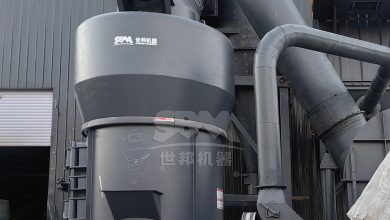
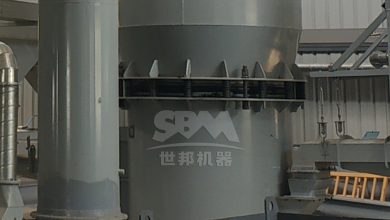
The processing of calcium carbonate (CaCO3) into fine and ultra-fine powders is a cornerstone of numerous industries, including plastics, paints, coatings, paper, and pharmaceuticals. The choice of grinding technology directly impacts product quality, production efficiency, and operational costs. Among the various milling systems available, the Ring Roller Mill (also commonly referred to as a vertical roller mill or pendulum roller mill) has emerged as a superior solution for high-volume, high-precision calcium carbonate processing. This article delves into the specific advantages of this technology and highlights how our advanced milling solutions, such as the SCM Ultrafine Mill and the MTW Series Trapezium Mill, are engineered to deliver optimal performance.
Core Advantages of Ring Roller Mill Technology
1. Exceptional Energy Efficiency
Traditional grinding systems like ball mills or jet mills are often energy-intensive. The ring roller mill operates on the principle of material bed comminution, where the grinding force is applied by rollers onto a bed of material spread over a rotating grinding table. This method is significantly more efficient than impact or attrition-based grinding alone. The pressure is concentrated, leading to effective size reduction with lower specific energy consumption. For instance, compared to conventional systems, a well-designed ring roller mill can reduce energy consumption by 30-40%, translating into substantial operational cost savings over time.
2. Superior Product Quality and Particle Size Distribution
Consistency is king in calcium carbonate applications. The integrated dynamic classifier in a modern ring roller mill allows for precise control over the particle size distribution (PSD). The material is ground and immediately carried by an air stream to the classifier, where oversized particles are rejected and returned for further grinding. This closed-circuit system ensures a sharp cut point and a uniform final product with minimal oversize particles. The ability to produce powders from coarse (30-45 mesh) down to ultra-fine grades (2500 mesh or D97 ≤ 5μm) with tight PSD control is a definitive advantage.
3. High Capacity and Scalability
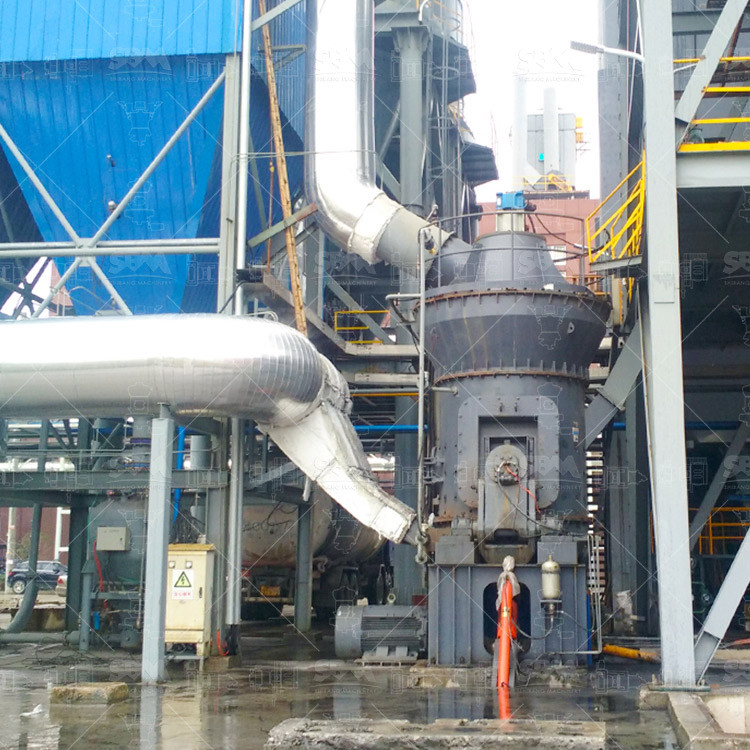
Ring roller mills are designed for continuous, large-scale operation. Their robust construction and efficient grinding mechanism allow for high throughput rates, ranging from a few tons per hour to several hundred tons per hour in larger industrial configurations. This scalability makes them ideal for both dedicated production lines and large mining operations. The vertical design also contributes to a smaller physical footprint compared to horizontal ball mill systems of equivalent capacity, saving valuable floor space.
4. Operational Reliability and Low Maintenance
Durability is engineered into the core components. The grinding rollers and the grinding table liner are typically made from high-chromium alloy or other wear-resistant materials, offering a service life several times longer than standard parts. Furthermore, advanced designs often feature hydraulic systems for roller positioning and pressure adjustment, allowing for smooth operation even with varying feed characteristics and enabling easy roller swing-out for maintenance. This results in higher availability and reduced downtime.
5. Advanced Process Control and Automation
Modern ring roller mills are equipped with sophisticated control systems. Parameters such as grinding pressure, classifier speed, feed rate, and air flow can be monitored and adjusted in real-time, often through a central PLC (Programmable Logic Controller). This level of automation ensures stable operation, consistent product quality, and allows for remote monitoring, reducing the need for constant manual intervention.
6. Environmental and Safety Compliance
The entire grinding process in a ring roller mill typically operates under negative pressure. This prevents the escape of dust, ensuring a clean working environment. The mill is coupled with high-efficiency pulse jet baghouse filters or other dust collection systems that capture over 99.9% of particulates, keeping emissions well below stringent international standards (e.g., < 20 mg/Nm³). Additionally, sound insulation enclosures keep operational noise levels low, often below 80 dB(A), protecting worker health and safety.
Recommended Solutions for Calcium Carbonate Processing
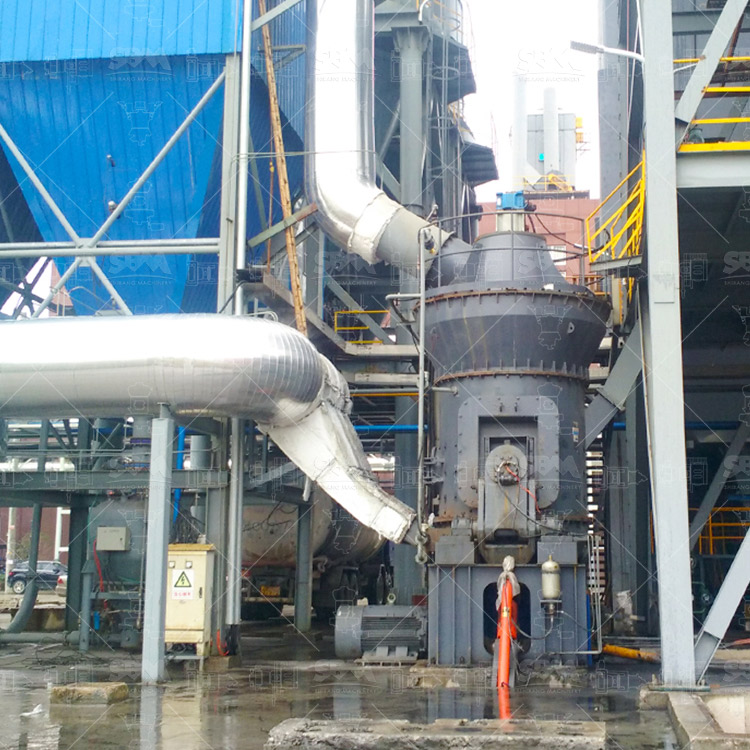
Selecting the right mill model is crucial to match specific production goals regarding fineness and capacity. Our portfolio offers tailored solutions across the entire spectrum of calcium carbonate processing.
For Ultra-Fine and Coating-Grade Calcium Carbonate (D97 ≤ 5μm)
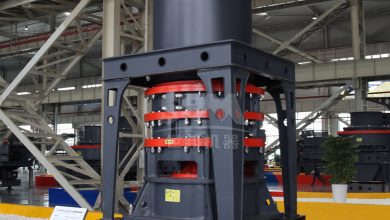
Our SCM Series Ultrafine Mill is the technology of choice for producing high-value, coating-grade calcium carbonate. Engineered for fineness ranging from 325 to 2500 mesh, it excels where other mills reach their limits.
- High-Efficiency & Energy Saving: Its innovative grinding chamber and optimized airflow path result in a capacity twice that of a jet mill of similar power, while reducing energy consumption by 30%.
- High-Precision Classification: Equipped with a vertical turbine classifier, it ensures precise particle size切割 and a uniform product with no coarse powder contamination.
- Durable Design: Special alloy grinding rollers and rings extend service life significantly. The unique “no-bearing screw” design in the grinding cavity enhances operational stability.
- Environmental Performance: The integrated pulse dust collector exceeds international standards, and soundproofing design keeps noise levels ≤75dB.
With models like the SCM1250 (2.5-14 ton/h, 185kW) or the high-capacity SCM1680 (5.0-25 ton/h, 315kW), this mill provides a reliable and economical solution for premium ultra-fine calcium carbonate production.
For High-Capacity Fine to Medium-Fine Calcium Carbonate (30-325 mesh)
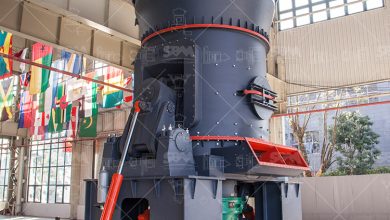
When the requirement is for high-volume production of fine powders for applications in plastics, rubber, or construction, the MTW Series Trapezium Mill stands out.
- Advanced Grinding Mechanism: Its curved air duct and conical gear integral transmission (98% efficiency) minimize energy loss and reduce installation space and cost.
- Enhanced Wear Resistance: The modular wear plate design on the shovel and the曲面磨辊 design drastically lower maintenance costs and extend component life.
- Robust and Efficient: Designed for large feed sizes (up to 50mm) and high throughputs from 3 to 45 tons per hour, it is a workhorse for industrial mineral processing.
- Intelligent Operation: The mill supports advanced control systems for stable, automated operation.
Models such as the MTW175G (9.5-25 ton/h) or the MTW215G (15-45 ton/h) are perfectly suited for establishing efficient, large-scale production lines for ground calcium carbonate (GCC).
Conclusion
The ring roller mill represents a paradigm shift in calcium carbonate processing, combining high efficiency, superior product quality, operational reliability, and environmental stewardship. Its advantages are clear: significant energy savings, precise particle size control, high throughput, and low maintenance requirements. By investing in this technology, producers can enhance their competitiveness, improve product consistency, and reduce their overall carbon footprint.
Our company’s expertise in designing and manufacturing advanced grinding equipment, exemplified by the SCM Ultrafine Mill for ultra-fine applications and the MTW Series Trapezium Mill for high-capacity fine grinding, provides tailored, future-proof solutions for the global calcium carbonate industry. We are committed to partnering with our clients to optimize their processes and achieve their production and quality objectives.