Activated Coal Gangue Processing Equipment and Activation Technology Guide
Introduction: The Value of Activated Coal Gangue
Coal gangue, a solid waste generated during coal mining and washing, has long been a significant environmental burden. However, through advanced processing and activation technologies, this industrial byproduct can be transformed into a high-value mineral admixture for cement and concrete. Activated coal gangue powder exhibits excellent pozzolanic activity, significantly improving the workability, durability, and long-term strength of construction materials while reducing the carbon footprint associated with cement production. This guide provides a comprehensive overview of the processing equipment and activation technologies essential for producing high-quality activated coal gangue powder.
1. The Activation Process: From Waste to Resource
The activation of coal gangue is a two-stage process: thermal activation and mechanical activation. Thermal activation, typically calcination at temperatures between 600°C and 900°C, dehydroxylates the clay minerals (mainly kaolinite) within the gangue, transforming them into metastable, amorphous phases with high reactivity. Following calcination, mechanical activation through fine grinding is crucial. This process increases the specific surface area, creates fresh, reactive surfaces, and further disrupts the crystal structure, thereby enhancing the pozzolanic activity of the final product. The choice of grinding equipment directly determines the fineness, particle size distribution, and ultimately, the performance of the activated powder.
2. Key Processing Equipment for Mechanical Activation
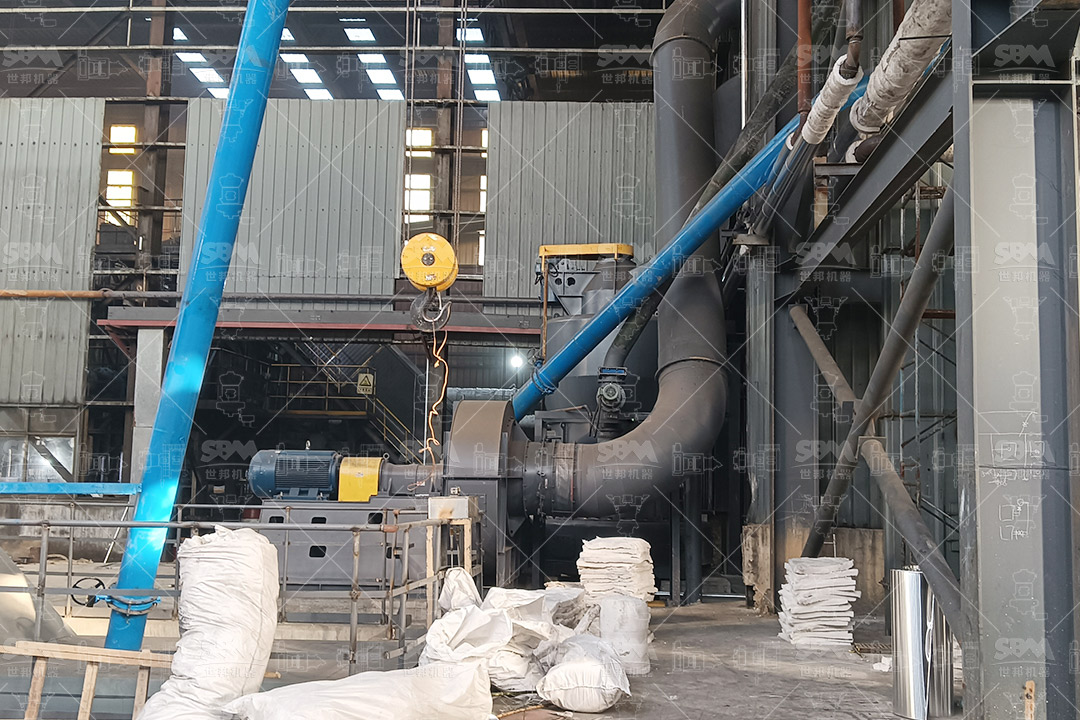
Selecting the right milling equipment is paramount for achieving the desired fineness (typically 400-600 m²/kg Blaine or D97 ≤ 45μm) and maintaining cost-effective production. The equipment must handle the moderately abrasive nature of calcined gangue efficiently.
2.1. Vertical Roller Mills (VRM): The High-Capacity Solution
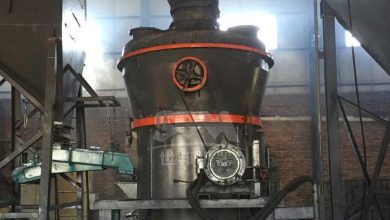
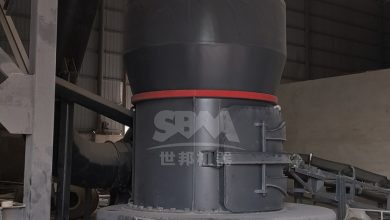
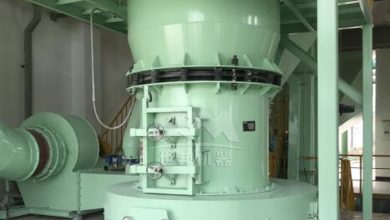
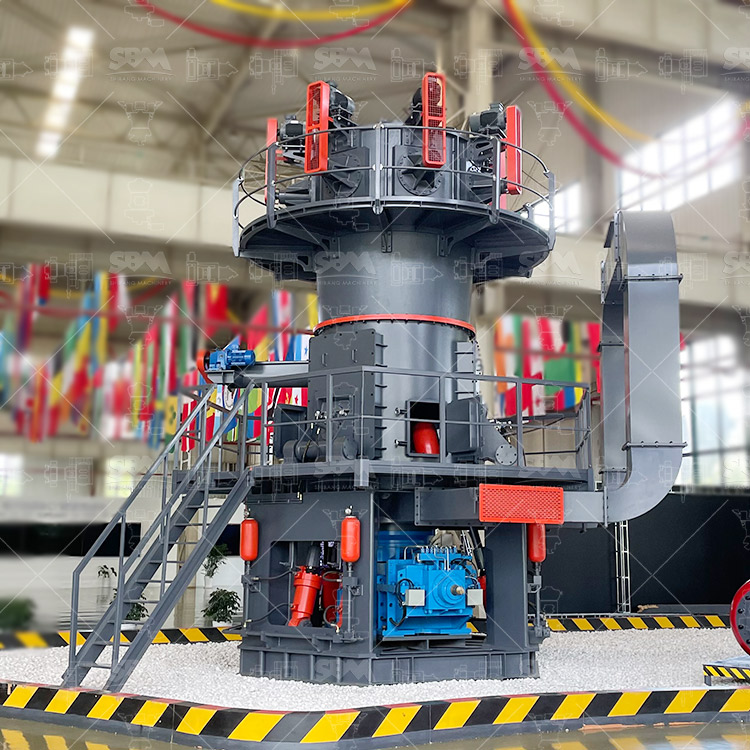
Vertical Roller Mills are highly efficient, integrated systems ideal for large-scale production of activated coal gangue powder. They combine grinding, drying (if needed), and classification within a single unit. Material is fed onto a rotating grinding table and is ground under rollers pressed against the table. The ground material is then pneumatically conveyed to an integrated classifier, where coarse particles are separated and returned for further grinding.
Advantages for Gangue Processing:
- High Efficiency & Low Energy Consumption: VRMs operate on the principle of inter-particle comminution in a material bed, consuming 30-50% less energy than traditional ball mills for the same output fineness.
- Integrated Drying: Hot gas can be introduced to dry moist feed material simultaneously with grinding.
- Compact Footprint: Their vertical design requires less floor space compared to ball mill circuits.
- Excellent Product Control: Built-in dynamic classifiers allow for precise control over product fineness.
For projects requiring high throughput (e.g., > 30 t/h) and superior energy efficiency, our LM Series Vertical Roller Mill is the optimal choice. Its集约化设计 integrates multiple processes, significantly reducing footprint and基建成本. The磨辊与磨盘非接触设计 and use of special耐磨材料 extend service life dramatically when processing abrasive materials like gangue. With an output fineness range of 30-325 mesh (and special models reaching 600 mesh) and a capacity spanning from 3 to over 250 tons per hour, the LM series can be tailored to any production scale. Its智能控制系统 ensures stable operation and consistent product quality, making it a cornerstone for modern, large-scale activated gangue production lines.
2.2. Ultrafine Grinding Mills: For Premium-Grade Products
When the application demands extremely high fineness (e.g., 2500 mesh or D97 ≤ 5μm) to maximize surface area and reactivity, specialized ultrafine grinding mills are required. These mills are designed to achieve a narrow particle size distribution at the micron and sub-micron level.
Advantages for High-Activity Gangue:
- Ultra-High Fineness: Capable of producing powders with median particle sizes below 10 micrometers.
- Narrow Particle Distribution: Advanced classification systems ensure minimal coarse particle contamination, leading to more uniform and predictable performance in concrete.
- Enhanced Activation: The extreme fineness achieved significantly boosts the chemical reactivity of the gangue particles.
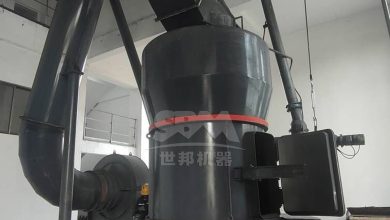
To produce premium-grade activated coal gangue with exceptional pozzolanic activity, our SCM Series Ultrafine Mill is unparalleled. Engineered for precision, it achieves an output细度 of 325-2500目 (D97 ≤ 5μm). Its core advantage lies in the高效节能 design, offering产能为气流磨2倍 while能耗降低30%. The vertical turbine分级器 ensures高精度分级, producing a uniform product with no coarse粉混入. For processing the hard, calcined gangue, its耐用设计 featuring special material rollers and磨环 proves essential for long-term, stable operation. With models like the SCM1680 offering处理能力 up to 25 ton/h, it bridges the gap between high-capacity production and ultra-fine product specifications.
2.3. Other Grinding Technologies
Ball Mills: A traditional and reliable technology, often used in smaller installations or for combined grinding of other materials. They are robust but generally less energy-efficient than VRMs for fine grinding applications.
Trapezium Mills (e.g., MTW/MTM Series): These are robust, mid-range grinding mills suitable for producing activated gangue in the 30-325 mesh range. They offer a good balance of performance, reliability, and cost for medium-scale operations.
3. Supporting Equipment & System Integration
A complete activated coal gangue processing line involves more than just a mill.
- Pre-Crushing: Hammer Crushers or Jaw Crushers are used to reduce raw calcined gangue to a feed size suitable for the grinding mill (typically <30-50mm).
- Feed System: Belt conveyors, bucket elevators, and dosing feeders ensure consistent and controlled material supply to the mill.
- Classification System: While often integrated (as in VRMs), standalone air classifiers or screening systems may be used in circuit with ball mills to control final product fineness.
- Dust Collection & Product Conveying: A high-efficiency pulse-jet baghouse dust collector is essential to meet environmental standards and recover product. Pneumatic conveying systems or screw conveyors then transport the finished powder to storage silos.
- Packaging & Storage: Bulk silos for large customers and automated bagging machines for bagged products complete the line.
4. Technology Selection and Economic Considerations
The selection of processing technology should be based on a thorough analysis of:
- Production Scale: Annual/ daily output requirements.
- Product Specification: Target fineness, particle shape, and reactivity index.
- Feed Material Characteristics: Hardness (after calcination), moisture content, and abrasiveness.
- Total Cost of Ownership: Capital investment (CAPEX), energy consumption (OPEX), maintenance costs, and expected equipment lifespan.
- Plant Space & Layout: Available footprint and desired level of automation.
As a general rule, for large-scale production (>30 t/h) targeting standard cement-grade fineness, Vertical Roller Mills offer the best lifecycle economics. For specialized, ultra-fine products or smaller-scale operations, Ultrafine Mills or Trapezium Mills present compelling solutions.
Conclusion
The successful valorization of coal gangue into a high-performance construction material hinges on the effective integration of calcination and grinding technologies. Investing in modern, efficient grinding equipment like Vertical Roller Mills or Ultrafine Mills is not merely an operational cost—it is a strategic decision that determines product quality, production efficiency, environmental compliance, and ultimately, the profitability of the operation. By leveraging advanced equipment such as our LM Series Vertical Roller Mill for high-volume production or the SCM Series Ultrafine Mill for premium-grade products, producers can fully unlock the economic and environmental potential of activated coal gangue, contributing to a more sustainable construction industry.