Technical Proposal for Annual 300,000 Tons Slag Micro Powder Production Line Project
1. Executive Summary
This technical proposal outlines a comprehensive solution for establishing an annual 300,000-ton slag micro powder production line. The project aims to transform industrial by-products, primarily granulated blast furnace slag (GBFS), into high-value-added supplementary cementitious materials (SCMs) or fillers. The proposed design prioritizes high efficiency, energy conservation, product quality consistency, and full compliance with environmental regulations. By leveraging advanced grinding technology and integrated system engineering, this production line will deliver superior economic returns while promoting sustainable industrial practices.
2. Project Overview & Market Analysis
The global demand for slag micro powder (also known as ground granulated blast furnace slag or GGBS) is steadily increasing, driven by the construction industry’s need for high-performance, durable, and sustainable concrete. Utilizing slag powder in cement and concrete significantly improves long-term strength, reduces permeability, enhances chemical resistance, and lowers the carbon footprint by reducing clinker factor. An annual capacity of 300,000 tons positions this project to serve regional infrastructure development, commercial construction, and ready-mix concrete plants effectively.
The core raw material, granulated blast furnace slag with a moisture content below 15% and appropriate chemical composition (e.g., basicity modulus, glass content), will be sourced from nearby steel plants. The final product target specifications are a Blaine fineness of ≥420 m²/kg (or D97 ≤ 45μm for certain applications) and moisture content ≤1%.
3. Production Process Design
The proposed production line follows a proven and efficient dry process flow, designed for continuous operation and minimal human intervention.
3.1. Process Flow Description
- Raw Material Reception & Pre-homogenization: Slag is delivered and stored in a large-capacity shed. A stacker-reclaimer system ensures homogenization of chemical and physical properties.
- Drying: A high-efficiency rotary dryer reduces the slag moisture from up to 15% to below 1%, using hot gases from a dedicated hot air furnace or waste heat if available.
- Intermediate Storage & Feeding: Dried slag is conveyed to a silo, which acts as a buffer before the grinding mill. A precise weighing feeder ensures stable feed rate to the mill.
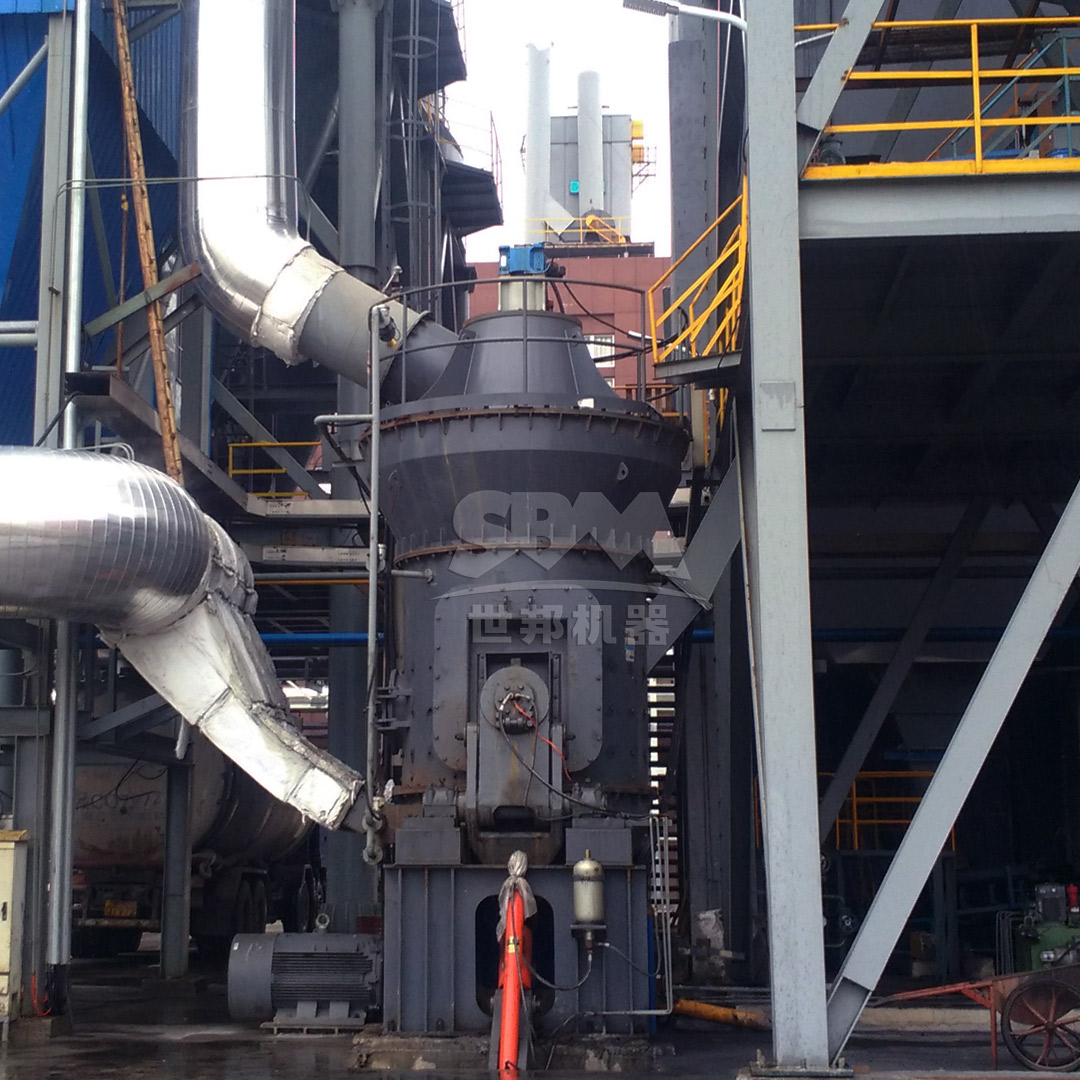
- Fine Grinding (Core Process): This is the heart of the production line. The dried slag is fed into a high-capacity vertical roller mill specifically designed for slag grinding. The mill grinds the material to the target fineness through a bed-compression principle.
- Classification & Collection: Ground powder is pneumatically transported to a high-efficiency dynamic classifier integrated with the mill. The classifier separates fine product from coarse particles, which are returned to the grinding table for further size reduction. The final product is collected by a high-efficiency bag filter.
- Product Storage & Packaging: The collected slag powder is conveyed to large product silos. It can be dispatched in bulk via tanker trucks or packaged in big bags for different market segments.
3.2. Process Flow Diagram (Simplified)
Raw Slag → Reception & Storage → Drying → Intermediate Storage → Fine Grinding Mill → Classification → Product Collection → Storage & Dispatch.
4. Core Equipment Selection & Technical Justification
The selection of the main grinding equipment is critical to the project’s success, impacting energy consumption, product quality, operational stability, and overall cost. For an annual output of 300,000 tons (requiring approximately 40-45 tons per hour, considering 330 operating days and 20-22 hours daily operation), a large-scale, energy-efficient grinding system is mandatory.
4.1. Primary Grinding Mill Recommendation
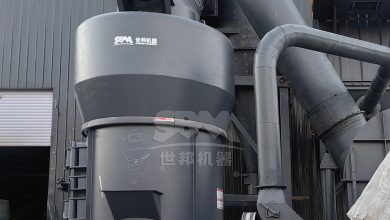
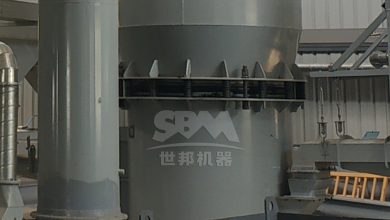
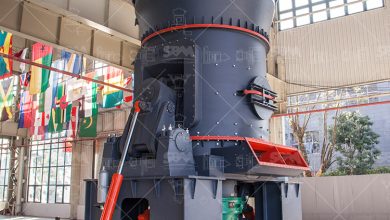
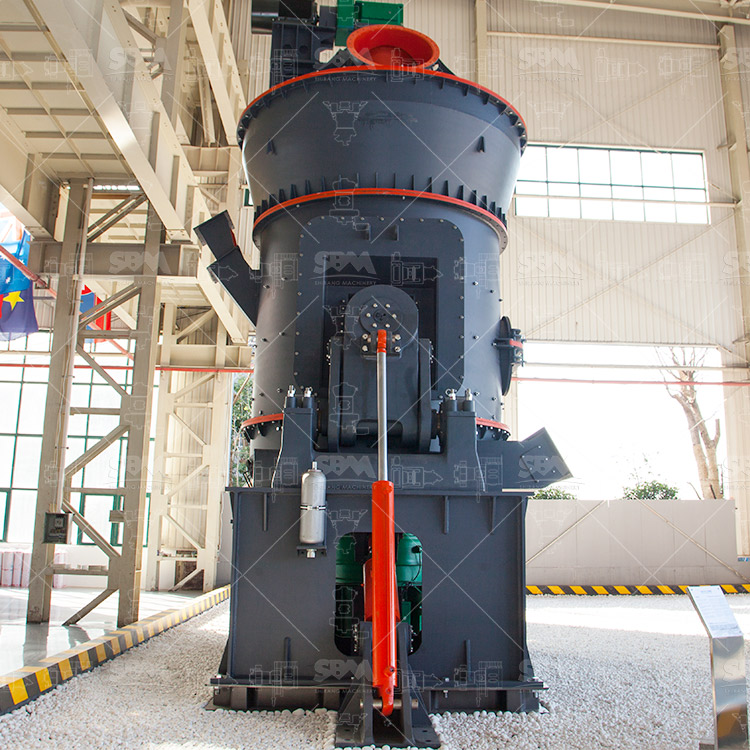
After a thorough technical and economic comparison of various grinding technologies (including ball mills, roller presses with ball mills, and vertical roller mills), the LM Series Vertical Roller Mill (specifically the Vertical Slag Mill models) is unequivocally recommended as the optimal solution for this project.
Technical Advantages for Slag Grinding:
- High Grinding Efficiency & Energy Savings: The LM mill utilizes the bed-compression grinding principle, which is significantly more efficient than the impact/attrition of ball mills. It typically reduces specific energy consumption by 30-40% compared to traditional ball mill systems. This translates to massive operational cost savings over the plant’s lifetime.
- Integrated Drying, Grinding, and Classification: Hot gases from the dryer can be directly introduced into the mill, allowing simultaneous drying and grinding within a single, compact unit. The integrated dynamic classifier ensures precise particle size control and immediate removal of fines, preventing over-grinding.
- Large Capacity & Compact Footprint: Models like the LM280N or LM370N are perfectly suited for this capacity. They offer a much smaller footprint (reducing civil engineering costs by up to 50%) and lower building height requirements compared to a ball mill circuit of equivalent capacity.
- Excellent Product Quality: The stable grinding bed and efficient classification result in a narrow particle size distribution (PSD) and excellent product consistency, which is highly valued in the concrete industry.
- Low Wear and Maintenance: Key wear parts like rollers and the grinding table are made from special alloy materials. The non-contact design between rollers and table during start-up and the ability to swing rollers out for maintenance reduce downtime. Wear part life is typically 2-3 times longer than in other systems.
- Environmental Compliance: The entire grinding system operates under negative pressure, ensuring no dust emission. Combined with a high-efficiency pulse jet bag filter (efficiency >99.9%), dust emissions are kept well below the 20 mg/Nm³ standard. Noise levels are also controlled below 80 dB(A).
For this 300,000 tpy project, we propose the configuration of one (1) unit of LM280N Vertical Slag Mill. With a capacity range of 50-60 t/h (for product fineness ≥420 m²/kg), it can comfortably meet the required average hourly output with built-in redundancy for peak performance and maintenance scheduling.
4.2. Auxiliary Equipment Configuration
- Drying System: One rotary dryer with a hot air furnace, sized to handle the required throughput and initial moisture.
- Material Handling: Complete set of belt conveyors, bucket elevators, and airslide conveyors designed for abrasive slag.
- Dust Collection: High-efficiency pulse jet bag filters for the dryer discharge, mill feed point, and product collection. The main product collector will be integrated with the mill system.
- Storage Silos: Steel silos for raw slag (pre-drying), dried slag, and final product (minimum capacity for 3-5 days of production).
- Electrical & Control System: A centralized PLC/SCADA system for automated control of the entire line, including motor control, interlocking, process parameter monitoring (temperature, pressure, feed rate), and production data logging.
5. For Ultra-Fine Slag Powder Applications
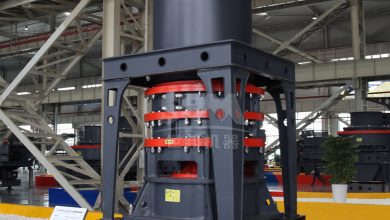
While the LM series mill is ideal for standard SCM production, certain high-end markets demand even finer slag powders (e.g., 600-2500 mesh, D97 ≤ 10μm) for use in high-performance composites, special mortars, or as functional fillers. For such niche production within a larger facility or for pilot-scale development, we recommend our SCM Series Ultrafine Mill.

The SCM Ultrafine Mill is a specialized equipment based on ring-roller grinding and advanced turbo-classification technology. Its key features make it suitable for producing ultra-fine slag powder:
- Ultra-Fine Grinding Capability: It can achieve a fineness range from 325 to 2500 mesh (D97 ≤ 5μm), far surpassing the capabilities of standard vertical mills.
- High-Precision Classification: The vertical turbine classifier ensures sharp particle size cuts, producing a uniform product with no coarse grit contamination.
- Energy Efficient for its Category: Compared to traditional jet mills, the SCM mill offers approximately double the capacity with 30% lower energy consumption for the same fineness level.
- Environmental & Low-Noise: It features a fully sealed grinding chamber and efficient pulse dust collection, with overall noise levels below 75 dB.
For instance, the SCM1680 model, with a capacity of 5.0-25 t/h (depending on fineness), could be considered for a dedicated ultra-fine slag powder production module alongside the main LM mill line, allowing the plant to diversify its product portfolio and capture higher-margin market segments.
6. Plant Layout & Civil Engineering Considerations
The plant layout will be designed for logical material flow, operational safety, and future expansion. The compact nature of the LM vertical mill significantly reduces the footprint of the grinding building. Key areas include:
- Raw material storage shed (covered).
- Drying station.
- Main grinding mill building (housing the LM mill, classifier, main fan, and bag filter).
- Product silo area.
- Electrical substation and control room.
- Maintenance workshop and spare parts storage.
Civil engineering work will involve foundation design for heavy equipment (especially the mill), structural steel for buildings and silos, and all necessary utility connections (power, water, compressed air).
7. Environmental Protection & Safety Measures
The project is designed to be environmentally sound:
- Dust Control: Multiple bag filter systems at all transfer points and the main product collector ensure dust emissions are minimized. Enclosed conveyors will be used where possible.
- Noise Control: Equipment will be selected for low noise generation. Mills and fans will be housed in buildings with acoustic treatment if necessary.
- Water & Waste: The dry process consumes minimal water (only for equipment cooling, which can be recirculated). No process wastewater is generated. Solid waste is limited to spent wear parts from the mill, which are recyclable.
- Safety: The design will comply with all relevant national safety standards, including proper machine guarding, emergency stop systems, dust explosion prevention measures (e.g., explosion vents), and clear safety signage.
8. Project Implementation Plan & Economic Feasibility
A typical implementation timeline is 14-18 months from contract signing to commissioning, including design, equipment procurement, civil works, installation, and调试 (commissioning).
Key Economic Indicators (Preliminary Estimate):
- Total Project Investment: Significant portion allocated to the core LM Vertical Mill system and auxiliary equipment.
- Operating Cost: Dominated by electrical power (grinding is the major consumer) and wear part consumption. The high efficiency of the LM mill minimizes these costs per ton of product.
- Return on Investment (ROI): Attractive ROI is anticipated due to the high value-added nature of slag powder, low raw material cost (slag), and the energy-efficient production process. Payback period is typically competitive within the industry.
9. Conclusion
This technical proposal presents a robust, efficient, and sustainable solution for a 300,000-ton per year slag micro powder production line. The cornerstone of this proposal is the selection of the advanced LM Series Vertical Roller Mill, which offers unparalleled advantages in energy efficiency, production capacity, product quality, and environmental performance for large-scale slag grinding. The optional integration of an SCM Ultrafine Mill provides a pathway to premium product markets. We are confident that this proposed configuration will deliver a highly profitable and reliable operation, turning industrial slag into a valuable resource for the construction industry.