What is the Fineness Range (in Mesh) of a Vertical Roller Mill for Producing Ultrafine Powder?
Introduction: The Quest for Ultrafine Powder
The production of ultrafine powders, typically defined as particles with a diameter of less than 10 microns (D97 ≤ 10μm), is a critical process in numerous modern industries. From high-performance coatings and advanced ceramics to pharmaceuticals and composite materials, the quality and consistency of the powder directly influence the final product’s properties. Achieving these stringent specifications requires precision grinding technology capable of operating within a specific fineness range, commonly measured in “mesh.” This article delves into the fineness capabilities of Vertical Roller Mills (VRMs) for ultrafine powder production, exploring the technological principles, typical ranges, and how advanced mill designs push these boundaries.
Understanding Mesh Size and Ultrafine Grinding
Before discussing mill capabilities, it’s essential to understand the terminology. “Mesh” refers to the number of openings in a linear inch of a screen. A higher mesh number corresponds to smaller openings and finer particles. For example, 325 mesh (approximately 44 microns) is a common benchmark for fine powder, while ultrafine grinding often targets 800 mesh (≈18μm), 1250 mesh (≈10μm), and beyond, reaching 2500 mesh (≈5μm). Converting mesh to micrometers (μm) provides a more precise measurement, with D97 representing the particle size below which 97% of the powder’s mass is contained. Producing powder in the 325-2500 mesh range (45-5μm) demands a mill with exceptional grinding efficiency, precise classification, and stable operation.
The Fineness Range of Conventional and Advanced Vertical Roller Mills
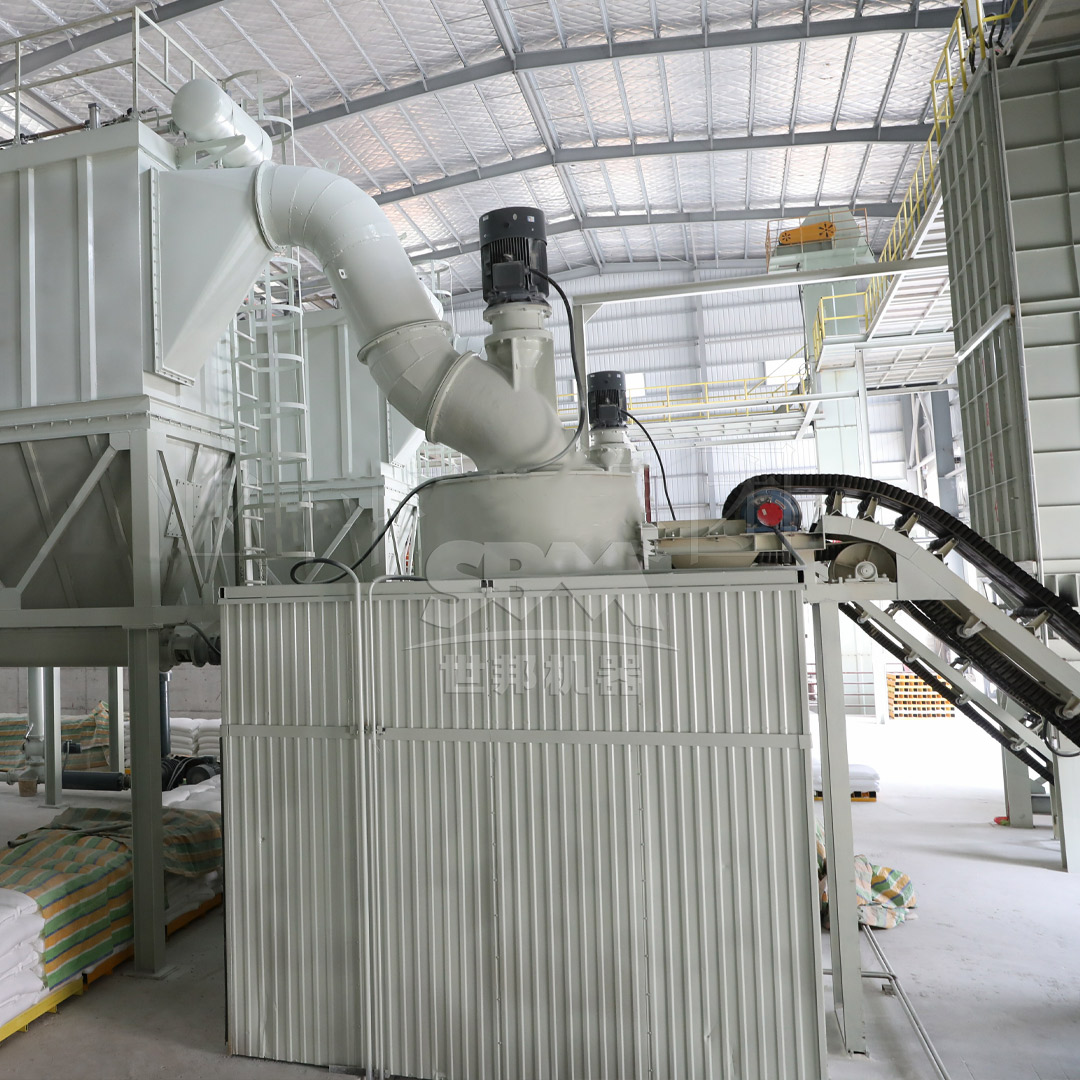
Traditional Vertical Roller Mills are renowned for their high capacity and energy efficiency in producing fine powders for industries like cement and coal. Their standard output fineness typically ranges from 30 to 325 mesh (600 to 45μm). This is achieved through the fundamental principle of bed grinding, where material is crushed between grinding rollers and a rotating table. The final fineness is controlled by an internal or external classifier that separates fine product from coarse material, which is returned for further grinding.
However, producing genuine ultrafine powder (consistently below 10μm or 1250 mesh) presents significant challenges for standard VRMs. The primary limitations include:
- Classification Efficiency: Standard dynamic classifiers struggle to make sharp cuts in the ultrafine range, leading to coarse particle contamination.
- Grinding Mechanism: The pressure-based grinding in standard VRMs becomes less effective on very fine, often cohesive, materials.
- System Stability: Achieving and maintaining a stable material bed at ultrafine settings is difficult, impacting throughput and consistency.
To overcome these hurdles and extend the fineness range into the true ultrafine spectrum, specialized mill designs have been developed.
Pushing the Boundaries: Mills Designed for Ultrafine Production
Advanced VRM designs integrate several key technologies to achieve ultrafine fineness ranges. These include multi-layer grinding loops, high-precision turbo classifiers, and optimized grinding curve designs. The target is not just to reach a fine size, but to do so with a narrow particle size distribution (PSD), high throughput, and low energy consumption.
For operations demanding the highest levels of fineness, such as producing fillers for plastics, premium paints, or functional ceramics, a dedicated ultrafine grinding mill is essential. These mills are engineered specifically for the 325-2500 mesh (5-45μm) range.
Spotlight on Advanced Technology: The SCM Ultrafine Mill
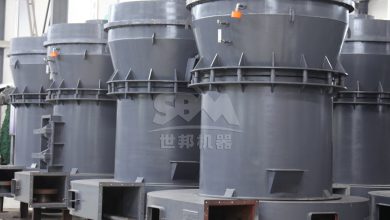
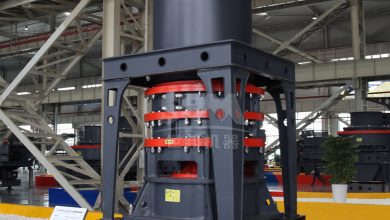
A prime example of technology pushing the fineness envelope is our SCM Ultrafine Mill. This mill is specifically engineered to conquer the challenges of ultrafine powder production. Its design philosophy centers on achieving a remarkable output fineness of 325-2500 mesh (D97 ≤ 5μm), a range that places it at the forefront of ultrafine grinding technology.
The SCM series achieves this through several patented innovations:
- High-Precision Classification: It employs a vertical turbine classifier that enables precise particle size切割, ensuring no coarse powder mixes into the final product, resulting in exceptional uniformity.
- Efficient Grinding Structure: The mill features a unique three-ring grinding path. Material undergoes centrifugal dispersion and progressive layered grinding between rollers and rings, enhancing fineness and yield.
- Superior Energy Economy: Compared to traditional jet mills, the SCM Ultrafine Mill offers twice the capacity while reducing energy consumption by 30%. Its intelligent control system provides automatic feedback on product fineness.
- Durability and Stability: Critical wear parts like rollers and grinding rings are made from special materials, extending service life multiple times. The innovative bearing-less screw design in the grinding chamber ensures stable, low-vibration operation.
With models like the SCM800 (0.5-4.5 t/h) to the high-capacity SCM1680 (5.0-25 t/h), this series offers scalable solutions for various production needs while consistently delivering powder in the critical ultrafine range.
Choosing the Right Mill: Matching Fineness Requirements with Technology
Selecting the appropriate VRM requires a clear understanding of the target fineness, required capacity, and material characteristics. Here is a practical guide:
- For 30-325 mesh (600-45μm) applications: Standard VRM series like the LM Vertical Roller Mill or MTW European Trapezium Mill are excellent, high-efficiency choices. For instance, the LM series offers integrated crushing, grinding, and classifying in a compact footprint, with capacities from 3 to 250 t/h and fineness adjustable within this range.
- For 325-2500 mesh (45-5μm) ultrafine applications: Dedicated ultrafine mills like the SCM Ultrafine Mill are necessary. Their specialized classification and grinding mechanics are non-negotiable for achieving and maintaining such fine specifications.
- For intermediate or flexible requirements: Some advanced mills offer extended ranges. For example, the LUM Ultra-fine Vertical Mill is also designed to cover the 325-2500 mesh spectrum, utilizing multi-rotor classification and optimized grinding curves.
It is crucial to consult with grinding experts and consider pilot testing when targeting the finest ranges, as material properties like hardness, moisture, and abrasiveness significantly influence the final result.
Conclusion: The Precision Frontier of Grinding
The fineness range of a Vertical Roller Mill for producing ultrafine powder is not a fixed value but a spectrum defined by the mill’s technological sophistication. While conventional VRMs reliably cover the fine grinding spectrum up to 325 mesh, venturing into the ultrafine territory below 10μm (1250+ mesh) demands specialized equipment. Mills like the SCM Ultrafine Mill exemplify the engineering breakthroughs—in precision classification, layered grinding, and intelligent control—that make consistent, high-volume production of 2500-mesh powder a commercial reality. As material science advances and industries demand ever-finer powders, the evolution of VRM technology will continue to push the boundaries of achievable fineness, enabling new applications and driving innovation across the manufacturing landscape.