200 Mesh Lithium Ore Grinding Mill Equipment for Powder Production
Introduction to Lithium Ore Grinding Requirements
The global demand for lithium has surged dramatically in recent years, driven primarily by the rapid expansion of the electric vehicle market and energy storage systems. Lithium ore, typically found in pegmatite deposits as spodumene, lepidolite, or petalite, requires precise grinding to liberate lithium minerals from gangue materials. The 200 mesh (74 microns) specification represents a critical particle size range that balances mineral liberation efficiency with downstream processing requirements. Achieving consistent 200 mesh powder production demands specialized grinding equipment capable of handling lithium ore’s specific characteristics, including moderate hardness (6-7 on Mohs scale) and occasional abrasiveness.
Proper grinding to 200 mesh ensures optimal recovery rates in subsequent flotation or leaching processes while minimizing energy consumption. The selection of appropriate grinding technology significantly impacts operational costs, product quality, and overall process efficiency in lithium processing plants.

Technical Challenges in Lithium Ore Grinding
Lithium ore presents several unique challenges that must be addressed by grinding equipment. The mineral’s variable composition often includes hard quartz and feldspar components alongside target lithium minerals. This heterogeneity can lead to uneven wear patterns in grinding components and inconsistent product size distribution if not properly managed. Additionally, some lithium minerals exhibit cleavage properties that require specific grinding mechanisms to achieve the desired liberation without overgrinding.
Energy efficiency represents another critical consideration, as comminution typically accounts for 30-50% of total processing energy consumption. Equipment selection must balance grinding efficiency with power requirements, especially given the increasing emphasis on sustainable mining practices. The tendency of fine lithium powders to agglomerate also necessitates integrated classification systems to prevent re-aggregation and ensure consistent product quality.
Grinding Technology Options for Lithium Ore
Ultra-Fine Grinding Solutions
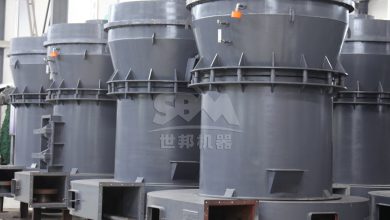
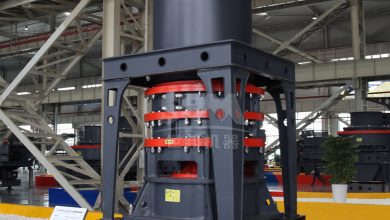
For operations requiring precise control over final product size distribution, ultra-fine grinding mills offer significant advantages. Our SCM Ultrafine Mill represents an ideal solution for lithium ore processing, particularly when consistent 200 mesh production is required. With an output fineness range of 325-2500 mesh (D97≤5μm), this equipment provides exceptional flexibility for various lithium ore types and processing requirements.
The SCM series incorporates several technological innovations specifically beneficial for lithium applications. Its efficient grinding mechanism achieves 30% lower energy consumption compared to conventional grinding systems while maintaining double the capacity of jet mills. The integrated intelligent control system automatically monitors and adjusts operational parameters to maintain consistent product quality, even with variations in feed material characteristics.

Key Features of SCM Ultrafine Mill for Lithium Applications
- High-Precision Classification: Vertical turbine classifiers ensure accurate particle size切割 with no coarse powder contamination, critical for maintaining strict 200 mesh specifications
- Enhanced Durability: Specially formulated roller and ring materials provide extended service life, reducing maintenance frequency and operational downtime
- Environmental Compliance: Pulse dust collection system exceeds international emission standards while noise levels remain below 75dB
- Processing Flexibility: Multiple models available with capacity ranging from 0.5-25 tons/hour to match various production requirements
Medium-Scale Grinding Solutions
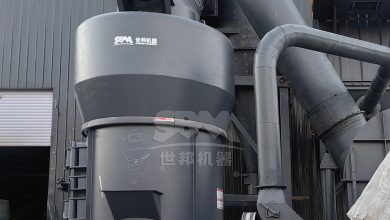
For larger-scale lithium processing operations, the MTW Series Trapezium Mill provides an excellent balance of capacity, efficiency, and operational economy. With output fineness adjustable between 30-325 mesh and capacity ranging from 3-45 tons/hour depending on model selection, this equipment suits medium to large lithium processing facilities.
The MTW series incorporates several design innovations that benefit lithium ore processing. Its curved air channel design minimizes energy losses during material transport, while the combined shovel blade configuration reduces maintenance requirements. The integral transmission system achieves 98% transmission efficiency, contributing to overall energy savings. For lithium operations requiring consistent 200 mesh output with high throughput, the MTW138Z model offers 6-17 tons/hour capacity with 90kW main motor power.
Equipment Selection Criteria for Lithium Ore Grinding
Selecting the appropriate grinding equipment for lithium ore requires careful consideration of multiple factors. Production capacity requirements must align with both current needs and planned expansions. The specific lithium mineral composition influences equipment selection, as different minerals respond differently to various grinding mechanisms. Spodumene, being harder and more abrasive, may require different grinding approaches compared to softer lepidolite.
Site-specific considerations such as available space, power supply limitations, and environmental regulations also impact equipment selection. The SCM series’ compact design makes it suitable for facilities with space constraints, while its low noise operation addresses regulatory concerns in populated areas. For operations prioritizing energy efficiency, both recommended models offer significant advantages over conventional grinding systems.
Operational Best Practices for Lithium Ore Grinding
Proper operation and maintenance of grinding equipment significantly impact performance and longevity in lithium applications. Regular monitoring of wear components is essential, particularly when processing abrasive lithium ores. The SCM Ultrafine Mill’s specially designed roller and ring assembly provides extended service life, but scheduled inspection and replacement remain critical for maintaining optimal performance.
Feed rate optimization represents another key operational consideration. Consistent feed at the designed capacity ensures stable operation and prevents issues such as overgrinding or insufficient liberation. Both recommended grinding systems incorporate advanced control systems that automatically adjust operational parameters in response to feed variations, but operator vigilance remains important for peak performance.

Economic Considerations in Grinding System Selection
The economic analysis of grinding equipment for lithium ore must consider both capital and operational expenditures. While initial investment represents a significant consideration, operational costs including energy consumption, maintenance, and component replacement often determine long-term economic viability. The SCM Ultrafine Mill’s 30% energy reduction compared to conventional systems translates to substantial operational savings over the equipment lifespan.
Maintenance requirements and component lifespan also significantly impact operational economics. The SCM series’ durable construction and specialized materials extend service intervals, reducing both maintenance costs and production downtime. For operations processing highly abrasive lithium ores, these durability advantages become particularly significant in total cost of ownership calculations.
Future Trends in Lithium Ore Grinding Technology
The evolving landscape of lithium extraction and processing continues to drive innovations in grinding technology. Increasing emphasis on water conservation favors dry grinding systems in water-scarce regions, making equipment like the SCM Ultrafine Mill particularly relevant. The trend toward finer grinding to enhance lithium recovery rates also supports the adoption of advanced ultra-fine grinding technologies.
Digitalization and smart manufacturing concepts are increasingly integrated into grinding systems, with remote monitoring, predictive maintenance, and automated optimization becoming standard features. Both recommended grinding systems incorporate these capabilities, positioning lithium processors for successful adoption of Industry 4.0 principles. As lithium demand continues to grow, grinding technology will likely evolve toward even greater efficiency, flexibility, and integration with downstream processing steps.
Conclusion
Selecting appropriate grinding equipment represents a critical decision in lithium ore processing operations. The 200 mesh specification requires precise control over particle size distribution, making advanced grinding technologies essential for optimal performance. Our SCM Ultrafine Mill and MTW Series Trapezium Mill offer complementary solutions for different scales and requirements within lithium processing.
With their advanced features, energy efficiency, and proven performance in mineral applications, these grinding systems provide reliable, economical solutions for lithium ore processing. As the lithium industry continues to evolve, partnering with equipment suppliers offering technical expertise and ongoing support becomes increasingly valuable for maintaining competitive advantage in this dynamic market.