
How Much Does a Lithium Feldspar Ultrafine Grinding Mill Cost? – Manufacturer Price Guide
Introduction to Lithium Feldspar Ultrafine Grinding
Lithium feldspar, a crucial raw material in ceramics, glass, and lithium-ion battery production, requires precise ultrafine grinding to achieve optimal material properties. The grinding process significantly impacts product quality, production efficiency, and overall operational costs. As manufacturers seek to optimize their lithium feldspar processing operations, understanding the cost factors and technological requirements for ultrafine grinding mills becomes essential for making informed investment decisions.
Key Factors Influencing Ultrafine Grinding Mill Costs
Production Capacity Requirements
The required production capacity represents one of the most significant cost determinants for ultrafine grinding mills. Higher capacity machines naturally command higher prices due to larger components, more powerful motors, and enhanced structural requirements. For lithium feldspar processing, production needs typically range from small-scale pilot operations (0.5-2 ton/h) to large industrial production lines (10-25+ ton/h). The relationship between capacity and cost isn’t linear—doubling capacity often increases costs by only 60-80% due to economies of scale in manufacturing.
Fineness Specifications
Lithium feldspar applications demand specific particle size distributions, typically ranging from 325 mesh to 2500 mesh (45-5μm). Achieving finer particle sizes requires more sophisticated classification systems, precision manufacturing tolerances, and often additional process controls, all contributing to higher equipment costs. Mills capable of producing D97≤5μm consistently command premium pricing compared to those limited to coarser grinding applications.
Technical Specifications and Features
Advanced technical features significantly impact ultrafine grinding mill pricing. Key cost drivers include the sophistication of the classification system, grinding element materials, automation capabilities, and energy efficiency technologies. Mills incorporating intelligent control systems, premium wear-resistant materials, and high-efficiency motors typically represent higher initial investments but deliver substantial long-term operational savings.
Recommended Equipment for Lithium Feldspar Processing
SCM Ultrafine Mill: Optimal for High-Precision Applications
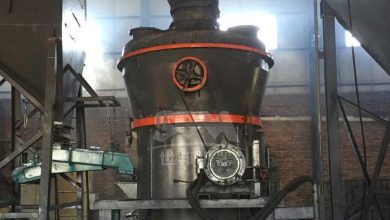
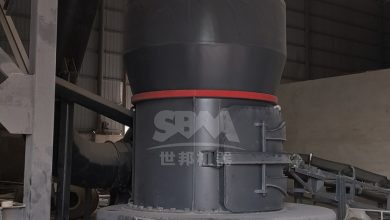
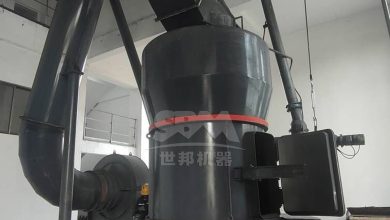
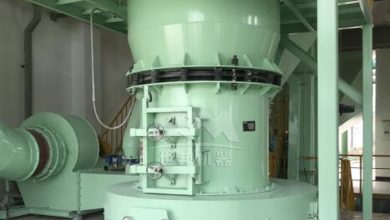
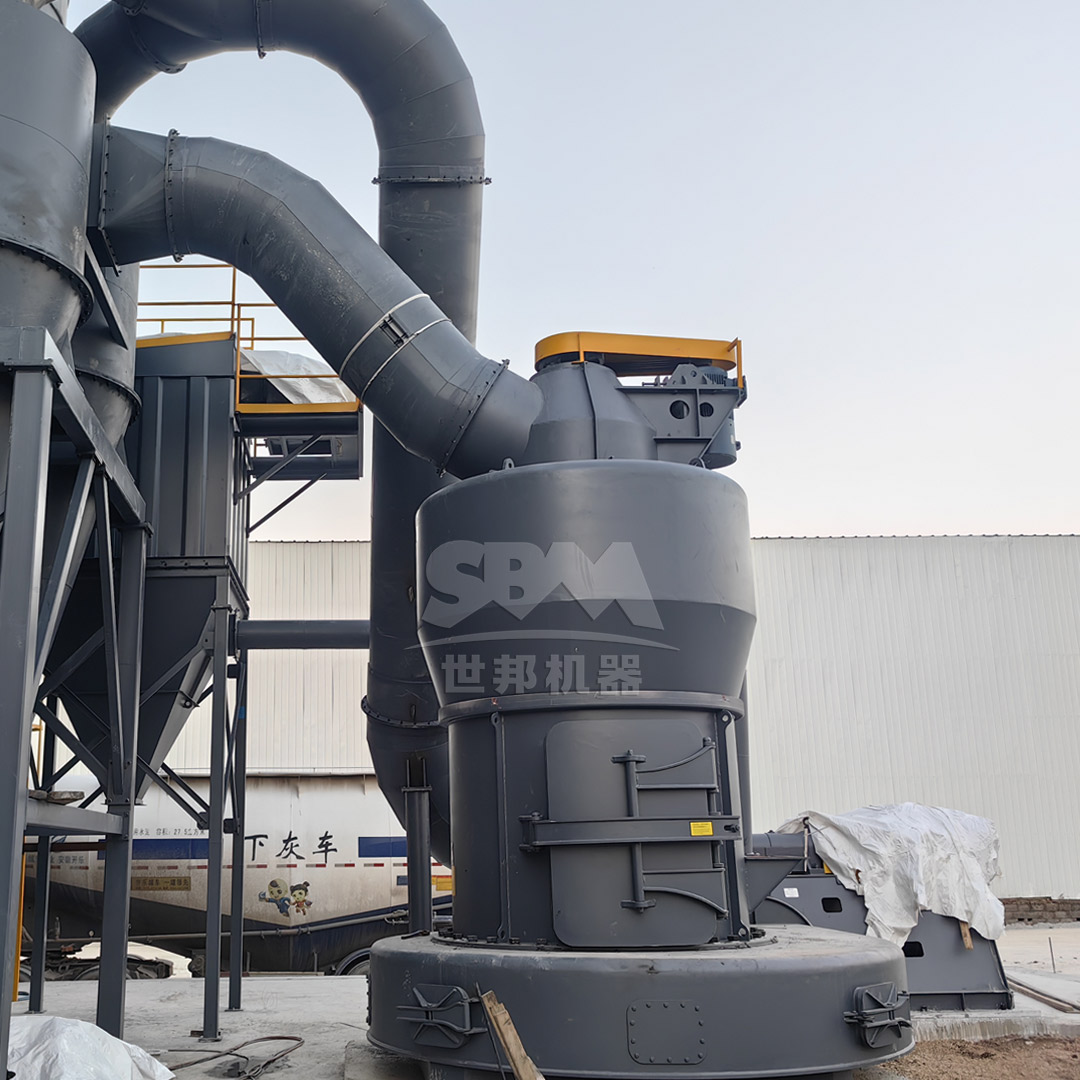
For lithium feldspar requiring ultra-fine particle sizes with narrow distribution, the SCM Ultrafine Mill represents an excellent investment. This mill specializes in producing powders ranging from 325 to 2500 mesh (D97≤5μm) with exceptional consistency. The vertical turbine classifier ensures precise particle size control, eliminating coarse particle contamination in the final product—a critical requirement for battery-grade lithium feldspar applications.
The SCM series offers models from SCM800 to SCM1680, with capacities ranging from 0.5 to 25 ton/h. The mill’s energy-efficient design provides approximately 30% lower energy consumption compared to conventional grinding systems while delivering twice the output of jet mills. The special material grinding rollers and rings significantly extend service life, reducing long-term maintenance costs. For lithium feldspar producers targeting premium markets where particle size consistency directly impacts product performance, the SCM Ultrafine Mill delivers outstanding value despite its premium positioning.

MTW Series Trapezium Mill: Cost-Effective High-Capacity Solution
For operations requiring higher throughput with slightly coarser specifications (30-325 mesh), the MTW Series Trapezium Mill offers an outstanding balance of performance and affordability. With capacities ranging from 3 to 45 ton/h, this European-style trapezium grinding mill incorporates multiple technological innovations that enhance efficiency while controlling costs.
The MTW series features curved air duct technology that minimizes energy losses and wear-resistant shovel blades that substantially reduce maintenance expenses. The conical gear transmission system achieves remarkable 98% transmission efficiency, contributing to lower operational costs. For lithium feldspar applications where extreme fineness isn’t required but high throughput and reliability are essential, the MTW Series provides exceptional value with faster return on investment.
Detailed Cost Analysis by Equipment Class
Entry-Level Systems (0.5-4 ton/h)
Entry-level ultrafine grinding systems for lithium feldspar typically range from $80,000 to $180,000, depending on configuration and automation levels. These systems suit pilot plants, research facilities, and small-scale production operations. The SCM800 model, with its 0.5-4.5 ton/h capacity and 75kW main motor, represents the entry point for genuine ultrafine grinding capability. While lower-cost alternatives exist, they often compromise on particle size consistency and long-term reliability.
Mid-Range Production Systems (4-15 ton/h)
Mid-range lithium feldspar grinding systems represent the most common investment category, with prices typically between $180,000 and $350,000. This range includes models like the SCM1000 and SCM1250, offering 1.0-8.5 ton/h and 2.5-14 ton/h capacities respectively. These systems balance production requirements with capital investment, providing robust performance for established lithium feldspar processing operations. The MTW138Z and MTW175G models also fit this category, offering slightly different technological approaches to ultrafine grinding.

High-Capacity Industrial Systems (15-25+ ton/h)
Large-scale lithium feldspar production facilities require high-capacity grinding systems priced from $350,000 to $600,000+. The SCM1680 (5-25 ton/h, 315kW) represents the premium end of dedicated ultrafine grinding technology, while the MTW215G (15-45 ton/h, 280kW) offers exceptional throughput for applications where the finest particle sizes aren’t critical. These industrial-scale systems incorporate advanced automation, comprehensive safety systems, and premium components to ensure continuous operation under demanding production conditions.
Additional Cost Considerations
Installation and Commissioning
Beyond the equipment purchase price, lithium feldspar grinding mill projects require careful budgeting for installation and commissioning expenses. These typically add 15-25% to the total project cost, covering foundation preparation, electrical connections, material handling systems integration, and initial system optimization. Proper installation is particularly critical for ultrafine grinding applications, where vibration, alignment, and system sealing directly impact performance and product quality.
Operational and Maintenance Costs
The total cost of ownership for lithium feldspar grinding mills extends far beyond the initial investment. Operational costs include energy consumption, grinding media replacement, classifier maintenance, and filtration system operation. Modern, efficient designs like the SCM Ultrafine Mill can reduce energy costs by 30% or more compared to older technologies. Maintenance costs vary significantly based on material abrasiveness, operating hours, and preventive maintenance practices, typically ranging from $0.50 to $2.50 per operating hour depending on mill size and application severity.
Spare Parts and Wear Components
Lithium feldspar’s moderate abrasiveness still necessitates regular replacement of wear components. Grinding rolls, rings, classifier blades, and shovel blades represent the primary consumables. High-quality mills incorporate specially developed materials that extend service life, but budgeting 3-7% of the initial equipment cost annually for spare parts represents a reasonable planning estimate for most operations.
Technical Considerations for Lithium Feldspar Specific Applications
Material Characteristics Impacting Mill Selection
Lithium feldspar presents specific grinding challenges that influence equipment selection and operation. With a Mohs hardness of 6-6.5 and typically containing 2-4% lithium oxide, the material requires robust grinding elements and precise temperature control to prevent thermal damage to lithium-bearing phases. The SCM Ultrafine Mill’s intelligent control system automatically adjusts operational parameters to maintain optimal grinding conditions, preserving the valuable lithium content throughout the process.
Product Quality Requirements
Different lithium feldspar applications demand specific product characteristics. Ceramic applications typically require controlled particle size distributions with D50 values between 5-15μm, while battery applications often need tighter distributions with D90 values below 10μm. The advanced classification systems in recommended mills enable producers to precisely target these specifications while maintaining production efficiency—a capability that directly impacts the economic value of the final product.
Return on Investment Analysis
Capital vs. Operational Cost Trade-offs
Selecting the appropriate lithium feldspar grinding mill involves careful analysis of capital versus operational cost trade-offs. Higher-efficiency systems typically command premium prices but deliver substantially lower operating costs. For example, the energy savings alone from the SCM Ultrafine Mill’s advanced design can justify the price premium within 18-30 months for operations running multiple shifts. Additionally, reduced maintenance requirements and higher product quality contribute to the overall economic advantage.
Production Efficiency Gains
Modern ultrafine grinding mills dramatically improve production efficiency compared to older technologies. The SCM series achieves grinding efficiencies 40-60% higher than traditional ball mills for equivalent product fineness, while the MTW series offers 25-35% improvements. These efficiency gains translate directly to increased production capacity, reduced energy consumption, and lower labor costs per ton of processed material.
Conclusion: Making the Right Investment Decision
Selecting the appropriate ultrafine grinding mill for lithium feldspar processing requires careful consideration of both technical requirements and economic factors. While equipment costs represent a significant investment, the long-term operational benefits of modern, efficient grinding technology typically deliver compelling returns. The SCM Ultrafine Mill stands out for applications demanding the finest particle sizes with exceptional consistency, while the MTW Series Trapezium Mill offers outstanding value for high-capacity operations with slightly less stringent fineness requirements.
Prospective buyers should evaluate not only the initial equipment price but also the total cost of ownership, including energy consumption, maintenance requirements, and the value of improved product quality. Consulting with experienced grinding technology providers and conducting thorough material testing remains essential for matching specific lithium feldspar characteristics with the optimal grinding solution.