Application of Phosphorus Slag Micro Powder in Concrete and Cement Production
Introduction
Phosphorus slag, a byproduct of the phosphorus chemical industry, has gained significant attention in recent years as a valuable supplementary cementitious material (SCM) in concrete and cement production. With the growing emphasis on sustainable construction practices and the reduction of carbon footprint in the building industry, the utilization of industrial byproducts like phosphorus slag has become increasingly important. This article explores the properties, benefits, and processing requirements of phosphorus slag micro powder for construction applications.
Chemical and Physical Properties of Phosphorus Slag
Phosphorus slag is generated during the production of elemental phosphorus in electric arc furnaces at temperatures exceeding 1400°C. The rapid cooling of this molten material results in a predominantly glassy structure with latent hydraulic properties. Chemically, phosphorus slag primarily consists of calcium silicate with varying amounts of alumina, magnesia, and minor impurities.
The key chemical components typically include:
- Calcium oxide (CaO): 40-50%
- Silicon dioxide (SiO₂): 35-45%
- Aluminum oxide (Al₂O₃): 2-8%
- Magnesium oxide (MgO): 1-5%
- Phosphorus pentoxide (P₂O₅): 0.5-3%
The physical characteristics of phosphorus slag micro powder significantly influence its performance in cementitious systems. The particle size distribution, specific surface area, and particle morphology are critical parameters that determine the reactivity and packing density of the material in concrete mixtures.
Benefits in Concrete Applications
Enhanced Durability
The incorporation of phosphorus slag micro powder in concrete significantly improves durability parameters. The fine particles fill the capillary pores in the cement paste, reducing permeability and limiting the ingress of aggressive ions such as chlorides and sulfates. This results in enhanced resistance to chemical attack, reduced risk of reinforcement corrosion, and improved long-term performance in harsh environments.
Improved Workability
The spherical morphology of properly processed phosphorus slag particles acts as miniature ball bearings in the concrete mixture, reducing interparticle friction and improving rheological properties. This enhanced workability allows for reduced water demand while maintaining desired consistency, potentially leading to higher strength development and reduced shrinkage cracking.
Thermal Properties
Concrete containing phosphorus slag exhibits lower heat of hydration compared to ordinary Portland cement concrete. This characteristic is particularly beneficial in mass concrete applications where thermal cracking due to excessive temperature rise is a concern. The reduced thermal conductivity also contributes to improved energy efficiency in buildings.
Environmental Benefits
The utilization of phosphorus slag in concrete contributes significantly to sustainable development by reducing the consumption of Portland cement, whose production is energy-intensive and generates substantial CO₂ emissions. Additionally, it provides an environmentally sound solution for managing industrial byproducts that would otherwise require disposal in landfills.
Processing Requirements for Optimal Performance
The effectiveness of phosphorus slag as a supplementary cementitious material is highly dependent on its fineness and particle size distribution. To achieve the desired reactivity and performance characteristics, the raw slag must undergo specialized grinding processes to produce micro powder with appropriate physical properties.
The optimal particle size for phosphorus slag in cementitious applications typically ranges from 5 to 45 micrometers, with a specific surface area between 400-600 m²/kg. Achieving this fineness requires advanced grinding equipment capable of efficient size reduction while maintaining consistent product quality.
Recommended Grinding Equipment
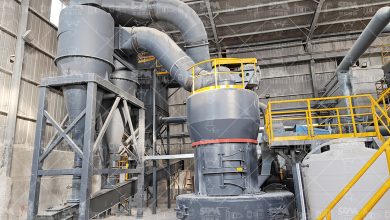
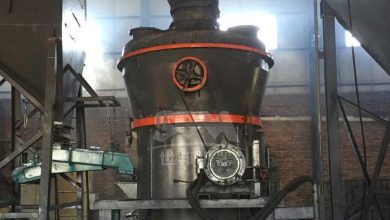
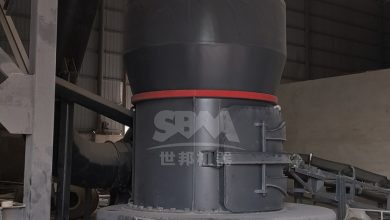
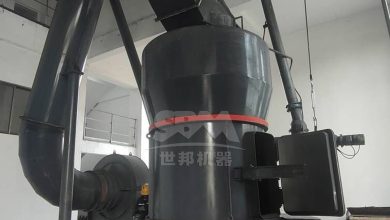
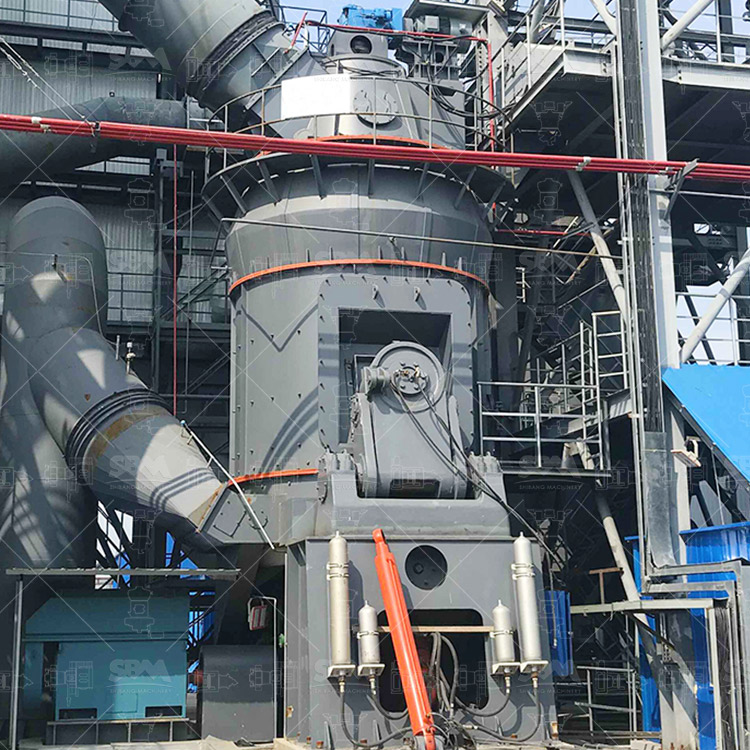
For the production of high-quality phosphorus slag micro powder, we recommend our SCM Series Ultrafine Mill, specifically designed for processing industrial byproducts into premium supplementary cementitious materials.
SCM Ultrafine Mill Technical Advantages
The SCM Ultrafine Mill offers several distinctive advantages for phosphorus slag processing:
- High Efficiency and Energy Savings: With capacity twice that of jet mills and 30% lower energy consumption, the SCM series provides exceptional operational economy. The intelligent control system automatically monitors and adjusts product fineness, ensuring consistent quality.
- Precision Classification: The vertical turbine classifier enables precise particle size切割, producing uniform powder without coarse particle contamination. This is particularly important for achieving the optimal particle size distribution for maximum reactivity in concrete.
- Durable Design: Specially manufactured roller and grinding ring materials extend service life significantly. The bearing-free screw grinding chamber ensures stable operation with minimal maintenance requirements.
- Environmental Compliance: With pulse dust collection efficiency exceeding international standards and noise levels below 75dB, the SCM series meets stringent environmental regulations for industrial operations.
Application-Specific Performance
For phosphorus slag grinding applications, the SCM800 and SCM900 models are particularly suitable, offering processing capacities of 0.5-4.5 ton/h and 0.8-6.5 ton/h respectively. The ability to achieve fineness levels up to 2500 mesh (D97≤5μm) makes these units ideal for producing the ultra-fine powders required for high-performance concrete applications.
For larger scale operations or when processing other mineral additives alongside phosphorus slag, our LM Series Vertical Roller Mill provides an excellent alternative with capacities ranging from 3-250 ton/h depending on the specific model selected.
Quality Control and Testing
Consistent quality of phosphorus slag micro powder is essential for predictable performance in concrete mixtures. Key quality parameters that require regular monitoring include:
- Chemical composition (particularly P₂O₅ content)
- Fineness and particle size distribution
- Specific surface area (Blaine method)
- Glass content and amorphous phase percentage
- Moisture content
- Activity index at 7, 28, and 90 days
Proper quality assurance protocols ensure that the phosphorus slag micro powder meets the requirements of relevant international standards such as ASTM C989, EN 15167-1, and GB/T 18046.
Mix Design Considerations
When incorporating phosphorus slag micro powder in concrete mixtures, several factors must be considered to optimize performance:
Replacement Levels
The optimal replacement level of Portland cement with phosphorus slag typically ranges from 20% to 50% by mass, depending on the application requirements, exposure conditions, and desired performance characteristics. Higher replacement levels generally provide greater sustainability benefits but may require adjustments to mixture proportions and curing regimes.
Compatibility with Chemical Admixtures
Phosphorus slag may affect the performance of certain chemical admixtures, particularly water reducers and set controllers. Compatibility testing should be conducted to determine appropriate dosage rates and ensure desired fresh and hardened concrete properties.
Curing Requirements
Concrete containing phosphorus slag generally benefits from extended moist curing periods due to the slower rate of strength development compared to plain Portland cement concrete. Proper curing is essential to realize the full potential of the pozzolanic reaction and achieve desired durability characteristics.
Case Studies and Field Applications
Phosphorus slag micro powder has been successfully utilized in various construction projects worldwide, demonstrating its technical and economic viability:
Infrastructure Projects
Several major infrastructure projects have incorporated phosphorus slag in concrete mixtures for bridges, tunnels, and pavements. The improved durability and reduced permeability have resulted in extended service life and reduced maintenance requirements.
High-Rise Buildings
The reduced heat of hydration characteristics make phosphorus slag concrete particularly suitable for massive structural elements in high-rise construction, where thermal cracking control is critical.
Marine Structures
The enhanced resistance to chloride penetration and sulfate attack has made phosphorus slag concrete a preferred choice for marine structures, ports, and coastal protection works in aggressive environments.
Economic Considerations
The economic viability of using phosphorus slag micro powder in concrete depends on several factors, including:
- Availability and cost of raw phosphorus slag
- Grinding energy requirements and equipment costs
- Transportation costs to concrete production facilities
- Potential savings from reduced cement consumption
- Life-cycle cost benefits from improved durability
In many regions, the use of phosphorus slag provides significant cost advantages compared to using Portland cement alone, particularly when considering the full life-cycle costs of construction projects.
Future Trends and Research Directions
Ongoing research continues to expand the applications and improve the performance of phosphorus slag in cementitious systems. Current research directions include:
- Development of activation methods to enhance early-age reactivity
- Optimization of particle size distributions for specific applications
- Exploration of synergistic effects with other supplementary cementitious materials
- Investigation of long-term performance under various exposure conditions
- Development of standardized testing methods and specification requirements
Conclusion
Phosphorus slag micro powder represents a valuable resource for the construction industry, offering technical, economic, and environmental benefits when properly processed and incorporated in concrete and cement production. The key to unlocking these benefits lies in appropriate processing to achieve the required fineness and particle characteristics. Our SCM Series Ultrafine Mill provides an ideal solution for transforming raw phosphorus slag into high-quality micro powder suitable for premium concrete applications. As sustainability considerations continue to gain importance in construction practices, the utilization of industrial byproducts like phosphorus slag will play an increasingly significant role in creating more durable, economical, and environmentally responsible built environments.