Effect of Limestone Powder Fineness on Strength and Properties of Fly Ash Concrete
Abstract
This comprehensive study investigates the influence of limestone powder fineness on the mechanical properties and durability characteristics of fly ash concrete. With the growing demand for sustainable construction materials, the synergistic combination of limestone powder and fly ash presents a promising solution for enhancing concrete performance while reducing environmental impact. The research focuses on how varying particle sizes of limestone powder, particularly in the ultrafine range, affect hydration kinetics, pore structure refinement, and long-term strength development in fly ash concrete systems. The findings demonstrate that precisely controlled fineness of limestone powder significantly improves early-age strength, reduces permeability, and enhances overall durability, making it an essential component in modern high-performance concrete formulations.
1. Introduction
The construction industry faces increasing pressure to develop sustainable building materials that reduce carbon footprint while maintaining or improving performance characteristics. Fly ash concrete has emerged as a prominent solution, utilizing industrial by-products to create more environmentally friendly construction materials. However, the incorporation of limestone powder as a supplementary cementitious material has gained significant attention due to its ability to enhance concrete properties through physical and chemical interactions.
Limestone powder serves multiple functions in concrete systems: as a filler material that improves particle packing density, as a nucleation site for hydration products, and as a reactive component participating in chemical reactions. The effectiveness of limestone powder in these roles is highly dependent on its fineness, which determines its specific surface area, reactivity, and packing characteristics. Understanding the relationship between limestone powder fineness and concrete performance is crucial for optimizing mix designs and achieving desired engineering properties.
This paper examines the fundamental mechanisms through which limestone powder fineness influences fly ash concrete, with particular emphasis on strength development, microstructural evolution, and durability parameters. The research provides practical guidance for concrete producers and engineers seeking to maximize the benefits of limestone powder in their applications.
2. Materials and Experimental Methods
2.1 Materials Characterization
The experimental program utilized ordinary Portland cement (OPC) conforming to ASTM C150 Type I specifications, Class F fly ash meeting ASTM C618 requirements, and limestone powders of varying fineness levels. The limestone powders were characterized using laser diffraction analysis, BET surface area measurements, and X-ray diffraction to determine their physical and chemical properties.
Natural river sand with a fineness modulus of 2.6 and crushed granite aggregate with a maximum size of 20 mm were used as fine and coarse aggregates, respectively. A polycarboxylate-based superplasticizer was employed to maintain consistent workability across different mix designs.
2.2 Concrete Mix Proportions
Twelve concrete mixtures were prepared with a constant water-binder ratio of 0.40 and total binder content of 400 kg/m³. The control mixture contained 100% OPC, while the other mixtures incorporated 25% fly ash replacement by mass of cement. Limestone powder was added as a partial replacement of cement at 10% by mass, with varying fineness levels ranging from 200 to 2500 mesh (approximately 74 to 5 microns).
The concrete mixtures were designed to investigate the individual and combined effects of fly ash and limestone powder fineness on fresh and hardened properties. Slump tests were conducted to assess workability, while compressive strength, splitting tensile strength, and flexural strength were determined at 1, 3, 7, 28, and 90 days of curing.
3. Influence of Limestone Powder Fineness on Concrete Properties
3.1 Hydration Kinetics and Microstructure Development
The fineness of limestone powder significantly influences the hydration process in fly ash concrete systems. Ultrafine limestone particles (finer than 10 microns) act as nucleation sites for calcium silicate hydrate (C-S-H) formation, accelerating the early hydration of cement compounds. This nucleation effect is particularly beneficial in fly ash concrete, where the slower pozzolanic reaction of fly ash can lead to reduced early-age strength.
Microstructural analysis revealed that concrete containing ultrafine limestone powder exhibited a more homogeneous and denser matrix compared to mixtures with coarser limestone particles. The filler effect of ultrafine particles contributes to better particle packing, reducing the volume of capillary pores and improving the interfacial transition zone between cement paste and aggregates.
Thermogravimetric analysis demonstrated that ultrafine limestone powder participates in chemical reactions through the formation of carboaluminate phases, which stabilize ettringite and reduce the conversion of monosulfoaluminate to monosulfate. This reaction contributes to a more stable microstructure and reduces the risk of sulfate attack in the long term.
3.2 Mechanical Properties
The compressive strength development of fly ash concrete is significantly influenced by the fineness of limestone powder. Concrete mixtures incorporating limestone powder with D97 ≤ 5μm demonstrated 15-20% higher 28-day compressive strength compared to mixtures with coarser limestone powder (D97 ≈ 45μm). The strength enhancement was more pronounced at early ages, with 1-day and 3-day strength increases of 25-30% observed in mixtures with ultrafine limestone powder.
The improved mechanical properties can be attributed to multiple factors: the physical filler effect that reduces porosity, the nucleation effect that accelerates hydration, and the chemical contribution through carboaluminate formation. The synergistic interaction between fly ash and ultrafine limestone powder creates a denser microstructure with enhanced bond strength between hydration products.
Splitting tensile strength and flexural strength followed similar trends, with ultrafine limestone powder mixtures exhibiting 12-18% improvement compared to control mixtures. The modulus of elasticity also showed moderate increases, indicating improved stiffness in concrete containing finely ground limestone powder.
3.3 Durability Characteristics
The durability of fly ash concrete is closely linked to its transport properties, which are significantly influenced by limestone powder fineness. Rapid chloride penetration tests (RCPT) according to ASTM C1202 showed that concrete containing ultrafine limestone powder (D97 ≤ 5μm) exhibited 40-50% lower charge passed compared to mixtures with coarser limestone. This indicates substantially reduced chloride ion penetrability, enhancing the corrosion resistance of reinforced concrete structures.
Water absorption tests revealed that ultrafine limestone powder reduced the sorptivity coefficient by 30-35%, demonstrating improved resistance to water ingress. The refined pore structure resulting from the combination of ultrafine limestone powder and fly ash creates a more tortuous path for fluid transport, thereby enhancing durability against various degradation mechanisms.
Freeze-thaw resistance testing according to ASTM C666 showed excellent performance in mixtures containing ultrafine limestone powder, with relative dynamic modulus values above 95% after 300 cycles. The improved resistance to freeze-thaw damage is attributed to the reduced connectivity of capillary pores and the presence of finely distributed air voids.
4. Production of High-Quality Limestone Powder
The production of limestone powder with consistent fineness and particle size distribution is crucial for achieving the performance benefits described in this study. Conventional grinding systems often struggle to produce ultrafine powders (D97 ≤ 5μm) with high efficiency and consistent quality. Advanced grinding technologies are required to achieve the desired fineness while maintaining economic viability.
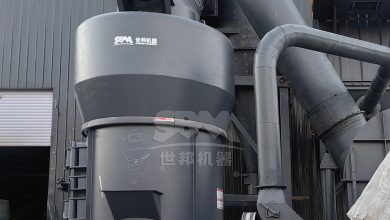
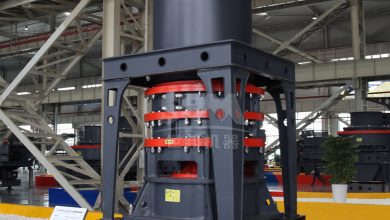
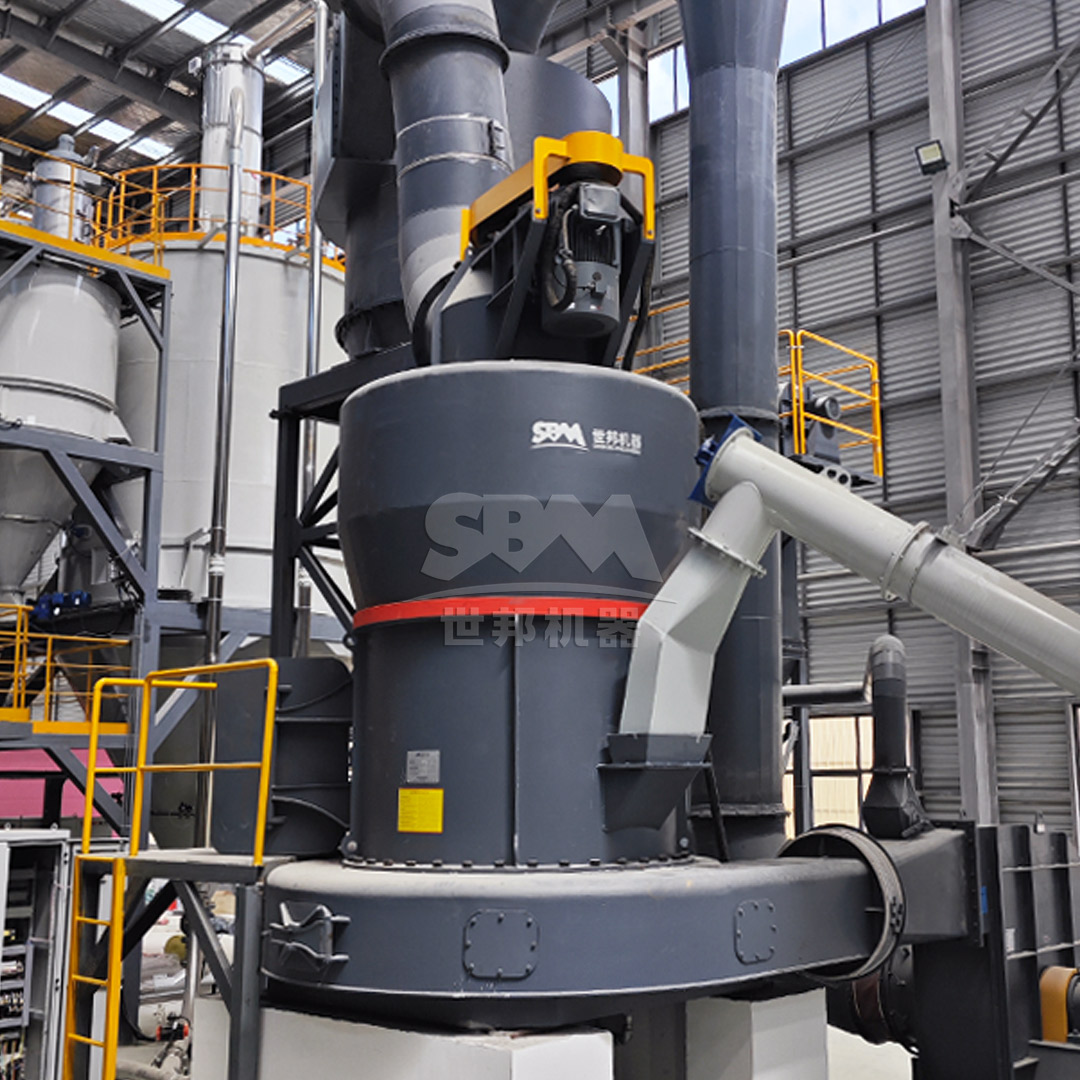
Our SCM Ultrafine Mill series represents the state-of-the-art in limestone powder production, specifically designed to generate powders in the 325-2500 mesh range (D97 ≤ 5μm). This equipment features a unique grinding mechanism that combines impact, compression, and shear forces to achieve ultrafine particle sizes with narrow distribution. The vertical turbine classifier ensures precise particle size control, eliminating coarse particles that could compromise concrete performance.
The SCM series offers significant advantages for concrete producers seeking to incorporate high-quality limestone powder in their mixes. With capacity ranging from 0.5 to 25 tons per hour depending on the model, these mills can be matched to production requirements of any scale. The energy-efficient design reduces operating costs by 30% compared to conventional grinding systems, while the durable construction with special material rollers and grinding rings extends service life and reduces maintenance requirements.
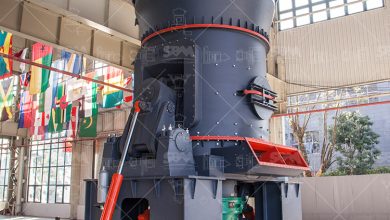
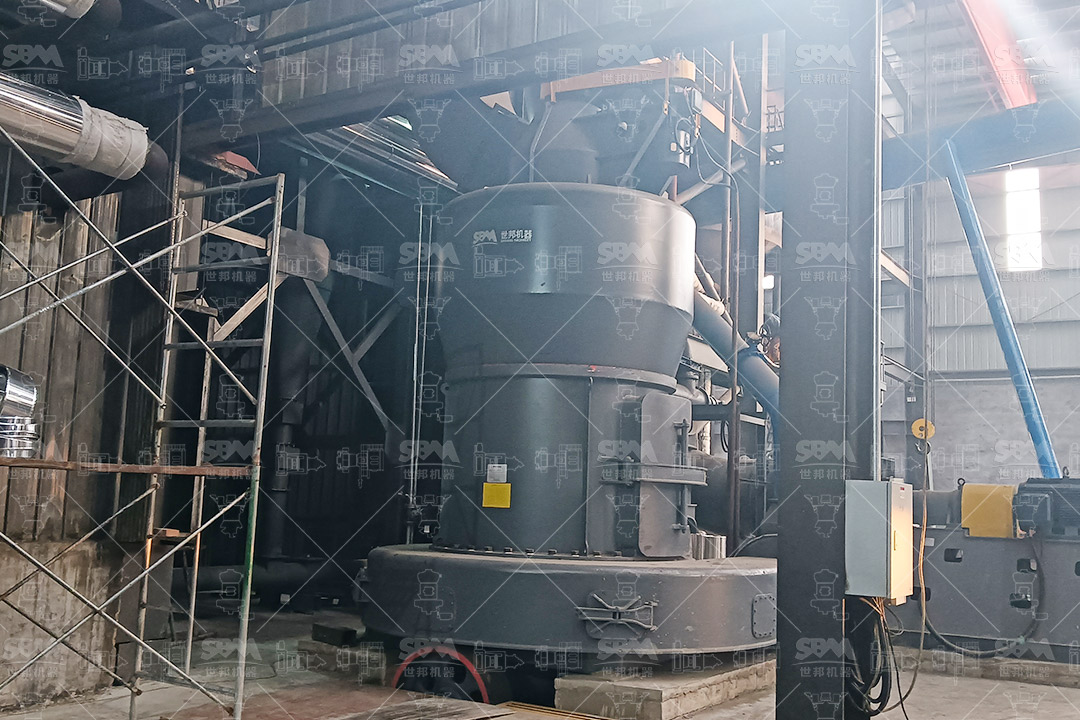
For applications requiring slightly coarser limestone powder (30-325 mesh), our MTW Series Trapezium Mill provides an excellent alternative with higher capacity (3-45 tons per hour) and robust performance. The curved air duct design minimizes energy loss during material transport, while the combined blade design reduces maintenance costs and extends component life. This equipment is particularly suitable for producing limestone powder for general concrete applications where the ultra-fine characteristics are not essential.
5. Practical Applications and Mix Design Considerations
5.1 Optimization of Concrete Mix Designs
Incorporating limestone powder of appropriate fineness requires careful consideration of mix proportioning to maximize benefits. For high-performance concrete applications, a ternary blend of cement, fly ash, and ultrafine limestone powder (D97 ≤ 5μm) typically yields the best results. A replacement level of 10-15% limestone powder by mass of cement, combined with 20-30% fly ash, generally provides optimal performance across strength and durability parameters.
The water demand of concrete increases slightly with the incorporation of ultrafine limestone powder due to its high specific surface area. This can be effectively compensated through the use of polycarboxylate-based superplasticizers, which maintain workability without compromising strength development. The packing density approach should be employed to optimize the particle size distribution of the solid components, ensuring maximum density with minimal voids.
5.2 Field Applications and Case Studies
The use of ultrafine limestone powder in fly ash concrete has been successfully implemented in various construction projects, including high-rise buildings, bridges, and marine structures. In a recent high-rise construction project, concrete incorporating ultrafine limestone powder (produced using SCM Ultrafine Mill technology) achieved 28-day compressive strengths of 65 MPa with 25% fly ash content, while demonstrating excellent pumpability and finishability.
Marine structures exposed to chloride-rich environments have particularly benefited from the reduced permeability offered by ultrafine limestone powder. Monitoring of concrete durability in these applications has shown significantly lower chloride ingress compared to conventional fly ash concrete, extending the service life of reinforced concrete elements in aggressive environments.
6. Economic and Environmental Considerations
The incorporation of limestone powder in fly ash concrete offers significant economic advantages through the reduction of cement content, which is both cost-intensive and carbon-intensive. The production of limestone powder requires substantially less energy compared to Portland cement manufacturing, resulting in lower embodied energy and reduced carbon footprint.
Life cycle assessment studies have demonstrated that concrete mixtures incorporating ultrafine limestone powder and fly ash can reduce global warming potential by 30-40% compared to conventional concrete mixtures with similar performance characteristics. The use of industrial by-products (fly ash) and naturally abundant materials (limestone) further enhances the sustainability profile of these concrete mixtures.
From an economic perspective, the initial investment in advanced grinding equipment for producing high-quality limestone powder is offset by the reduced material costs and improved concrete performance. The SCM Ultrafine Mill series, with its energy-efficient operation and low maintenance requirements, provides an attractive return on investment for concrete producers seeking to differentiate their products in the market.
7. Conclusion
The fineness of limestone powder plays a critical role in determining the performance of fly ash concrete. Ultrafine limestone powder (D97 ≤ 5μm) significantly enhances both mechanical properties and durability characteristics through physical filler effects, nucleation sites for hydration products, and chemical participation in hydration reactions. The synergistic interaction between fly ash and ultrafine limestone powder creates a denser microstructure with reduced permeability, extending the service life of concrete structures in aggressive environments.
The production of high-quality limestone powder requires advanced grinding technology capable of achieving consistent ultrafine particle sizes. Our SCM Ultrafine Mill series provides an ideal solution for concrete producers seeking to capitalize on the benefits of ultrafine limestone powder, offering precise particle size control, energy-efficient operation, and reliable performance. For applications where ultra-fine characteristics are not essential, the MTW Series Trapezium Mill provides a robust alternative with higher capacity and excellent cost-effectiveness.
As the construction industry continues to prioritize sustainability alongside performance, the strategic combination of fly ash and appropriately graded limestone powder will play an increasingly important role in concrete technology. Further research is recommended to explore the long-term performance of these concrete systems under various exposure conditions and to optimize mix designs for specific application requirements.